Princeton Review
Tulane University

Previous Photo
Next Photo

Contact Information

6823 St. Charles Avenue
New Orleans, LA 70118
Phone: (504) 865-5260
Fax: (504) 862-8715
View Website
Tulane University Says...
Founded in 1834 in New Orleans, Tulane is one of the most respected universities in the country, known worldwide for its teaching and research. It is consistently ranked among the top 50 universities in the nation and is one of only four private research institutions in the South that is a member of the prestigious Association of American Universities, an... Read More...

Statistics

Enrollment: 7803
Average ACT: 30
Regular Application Deadline: 01/15
Student Faculty Ratio: 11:1

Scholarships & Financial Aid

Undergraduate Receiving Need-Based Financial Aid: 127
Average Freshman Total Need-Based Gift Aid: $23,690.00

Rankings & Lists

Great College Towns
Lots of Hard Liquor
Best Quality of Life
School Says - General Information
Founded in 1834 in New Orleans, Tulane is one of the most respected universities in the country, known worldwide for its teaching and research. It is consistently ranked among the top 50 universities in the nation and is one of only four private research institutions in the South that is a member of the prestigious Association of American Universities, an organization of the top research institutions in the United States and Canada. Tulane was named by Kaplan/Newsweek's college guide as one of the nine "Hot Schools" in the nation in 2002 and its Latin American Studies program is ranked second in the country by the Gourman Report of Undergraduate and Professional Programs. With research and educational partnerships that span the globe and top-ranked programs in both undergraduate and professional schools, Tulane has the intimacy of a small liberal arts college and the resources of a major research institution located in one of the world's greatest cities.

School Says - Student Body
Much of the learning that takes place in college happens when students pursue interests outside of class. Such learning plays an important role in the Tulane experience. With more than 200 student organizations on campus, including student government; pre-professional and multicultural organizations; media groups; performance; service and education organizations; honor societies; fraternities and sororities; club and intramural sports and military; and religious and political organizations, every student has opportunities to join, lead, expand horizons, make friends and have fun. Campus programming brings concerts, lectures, and special events year-round to Tulane. Students also enjoy supporting Tulane's athletics teams, known as the GreenWave, who play at the highest level (Division I-A) of the NCAA. First-year students also have the opportunity to take part in the Tulane Interdisciplinary Experiences or TIDES program, a unique opportunity to get to know some of the university's most distinguished faculty and their fellow students both as scholars and friends. Students select a TIDE program from a list that includes themes such as politics, religion, the arts, women's studies, popular culture and more.

School Says - Academics
The 9 schools and colleges of Tulane University offer undergraduate, graduate and professional degrees in architecture, business, engineering, law, liberal arts and sciences, medicine, public health and tropical medicine and social work. Tulane's academic programs are considered among the best in the country. At Tulane, traditional classroom instruction is enhanced by experiential, hands-on learning. Examples of this include a myriad of service learning programs that give students real-life experience in their chosen field, internships for students during the summer or school year, and cutting-edge research opportunities with professors. For example of service learning, a psychology student might be assigned service learning hours at a local mental health facility or an English major assigned as a tutor at an adult literacy program. Other hands-on opportunities include the archaeological excavations sponsored through Tulane's Latin American program and the award-winning Burkenroad Reports through which business majors produce stock analyses used by investors across the country.

School Says - Admissions
Tulane enrolls 6,488 undergraduates (48 percent males and 52 percent females) from all 50 states and many foreign countries. A higher percentage of Tulane students travel farther to school than students of any other college or university in the nation. More than 75 percent of entering Tulane freshmen come from more than 500 miles away, making the student body geographically, socially and academically diverse. An additional 4,073 students are enrolled in the university's graduate programs and professional schools. Admission to Tulane is highly competitive with evaluators looking for high levels of achievement in all areas of student life, including leadership and community involvement. The average SAT score for the 2006-2007 entering freshmen class was 1300, which is 274 points above the national average Each year approximately 63 percent of enrolling freshmen rank in the top 10 percent of their high school class; more than 75 percent rank in the top 25 percent and 95 percent rank in the top half of their class. Candidates for admission are expected to present strong high school programs of study consisting of 18 or more academic courses taken over the four-year period. The following minimum preparation is recommended for each subject area. English: Four years with extensive work in reading and writing Mathematics: Three years (students entering scientific fields should have four years including advanced algebra, trigonometry, geometry, and calculus) Foreign Language: At least two years, preferably three, of a classical or modern language Science: At least two years of a laboratory science (biology, chemistry, or physics); students entering scientific fields should have at least four years Social Studies: At least two years with an emphasis on history Application Deadlines for Admission to Tulane are: Early Action (Nonbinding): By September: Take TOEFL, SAT I, or ACT no later than September if applying for Early Action. October 1: Submit CSS PROFILE Registration to College Scholarship Service. November 1: Application deadline. Submit CSS PROFILE application packet to College Scholarship Service. December 15: Last day for notification of admission. All Deans' Honor Scholarship projects must be submitted. January 15: Community Service Scholarship applications due. February 1: Submit FAFSA to federal processor. February 20: Deans' Honor Scholarship winners announced. April 15: Last day for notification of financial aid decision. May 1: Enrollment commitment deposit due for Early Action candidates. Deadline for accepting financial aid offers. Regular Decision Take SAT or ACT no later than December if applying for Regular Decision. By December 15: Applicants for Deans' Honors Scholarships must submit application materials and projects. January 1: Submit CSS PROFILE Registration to College Scholarship Service. January 15: Regular Decision application deadline (if not applying for Deans' Honor Scholarship). Community Service Scholarship application due. By February 1: Submit CSS PROFILE Application packet to College Scholarship Service. Submit FAFSA to Federal Processor. February 20: Deans' Honor Scholarship winners announced. April 1: Last day for notification of admission decision. April 15: Last day for notification of financial aid decision. May 1: Enrollment commitment deposit due for Regular Decision candidates. Deadline for accepting financial aid offers.

School Says - Campus Life
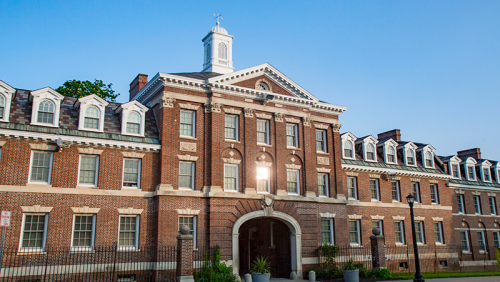
Tulane's 110-acre campus is located in the heart of New Orleans' beautiful and historic Uptown neighborhood on oak-lined St. Charles Avenue, home to the country's oldest streetcar line. Tulane's campus combines old and new styles of architecture interspersed among live oaks, azaleas, magnolias and the occasional banana tree or bamboo grove. Tulane's semi-tropical location makes outdoor classes and activities possible almost year-round.

School Says - Cost Aid
$36,610, undergraduate schools, A.B. Freeman School of Business, and Law School $47,234, School of Medicine (tuition only, first year) $832/credit hour (tuition only), School of Public Health and Tropical Medicine $263/credit hour (tuition only), School of Continuing Studies $8,690 Room and BoardStudents should not hesitate to apply for financial assistance to attend Tulane. Between Tulane-funded grants, scholarships and other sources, more than $111 million is available to subsidize undergraduate education at Tulane each year. The average need-based financial aid package given to 2006-2007 entering freshman was $29,417. Financial aid packages are typically composed of grants and need-based scholarships, loans and part-time student employment. Merit, ROTC and athletic scholarships are also available. High-performing Louisiana students may also qualify for special awards. Approximately 75% of incoming freshmen for the fall of 2007 received some form of need or merit based aid.

Students Say - Academics
Medium-sized Tulane University is "small enough for individual attention but big enough that you don't know everybody." Students call Tulane "the perfect mix between top-50 private college and party school." Its business school is nationally renowned, and a wealth of international programs provide opportunities to study abroad in more than 40 countries. There's also a solid core curriculum that includes a public-service requirement. "Academics are rigorous but rewarding." "By no means is it a school for slackers," cautions a marketing major. "It's a challenging school," agrees an art major, "but not challenging to the point of mental insanity." Professors here are "really smart and even pretty funny." They "care a ton" and they are "extremely personable and easy to talk to." "Due to our small class sizes, individual attention is incredibly realistic," adds a neuroscience major. "Most professors know your name and who you are. Even intro classes have, at most, like 80 kids, and even then, there are smaller labs." A few students report that dealing with the deans and the staff involves "much red tape." However, the general sentiment is that Tulane's "visible" and "very accessible" administration "works hard to treat each student as an individual rather than a number."

Students Say - Campus Life
Club and intramural sports are very popular on this "absolutely beautiful campus." There are more than 200 student groups, too. "Greek life is here but it's not a huge deal." The administration works hard to provide alcohol-free events. Students say these events are "actually very fun," but that drinking, or at least being around drinking, is "inevitable" at Tulane. There's a hopping bar scene close to campus. "Going out is part of the social culture," relates a senior. "Students embrace it." They "take full advantage of the party scene in New Orleans, a city where bars don't close and where Mardi Gras is a huge party in the spring semester." At the same time, you won't last long if you don't hit the books. "Tulane is about balance." Success "necessitates a large amount of self-control and will-power." "While the school has a reputation as a party school, it's more of a school in a party city," explains a sophomore. "Most people think we spend all our time on Bourbon Street, but [it's]...usually only reserved for 21st birthdays and a quick visit when friends from other colleges visit." "Laid-back, fun-loving," "thrilling," and "practically lawless," New Orleans is "the most incredible city in the world," though, and a fabulous asset. "There is always an amazing concert or festival going on." "New Orleans is abundant in culture and [offers] a surprise at every turn," and it's "very much an outdoors city because of the weather." You can explore "great historical restaurants and antique stores" or just "listen to a jazz band while eating a beignet, looking out onto the Mississippi River."

Students Say - Student Body
Students describe themselves as "independent and confident," "happy kids" who "are academics-focused and want to get a good education while having a good time." "Everyone is very smart but a kind of cool smart," claims a junior. "The typical Tulane student is what I call a closet nerd," adds a sophomore. "Basically, you see them having fun and it looks like they never do work. But the truth is that they study way more than you think." While "Tulane could use a little more racial diversity," the population is very "geographically diverse." Students come from all 50 states and more than 40 different countries. "There are large Jewish and Catholic populations. Many students are from the Northeast, Florida, Texas, and California." "There are a lot of wealthy kids here but there are also a lot of hard-working kids on scholarship." "People do dress well," notes a senior. "Sorority girls with their leggings" and guys with "gelled hair" certainly aren't uncommon. "You can wear whatever you want," but you'll fit in best if your attire is "kind of preppy." "We don't have so many artsy kids or crazy, pink-haired nonconformists," says a sophomore.

Other Schools To Consider Top Programs

Quick Search

Find information on thousands of colleges and universities.

Think you have what it takes to be an entrepreneur?
Test your knowledge with our short quiz on entrepreneurship.

College Success Stories

Analyze This

Analyze This

Two ASU students prove that there is much more to analytics than page views. Billions more.
Dressed for Success

Dressed for Success

Blank Label founders Fan Bi and Danny Wong have made more than $350,000 in their first year.
The Bling King

The Bling King

Matt Lauzon's Gemvara puts the 'me' in e-commerce.
Simplified Sharing

Simplified Sharing

Three entrepreneurs on the same mission to facilitate college note-sharing join forces -- and 360,000 students follow.
It Passes the Mom Test

It Passes the Mom Test

A former law student develops an online business that lets anyone -- even his tech-challenged mother -- create a website.