Princeton Review
Reed College

Previous Photo
Next Photo

Contact Information

3203 SE Woodstock Boulevard
Portland, OR 97202-8199
Phone: (503) 777-7511
Fax: (503) 777-7553
View Website
Reed College Says...
Intellectual. Free-thinking. Rigorous. Laid back. Classical. Iconoclastic. Paradoxical. Liberal. College guides grapple to define the Reed College experience, but they all tend to agree on two points: Reed is one of the most distinctive colleges in the nation and it is not for everyone. Reed attracts serious students, and often brings out the best in them. Always engaged, often engrossed,... Read More...

Statistics

Enrollment: 1447
Average ACT: 31
Most Popular Majors: Anthropology,English Language and Literature, General,Psychology, General,
Regular Application Deadline: 01/15
Student Faculty Ratio: 10:1

Scholarships & Financial Aid

Undergraduate Receiving Need-Based Financial Aid: 49
Average Freshman Total Need-Based Gift Aid: $34,939.00

Rankings & Lists

Best College Radio Station
Birkenstock-Wearing, Tree-Hugging, Clove-Smoking Vegetarians
Class Discussions Encouraged
Dodgeball Targets
School Says - General Information
Intellectual. Free-thinking. Rigorous. Laid back. Classical. Iconoclastic. Paradoxical. Liberal. College guides grapple to define the Reed College experience, but they all tend to agree on two points: Reed is one of the most distinctive colleges in the nation and it is not for everyone. Reed attracts serious students, and often brings out the best in them. Always engaged, often engrossed, and occasionally engulfed in a demanding, exhilarating educational adventure, "Reedies" thrive on a mix of classical study, critical analysis, and guided inquiry that rewards creativity, independence, and reflection. Classes are small, faculty make themselves accessible, and students adhere to an honor principle both inside and outside the classroom.

Reed recruits nationally, with strong representation from California, the Pacific Northwest, and the eastern corridor. The student body is also composed of 8 percent international students. A recent survey of graduating seniors at 52 liberal arts colleges found Reed students one and a half times more likely to be satisfied with their education than the national average and twice as likely to say they would choose Reed again. Reed ranks first among U.S. liberal arts colleges in percentage of graduates going on to earn doctoral degrees and fourth among all institutions of higher education. The breadth, depth, and rigor of the curriculum provide great preparation for nearly any career. Many Reed alumni found or lead companies and organizations, earn medical or law degrees, write books or create works of art, and work to make life on the planet better for all.

School Says - Student Body
Reed shuns exclusive organizations and activities, so the college has no Greek organizations and no NCAA or NAIA athletic teams (more about sports below). All campus organizations are student-created and student-run. Student organizations must lobby the Student Senate for funding annually, after which the Senate oversees a vote in which the entire student body decides what organizations should be funded. Thus, the number and nature of campus organizations at Reed changes every year to meet current student interests. Reed may not compete at the NCAA or NAIA level, but most students participate in sports on an informal basis. Intramural sports and club sports proliferate in basketball, fencing, rugby, sailing, soccer, squash and ultimate Frisbee. A three-semester physical education requirement demonstrates that the school recognizes the importance of physical fitness and the salutary effects of exercise.

School Says - Academics
The curriculum at Reed is both demanding and wide-ranging. Through required studies, Reed students receive a solid grounding in the liberal arts and sciences.

All freshmen must complete "Hum 110," a survey of Greek, Roman, and other Mediterranean scholars from Homer to Petronius. Distribution requirements set a substantial portion of a student's curriculum for the first two years at Reed. Freshmen and sophomores must complete two courses in each of the four major divisions of the college. No specific courses are required; students are free to pursue their interests within the strictures of the requirements.

Reed juniors must pass a comprehensive exam in their major, to allow faculty members the chance to determine the student's readiness for his or her senior thesis project. The required senior thesis is the capstone experience of a Reed education. Every senior must produce an original independent research project over the course of the final year.

Reed strongly believes that learning should be undertaken for its own sake, not for the sake of letter grades. Accordingly, students do not receive grade reports unless they wish to. A student's transcript does include letter grades for all courses taken, but students can better gauge their progress through professors' written evaluations of their work and one-on-one meetings with faculty. Most prefer this system, which eliminates competition among students and allows them to focus entirely on the content of their academic work.

School Says - Admissions
Reed seeks students who demonstrate a commitment to learning and to the ideals embodied by a rigorous and stimulating liberal arts education. Freshman and transfer applications are welcome. The admission committee attempts to determine which candidates will benefit most from a Reed education as well as who is most likely to succeed at Reed.

The ideal incoming class is diverse in its range of talents, interests, ethnic and socioeconomic backgrounds, and perspectives, yet constituted of students who share a common passion for academic inquiry. The admission committee places most emphasis on an applicant's record of previous academic accomplishment. Successful applicants have usually pursued a rigorous secondary school curriculum that includes honors and advanced courses and typically includes 4 years of English, at least 3 years of a foreign or classical language, 3 to 4 years of mathematics, 3 to 4 years of science, and 3 to 4 years of history or social studies. Because secondary school curricula vary widely in quality and content, Reed sets no fixed requirements in this area.

With rare exceptions, incoming students have obtained a secondary school diploma prior to enrollment. The admissions committee sets no "cutoff points" for high school grades, college grades (for transfer students), or standardized test scores. Reed seeks candidates who demonstrate excellence of character, motivation, intellectual curiosity, individual responsibility, and social consciousness. The admission committee recognizes the importance of creating a diverse community in which individual differences contribute to the vitality of the campus. Reed strongly recommends a personal interview, especially for early decision candidates, but an interview is not required. Early decision applications should arrive at Reed by November 15 (Option 1) or December 20 (Option 2). Early decision at Reed is binding: students who are accepted under early decision are expected to matriculate. The deadline for regular freshman admission applications is January 15. Transfer candidates should apply no later than March 1.

School Says - Campus Life
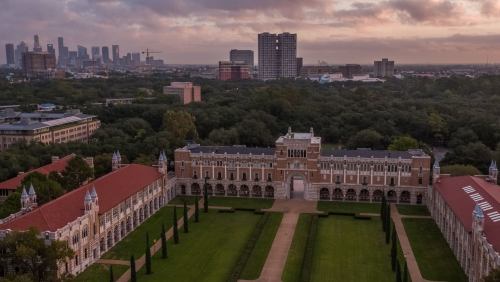
Talk about the best of both worlds! Located in a quiet residential neighborhood is a 116-acre campus of verdant lawns, winding paths, statuesque trees, a wooded natural wetland preserve, and a spring-fed lake frequented by migratory birds and other wildlife. Reed is a short bicycle or bus ride from the energy and excitement of downtown Portland, which is widely cited as the nation's most livable urban center. Portland boasts a wealth of diverse cultural, entertainment, shopping, and dining opportunities in an environment characterized by a combination of youthful exuberance and Pacific Northwest reserve. The Oregon Coast is an hour to the west and Mt. Hood an hour to the east (reserve early to be sure of securing weekend accommodations at Reed's own ski cabin).

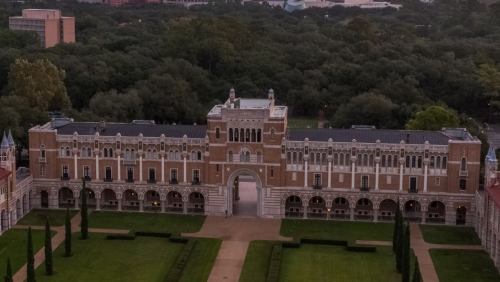
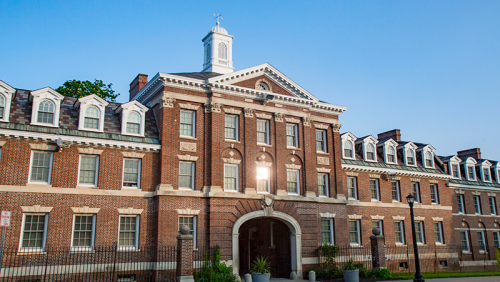
On the campus itself, century-old brick Tudor gothic buildings are interspersed with newer traditionally designed and remodeled facilities. The library, classrooms, and laboratories resonate with the history of decades of inquiry and discovery, supported with modern technology. Extensive facility expansion and renovation financed by a $112 million development campaign has increased the overall square footage of Reed's buildings by almost 30 percent and added seven acres of contiguous property to the northwest corner of the campus. Five new eco-friendly residence halls opened in 2008, making it possible for 75% of Reed students to live on campus. For those who want it, housing on campus is all but guaranteed for all four years, because a healthy percentage of Reed students enjoy living in Portland neighborhoods near campus.

School Says - Cost Aid
Tuition for the 2010-2011 academic year is $40,940. A $260 student body fee is added. Room and board is an additional $10,650, bringing the yearly total cost to $51,850.Reed provides financial assistance to roughly 50% of its undergraduates. The college maintains a need-based assistance program that allows students of all economic backgrounds to attend the college; it further guarantees that full need will be met for all continuing students who maintain good academic standing and who meet all other requirements of the aid process (such as application deadlines). The college makes every effort to make admission decisions on a need-blind basis but cannot guarantee that it will have the funds to do so. Each year, approximately half of all first-year and transfer students receive aid packages equaling their full demonstrated need. The college budgeted approximately $21 million for grant aid in 2010-2011; individual awards ranged from $500 to $49,800. For the 2010-2011 academic year, the average financial aid package, including grants, loans, and work opportunities, was approximately $34,196. The college is the primary source of grant money for its students. Reed also administers federal grants and a number of other awards. Students may take Perkins Loans and other federally subsidized loans; campus employment and work-study programs also figure into many aid packages.

Students Say - Academics
Reed College, "offers a serious liberal-arts education in a small, creative, community" where "intellectualism is highly respected" and students pursue "learning for learning's sake" in "a challenging academic atmosphere." "We are a collection of those weird kids in high school who had a passionate interest in learning about something and made that interest academic, even if it wasn't beforehand," one student explains. They're the sort of students who seek out an "academic rigor that definitely prepares us for graduate school and scholarly work." "Small, discussion based classes, frequent interaction with professors, and general intellectual curiosity override all other aspects of the life at Reed," where "studying and going to classes is not somehow the price to pay for staying here (with the ultimate goal being the weekend and, eventually, a diploma); rather, it is the core joy of being at Reed." Unsurprisingly, "students work incredibly hard," but "the school is there for us every step of the way. As freshmen, students meet with their humanities professors after every paper one-on-one for paper conferences." Seniors must complete a thesis project; "When writing one's senior thesis, students meet with professors one-on-one for an hour every week." It's exactly the right sort of place for students who "want to be excited about school again," says one student. "I wanted to be around other people who were both excited about academics and excited about being at a place where academics excited them. I wanted to be in a place where people didn't take themselves too seriously but took their work seriously." Welcome to Reed.

Students Say - Campus Life
Reed is an academically intense school, so "a great amount of time is spent on academics, even on the weekends" here. "Late at night, it is not uncommon to see Reedies debating the merits of Thucydides and Herodotus or discussing the financial bailout package in the library lobby, dorm common rooms, and at the hotcake house (a nearby 24-hour pancake joint)," one student reports. But although "people are very involved in their studies, especially seniors and their individual theses...everyone keeps his or her own passions alive with student government, various hobbies (baking, knitting, singing, dancing), sports (rugby, ultimate Frisbee, and basketball), and often trips around the multiple neighborhoods of Portland." The city justly is celebrated for its coffee shops, restaurants, and bookstores. Annual campus traditions include Renn Fayre, "a three-day party at the end of the year at which students celebrate the completion of senior theses. Renn Fayre begins with Thesis Parade, in which seniors burn their thesis drafts in a bonfire in front of the library and then march in costume, covered in champagne and confetti through the library across the lawn to the registrar's office to turn in their [completed] theses."

Students Say - Student Body
Reed students tend to be "smart, intellectually curious, and a little quirky." Politics tilt strongly to the left. One student reports, "There is virtually no political dialogue. The student body is so liberal the only dialogue is really between socialists and communists. For students who regard themselves as liberal and, consequentially, open-minded, there is very little acceptance of people who don't identify themselves as liberal or who simply like political dialogue." The student body is also "overwhelmingly Caucasian" and affluent, although students note there is "a growing population of minority students (minority in various senses) and they are making efforts constantly to establish themselves as a social presence on campus. Student groups like the Latino, Asian, and Black and African Student Unions and places like the Multicultural Resource Center offer places for support."

Other Schools To Consider Top Programs

Quick Search

Find information on thousands of colleges and universities.

Think you have what it takes to be an entrepreneur?
Test your knowledge with our short quiz on entrepreneurship.

College Success Stories

Analyze This

Analyze This

Two ASU students prove that there is much more to analytics than page views. Billions more.
Dressed for Success

Dressed for Success

Blank Label founders Fan Bi and Danny Wong have made more than $350,000 in their first year.
The Bling King

The Bling King

Matt Lauzon's Gemvara puts the 'me' in e-commerce.
Simplified Sharing

Simplified Sharing

Three entrepreneurs on the same mission to facilitate college note-sharing join forces -- and 360,000 students follow.
It Passes the Mom Test

It Passes the Mom Test

A former law student develops an online business that lets anyone -- even his tech-challenged mother -- create a website.