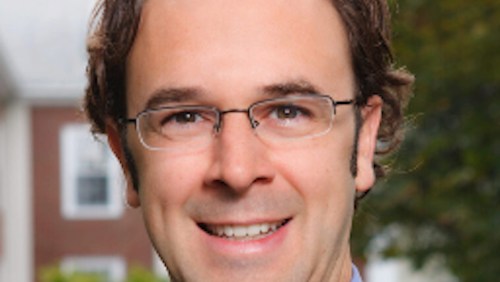
David Plouffe
The manager of Barack Obama’s historic presidential campaign gives a rare behind-the-scenes look back at the election.
If he were less shy and had a funny accent, David Plouffe would be every bit the household name that James Carville is-perhaps even going on Oprah and taking cameo roles in Hollywood movies. Plouffe is, after all, “the unsung hero” of the “best political campaign in the history of the United States of America”-which is how Barack Obama described him before a global television audience, in the mother of all shout-outs, on the night he was elected Leader of the Free World.
At 41, Plouffe (rhymes with “no fluff”) will probably never top his historic achievement of managing the campaign that gave this nation its first African-American commander in chief. The juggernaut Plouffe led, which grew to a payroll of 5,000 before Election Day, raised record amounts of cash from millions of small donors, defeated the once-invincible Hillary Clinton machine, and crushed the flailing Republican nominee, John McCain. Obama’s success was so overwhelming that it’s hard to remember those early days when the freshman senator from Illinois was the longest of long-shots and the darkest of dark horses in a country still troubled by issues of race.
But, as the press-averse Plouffe told Portfolio.com in an exclusive interview, Clinton might well have won the nomination if she had just competed in the far-flung caucus states that handed Obama his insurmountable delegate lead in February and March. “We woke up every day wondering, is today the day they’re going to show up in Colorado, Minnesota, and Washington State?” Plouffe said. “And every day they didn’t, that enabled us really to build up our strength there.”
Lloyd Grove: Just to begin, I’ll do one small bit of full disclosure: I used to be married to your wife’s sister, so that makes us ex-brothers-in-law once removed. But, hey, we’re all ex-brothers-in-law in the family of man.
David Plouffe: In some way, if you do the charts deep enough, yes, that’s right.
L.G.: The goal of this interview will just be to get you to teach us a little bit of Presidential Campaigning 101 and also to give us a couple of insights from your own experience in this last campaign. You’ve been involved in several presidential campaigns before. You did [Iowa Senator Tom] Harkin in ’92, you’ve done [Missouri Representative Dick] Gephardt. Walk me through your previous presidential campaign experience.
D.P.: Those were the two, then I did a lot of the work for the D.N.C. [Democratic National Committee] during the general election of 2004. We, meaning David Axelrod and I, did a lot of the advertising-like McCain this time. The R.N.C. [Republican National Committee] was more of a major actor than the McCain campaign was, because they were in the federal system. We did a lot of that work in ’04 for the D.N.C. Gephardt was ’04. The other thing is I spent a lot of ’97 and ’98, when Gephardt was planning on running against Gore, as you might remember. I spent two years doing a lot of planning and work on that. It gave me a lot of understanding of Iowa and New Hampshire and how the process works, that early states were of paramount importance, that if it got into a long, drawn-out affair, it was going to be a delegate-by-delegate battle, and also that the way the media covered the race did not reflect how the race might be decided. So that took a lot of discipline not to play their game but to play our own.
L.G.: Okay, why don’t you give me a sense of the scale of things? Basically a presidential campaign is a business. It’s a public company of which you were the C.E.O., and it’s only a temporary company, and the goal is to get 50 percent market share plus one. I guess in the primary phase it’s less than 50 percent. But give me a sense of the scale. You had 1,000 on your payroll? How much money came in and went out?
D.P.: There are business analogies. One is, we’re a startup, we had to go from zero to 60 in a matter of weeks. Our company, if we were successful, would only last two years at the most. You have an end line. You don’t have quarter after quarter to succeed. You either win or lose on Election Day. It is a very accelerated environment. For us particularly, because we weren’t planning to run for president, he got into this very unconventionally. It’s like taking off while you’re fixing the wings on a plane. You’re up on the high wire, but by the end we raised over three quarters of a billion dollars, over $750 million dollars. We had over 5,000 employees, we had millions of active volunteers. So it was a big organization. The most important thing for me as a manager was the senior staff. If you don’t have strong senior staff, you’re going to struggle, and I was blessed to have a strong senior staff. And we were an organization about accountability. Down to the entry-level staffer, we measured their job performance based on metrics.
L.G.: And what were those metrics?
D.P.: It depended on the job. If you were a fundraiser it was how much money you raised. If you were a field organizer, it was did you recruit enough volunteers? If you were in the operations part of the campaign, were you processing things quickly enough? We were kind of a service organization in some respects to the states. We had a whole team in Chicago there to serve the states, who were out there in the battleground and war zones. And so we can’t afford to have any delays in what they need. People who are cutting lists, data people-it all has to be both accurate and quick. I think we were a very agile organization, even as we got big we kind of maintained that insurgent feel and that’s very important. I think we were much more nimble than Clinton or McCain.
L.G.: Clearly. Walk me through the different units of the campaign. There’s the ground game, media, communication-just tell me how you thought of the organization.
D.P.: There are the states, which were always critical, and within the states, there’s a state director, the ground game, and people doing press in the states. We viewed the campaign as essentially 16 different campaigns, because every state is different. We had communications people in Chicago, we had research people in Chicago, we had a big new media and technology department in Chicago. We had a fundraising department, we had a scheduling and advance department, which is critical because we obviously had Obama and Biden and their staffs out there every day. We had a vice presidential staff, we had an operational staff that administered the campaign. Those would be the main areas.
L.G.: How much money is allocated to the various units of the campaign? One always hears that paid advertising takes significantly more than 50 percent-putting commercials on the air, radio, and television. Can you break down the percentages?
D.P.: Well, we spent obviously a lot of money on TV, but as a ratio of our spending, it was much lower than historically is done, and that’s because we spent a lot of money in the field and on the ground. And, in fact, when we did our baseline budget, the field was fully funded because we thought it was very, very important. If we were to raise excess funds, we bolstered the field a little bit, but it went in advertising. Our first priority was the ground operation because we thought that was essential to us winning. It’s very much, I think, a unique approach. In a lot of campaigns, the media gets funded first, then if you have extra money that comes in, you bolster the field and things of that sort. And we kind of did it in reverse.
L.G.: Can you give me a rough breakdown of percentages?
D.P.: Well, no. I would say that it’s lower.
L.G.: One always hears historically it’s almost 70 percent that goes to media.
D.P.: Right, the playbook is 70 to 75 percent, and we did much less than that. Under 50 percent.
L.G.: What gave you the chutzpah to think you should break the model, and spend more than 50 percent on non-media?
D.P.: First of all, we knew that we had to get really good turnout, and that we thought a human being talking to a human being in a state is the most effective in communication. So we needed an organization that was able to facilitate that. Secondly, a presidential campaign is a very well-covered enterprise, people are talking about it all the time, they see it on the newscast, they’re reading about it online. In many respects, advertising in a senate race or governor’s or congressional race can have more impact because those races aren’t front and center for people. I always believed that advertising was very, very important. I think we went right in and it was very helpful-makes it meaningful because people have 100 percent knowledge of the candidate and are following pretty closely. So I thought we could afford to trim a little bit. Now we ended up raising a lot of money, so our point levels were very big in September, October, but we could’ve won without that. Then the McCain campaign likes to say, “we were outspent, that’s why we lost on TV”-and I think that’s complete malarkey.
L.G.: You think it had more to do with the good luck you had with the economy tanking and the fact they didn’t really have a ground game?
D.P.: Well, and they careened from message to message, strategy to strategy. We had one message, one strategy. We won all three debates. When was the last time one candidate won all the debates? Maybe Clinton in ’92, although I think one of them was a tie. We had big moments in the campaign.
L.G.: So David, as far as you’re concerned, you’re still in Spin Alley, huh? Still telling me Obama won the debates.
Page 2
D.P.: Yeah, he did, and that was incredibly meaningful to us! McCain, he suspends his campaign around the economic issues, we don’t. There’s no doubt our voters liked our stability and punished McCain for his erratic-ness.
L.G.: Just to go back a little bit, you didn’t know Obama until you worked on the Senate race with Axelrod. At what point did you think this guy was presidential horse flesh?
D.P.: Well, my sense is we had this conversation about whether he was going to run or not, and I had a pretty high degree of confidence that he had the intellect and the character and temperament to be a very good president. The bigger question was, could he be a good presidential candidate, because that’s the horse of a different color-the grueling nature of it. He hadn’t spent any time in Iowa, New Hampshire, didn’t have a fundraising base. He had young kids-he wouldn’t see them very often. Those are the big questions. Could he transact this brutal obstacle course at the presidential campaign? These presidential campaigns are very grueling obstacles and I think they’re pretty revealing. I just grew to have an immense amount of respect for how he dealt with it, so the question was, could he be a good presidential candidate and could we, in improbable circumstances, announce his presidential campaign against a dominant front-runner like Hillary Clinton?
L.G.: When were these discussions?
D.P.: It was after the 2006 election. And you know it was definitely seat of the pants, because he hadn’t spent any time in 2005 or 2006 thinking about this, discussing this, doing the things people do who plan to run for president. It was a startup in every sense of the word.
D.P.: Exactly. A big hiatus there.
L.G.: There is another aspect to this. In business, you don’t have your competitors-say you’re Pepsi and they’re Coke -saying that actually Pepsi has poison in it. And if you drink it, you’re going to die. So you don’t have that aspect in real business because I think the Federal Trade Commission would step in.
D.P.: That’s right. Exactly. In real business, there’s no doubt that there’s competition and you’re fighting for market share. It’s a much more genteel affair, trying to go from A to B. But in a campaign you’ve got arrows flying at you every day from your opponent, from the press. That’s your goal every day, you’re trying to accomplish something every day-a message you’re trying to drive, voters you’re trying to contact, money you’re trying to raise. This isn’t like shooting free throws. That’s one of the things: Can you stay upright every day? You want to accomplish what you need to accomplish, and that’s a very important difference between what we do and what business does. And it makes it more complicated.
L.G.: You mentioned not getting distracted. I guess one obvious distraction was the Reverend Wright affair. Can you think of anything else that reached that level?
D.P.: No doubt we had challenges. I think, first of all, getting the campaign up and running was a huge challenge.
L.G.: Tell me how you did that. Give me the timeline.
D.P.: You know we started really in January of ’07. Here’s why. We had a lot of great staff who gravitated to us, who were inspired to work for him, weren’t in it for their own reasons, and so we were very quickly able to attract a great staff. From the very beginning it was clear there was going to be a pretty strong grassroots appeal, although no one could’ve predicted it would grow as large as it did. We had some assets, but it was a challenge. Listen, it was brutal to try to get this up and running in a matter of weeks. We had to find office space, we had to get accounts up and running, we had to raise some initial seed money, we had to get staff hired in all the states. And, again, almost anybody who runs for president spends years planning for this, right? So you kind of turn the key and you have a plan, and we didn’t have a plan. As challenging as it was, I think in retrospect it made us a better campaign, because we didn’t have some stale playbook we were following. We were kind of making it up as we were going along, but I think in a very effective way, because the electorate changes and technology and techniques change so we weren’t wedded to any of the old ways of doing things.
L.G.: Give me a sense of what the candidate’s involvement in all this was. You’re C.E.O., he’s chairman of the board. Tell me how down in the weeds he got and how that whole interaction worked.
D.P.: I think in the beginning, circumstances dictated it. We didn’t have a lot of time to dilly-dally in the beginning, we just had to move, make decisions, and move. I think that was helpful because then the organization, and he and I, developed a good way of working. I kind of got to know what decisions he would want to be involved in. He really spent a lot of time on policy decisions, what’s his health-care plan going to look like, what’s his energy plan going to look like? He spent a lot of time thinking about how he wanted to communicate things, then I got a sense of what decisions he’d want to be involved with, and what discussions. So I thought we had a very smooth way of operating, and part of it is because of that beginning period, we had to do a lot of things very quickly. I think a lot of it ended up working out well. He had confidence in the organization. Sometimes in an organization you can be really harmed by the inability to make decisions or to chew on things for too long, and we didn’t have that luxury. The organizational mentality was, we’re not going to dither, we’re going to try and make smart decisions, and you have to know that not all of them are going to work out. But one thing that we didn’t do in our campaign was revisit and that drives me crazy. If you run an organization, four weeks after we make a decision, “if we’d only done that”-you just don’t have time for navel-gazing.
L.G.: Obviously Hillary was the front-runner, the prohibitive favorite to be the nominee when you got into the race. How did you view that campaign? Because obviously you’ve had relationships with and knew all the players in her campaign. For all I know you had worked with them in different races.
D.P.: Some of them. I would say we had a full appreciation for her strong standing in the race, and knew we were decided underdogs, and that informed most of what we did. When you end up in a competition like that, obviously it gets heated and you obviously want to win badly. You wake up every day trying to really do damage to them. We had a healthy amount of respect for her, and for their position in the race. They were as strong a front-runner as you’ll find in American politics, and we didn’t really dispute that. We thought we had a path to the nomination but it was a very narrow path. She had a lot of different ways to win and we only had one. We had to win Iowa, and then obviously we had to win this delegate battle, when it turned into a long race. We were huge underdogs. I think that sometimes gets lost years later-“Oh you raised all this money, you built this big organization.” We were definitely a huge underdog in this campaign.
L.G.: Did you think at the time, if you can cast your mind back to the time you got into the race, knowing all the players in Hillary’s campaign, did you think she had an Achilles’ heel?
D.P.: Just that the country was looking for change and that Obama represented change more than she did, and it became clear as the campaign went on, that they probably didn’t have as good a grasp about how this would unfold as we did. They ran much more of a national campaign, much more concerned about what the national press had to say. We were much more driven by what was happening in Iowa, New Hampshire, or Wisconsin-that was their Achilles’ heel as far as their campaign. They were a very good campaign, they raised tons of money, they were very aggressive, they worked the press hard. She was a relentless and focused candidate. They had a lot of things going for them, and obviously if we had not won Iowa, we probably would’ve gone belly up-so Iowa was a high-stakes thing.
L.G.: I know that you use the pronoun “they” for Hillary’s campaign, as though they were like a unified entity and not trying to kill each other behind the scenes all the time. I have to think that one advantage that you had over them is that you had a very collegial environment and they-which is I guess the standard operating procedure for presidential campaigns-were constantly at each other’s throats.
D.P.: I wasn’t in that campaign, but you hear the stories. We had three things that helped us run a very good campaign, and I think this wasn’t the case for Clinton or McCain. One, we had a consistent message. What was our slogan the entire primary? “Change we can believe in.” We adjusted slightly for the general-“Change we need.” That didn’t change. That was boring to the press, but that consistency, I think, wore well with voters. And we didn’t have meetings every day about how to change our message. We had an electoral strategy, and the primary contest goal was to try to do well in the early states, and win delegates, in the general to play on the big map. We never adjusted that. And third is we didn’t have that internal tension and in-fighting, so we could just focus on doing our damn jobs every day, and executing at a high level. And you’re right. I’ve worked in a lot of campaigns and they’ve been great experiences, but this was by far the most collegial environment that I’ve worked in, and it was a real pleasure to go to work every day, and we just had a sense of mission. And that can’t be overstated. There weren’t a lot of closed doors where people were complaining and we were a unit. And once we made a decision, we had made a decision, and no one second-guessed it.
L.G.: Why do you think that was, David?
D.P.: I think partially the types of people that worked in this. I don’t think many of us would’ve worked in another presidential campaign, it’s not what we were looking to do. We were motivated by him. I think being in Chicago helped. I think Obama, and secondarily me, set a tone that we’re not going to abide a bunch of internal fighting, we’re not going to abide talking about our business to the outside world, and we’re going to be strong in our opinions but we’re going to respect decisions. And that was just the ethos of the organization and it made it much more effective than I think some of our opponents’ campaigns for that reason.
Page 3
L.G.: Did you have to drive that message home by making an example of anyone? Not to get into specific people, but did you have to fire anybody?
D.P.: Sure, well, I mean we fired people obviously, but from the very beginning we did spend some time saying, this is the way we’re going to operate. We’re just not going to have a bunch of the typical campaign B.S. We’re not going to talk to the press about things we shouldn’t talk about. We’re going to respect each other and we’re going to have a sense of mission. And, again, I think being an underdog helped in that regard. We had to be feisty and almost perfect to win the primary. And we weren’t perfect, but we didn’t have a lot of time to navel-gaze and worry about what job we were going to have in the presidential administration, because it was such a far-fetched enterprise in the beginning.
L.G.: Did you actually have a meeting where you and Obama sort of laid out the ethos of the campaign, where you said all those things explicitly?
D.P.: It wasn’t a meeting. It was just a consistent and present part about how we talked about the campaign in the beginning. And so when people came on in the general election, a lot of new people came in but there was an existing ethos. So people had to kind of adapt to it, and that was a challenge obviously, because you were disrupting to some extent the great chemistry we had-but it took hold.
L.G.: How did you discipline salaries and compensation? Because traditionally, if you look at, say, Mark Penn [Hillary Clinton’s chief strategist], I don’t know how much Mark was pocketing but you see that they had outstanding bills approaching $10 million to him.
D.P.: People on the campaign could not make more than a certain amount-$12,000 a month. There were salary bands, so there wasn’t a lot of eventfulness about what people got paid. If you were a deputy you got paid X, if you were an assistant, you got paid Y. We were very aggressive with our consultants in terms of their piece. From a fiscal management standpoint, Obama was very clear that he did not want to end up with a debt in the primary or the general, so we just planned accordingly. We didn’t spend beyond our means.
L.G.: So the highest salary on the campaign was $12,000 a month?
D.P.: Pre-tax, yeah. In other campaigns, they can make a lot more than that, and people working in Senate races and governor’s races made a lot more than that.
L.G.: You’ve made more than that.
D.P.: No doubt, it was a financial sacrifice for many on the campaign, but I think it helped. There wasn’t any drama around compensation.
L.G.: What about percentages of ad buys?
D.P.: We had a cap, an aggressive arrangement-
L.G.: What did you cap it at?
D.P.: Well below industry standards.
L.G.: Because arguably, somebody could still get a very handsome fee. Say for the sake of argument, you spent $350 million on advertising. Even a niggling 1 percent of that is $3.5 million.
D.P.: That’s why you have caps, so that people can’t make more than a certain amount. So that if your spending does increase, their profits don’t increase.
L.G.: What was the cap on that?
D.P.: I can’t remember-it differed by firm based on what they were doing. But we made sure to protect ourselves. That ended up being, I think, wise, because we obviously raised a lot of money but the firms did not make more. My view of this is that working on a presidential campaign is obviously arduous but it’s a unique opportunity. My view is you shouldn’t have to pay market rate for people’s services. And that’s the general approach, and it seems to have worked out well.
L.G.: As reporters, we love covering campaigns, and especially presidential campaigns, because they’re just a great source of gossip and behind-the-scenes drama. How did you stop that? Everybody was amazed at how little that was occurring from the Obama campaign.
D.P.: I think, first of all, we attracted the kind of people that weren’t in it for themselves, they were in it for the cause. And that can’t be overstated enough. Then I think, you instilled from the get-go, we don’t tolerate, we don’t want our business out there publicly. But I think without that core group of people, who had the right reasons for being there, who were very loyal, we couldn’t have done it. We had a really great esprit de corps, and I think the culture of the organization from the get-go was, a leak could not be tolerated, it wasn’t who we are. Any time there was a story we didn’t like, we let it be known, so we did take some corrective action. And I think eventually that really became known throughout the organization-that we don’t leak. Even as we grew, when we added staff it was a challenge, but there was enough of us being around through the primary that our culture is what people became indoctrinated in. It was a big deal. This isn’t through some perverse desire for secrecy. I do think the press plays a very important role, so we were free with the information we thought needed to be. But the way we made decisions and processed stuff, if it didn’t really serve voters, if it didn’t really serve us, we tried to be careful about that.
L.G.: You personally had a limited degree of contact with reporters.
D.P.: I did talk to reporters, but only when we thought it served a purpose. I did plenty of it, but I didn’t spend my day on the phone with reporters, unless our press folks or I thought it served a purpose.
L.G.: At one point during the primaries, you sent out a memo which had a great impact, and what you said was, that it was virtually impossible for Hillary to catch up.
D.P.: Yeah, we did that in mid-February, and I did a conference call with reporters. That was out of character for the campaign, and for me, because we were fairly provocative. We thought the race was not being covered in an accurate fashion. It was being covered as a dead heat, and the reality was, we had turned a corner on the campaign, where it was extraordinarily unlikely that we would not win. So we thought it was important to send that message to the press, and to the superdelegates, at that point it was more and more about superdelegates. And we needed it to take hold-in fact, this was not a tied race, we had gained a foothold that was going to be very hard to shake loose.
Page 4
L.G.: You’d obviously had the insight early on that caucuses were going to be extraordinarily important, and I just wondered how surprised you were that the Clinton campaign did not seem to appreciate that?
D.P.: Well, we were surprised because at some point it became likely that it was going to be a battle that went on for some time, and delegates that are gained through a caucus are no different than through a primary-so every contest mattered. What was interesting was, if you look at the contest in February and March, the caucuses of Minnesota, Colorado, Nebraska, Washington State, and almost all those states, our initial research, whether that be polling or voter I.D. work, showed us losing. Because it was the people who had gone before, and Hillary Clinton was the established candidate, so we had to expand the electorate, which was no easy task. It was made easier because they ceded the field to us for a long period of time. I think if they had contested those caucus states, we might’ve won those caucus states but we wouldn’t have won them 55-35. As we all know now, the only way to rack up delegates is to win by a landslide. A close outcome yields an equal delegate count. So, it was those landslides, 60-40, 65-35, that gave us that delegate lead. We might’ve still won those caucuses, but I guarantee if they had contested them vigorously, our margins would’ve been shrunk. And that’s the tale of the campaign. Otherwise we didn’t rack up the huge landslide. We did in some of the primary states for sure, Virginia was a big win, Wisconsin was a big win, but those caucuses provided us a huge delegate lead.
L.G.: Did the loss in New Hampshire to Hillary have the effect of energizing the campaign?
D.P.: Well it did. It was a blow obviously. I think it was a real test of our campaign and our candidate. I think at the end of the day, voters want to see their next president struggle a little bit through this process, and if we would’ve won New Hampshire, we would’ve been like a comet streaking across the sky. I think they wanted to see Obama have to fight for it, struggle for it, and I think in many ways, we were better off for having lost New Hampshire. It’s harder to see it in that moment-but it gave him a little more texture, and voters could say, okay, how do you respond to adversity, a tough situation? I think at that moment, the night of January 8, most political observers in the press thought Hillary Clinton was going to be the nominee, and that we were kind of a one-trick pony. We won Iowa, that was a nice political sideshow, and now order had been restored. But, yeah, I’m really proud how we fought back from that and were able to win the nomination.
L.G.: Perhaps the media, which is so focused on what’s in front of their face-I say that with all due disrespect to myself-didn’t realize what you were doing on the ground in these other states, coming up.
D.P.: I think that’s right. All the focus about February 5-and February 5 for us was always a matter of survival-was that it was a day that was built for Hillary Clinton and we did better on February 5 than we could’ve ever imagined, I mean, we won more states and more delegates, but there was very little attention paid to what comes after February 5, and we won 11 in a row and we won almost all of them by landslide margins. That’s why we built up a delegate lead that was never going to be given up.
L.G.: They obviously had Harold Ickes, who was supposed to be this huge expert on the rules and on how primaries proceed in the Democratic Party. Were you surprised they kind of dropped the ball on that?
D.P.: We were surprised. I’d read various accounts that Harold tried to bring to everybody’s attention that this was going to become a delegate battle. I think they were much more tactical. The press narrative of the day was important to them. We were surprised.
L.G.: Another question. Winning presidential campaigns, as all of us know, are so often vehicles for people to become stars. Obviously the ’92 campaign produced a number of stars. You took the position that you didn’t want to have anything to do with that. Why was that, David?
D.P.: Well, I think it was candidate first and it was mission first. I also learned a long time ago that we’re all replaceable, the only person that’s not replaceable in the campaign is the candidate. I’m proud of the job I did, I’m very proud of the job the entire campaign did. But this was all about Barack Obama. Even though I’m probably going to write a book, I’m doing that because I think there’s going to be a good story to tell. It’s not going to be in any way an adulatory exercise about my role. The fact was, this was such a grassroots campaign, our partners in this were these millions of Americans who participated in the campaign, who were never seen before. We had all these supporters out there, volunteers, millions of people, and they’re all part of the campaign, and I think that keeps us grounded, because they were a really powerful, important part of our campaign.
L.G.: So you’re doing a book? Which is not a surprise-have you signed a deal to do it?
D.P.: I have not.
L.G.: I can well imagine you’ve been inundated with offers and pitches. Are you, too, using the sainted Bob Barnett?
D.P.: I am, yes.
L.G.: Why is it that this man handles every book deal out of Washington? It’s amazing to me.
D.P.: Well, he’s built a nice niche business, it’s been good. This is not a familiar role to me. I’m going to be very careful about the book I write. It’s one, going to be nothing but great, adulatory about the president. I’m not there to tell secret tales. We’ll see if there’s an interest in that. I’m just not going to do that.
L.G.: Positive books about winning strategies seem to do well. Now, just to understand how you dealt with some of these tough moments-for instance the sound bite in the Huffington Post about the candidate talking about bitter religious gun owners in San Francisco, that seemed to have a long half-life. And then there were the sermons of Reverend Wright that got enormous play. Were those crisis moments in the campaign you had to deal with? Can you walk me through some of that?
D.P.: Reverend Wright was the most severe test we faced. The “bitter” comments were challenging, so what we tried to do is just handle them calmly. This was the place where Obama proved himself, I think, to be a unique leader. He was always the calmest guy in all of those-I think the way he decided to give that speech on race in Philadelphia was exactly what you’d want in a president. “I don’t know if people are going to accept this or not, I’m going to say what I think, and they’ll either accept it or not.” That certainly wasn’t in the political playbook, to give a speech about race, and deal with that. We were tested, there’s no doubt about that, and we were tested in the primary. We went through as rigorous a primary as we’ve ever seen in our country’s history, I think, and there’s no doubt that made us a stronger general election candidate. A lot of our dirty laundry was aired, and we had practice in testing a campaign. Clinton, she was formidable, the campaign was formidable, it was very aggressive. We were the front-runner for a while, which meant the press took a bite out of us. We had really been tested, and we went into the general election in very much fighting shape. We were ready for those five months because we had been through 54 primaries and caucuses, and run the gauntlet. McCain hadn’t done that. For all of his years in public life, he never went through anything like what we did in that primary.
L.G.: By the way, were you at all concerned at the time of the Reverend Wright business that it was really going to be damaging and might deny you the nomination?
D.P.: We didn’t think it would deny us the nomination, but we knew it would be a hit to the main engine. It bothered people, it was a factor in the general election. But people had digested it, and those people got by it, others couldn’t. But it was a big issue and it was a real test. I think the way he dealt with it, most voters said, Okay, he dealt with that in a way that I can respect.
L.G.: But it wasn’t a near-death experience of the kind that, if you cast back to 1992, the whole draft-Gennifer Flowers business was for the Clinton campaign. It wasn’t at that order of magnitude.
D.P.: No, but I think it was probably a notch below that. It was a serious, serious episode and tested us in every way possible.
L.G.: Walk me through the risk/benefit analysis you went through in deciding not to take public financing.
D.P.: Well, he’s a campaign reformer by nature and by record so it was not an easy decision. First of all, we thought we’d achieved one of the ideals of campaign finance reform, which is millions of Americans contributing to the campaign. We didn’t take P.A.C. money, we didn’t take lobbyist money, we had millions of contributors, so we felt that we were doing right by the reformer agenda. Secondly, we thought the Republicans would have tons of outside money. It was clear that they didn’t have any interest in policing that. Then, third, we were trying to control as much of our campaign as we could. The truth is, what happened was the McCain campaign raised a ton of money. This notion that somehow they were destitute is ridiculous. The R.N.C. raised $250 million in September and October, but it was raised in huge checks, a lot of $30,000 checks, P.A.C.’s, and lobbyists. We thought our funding stream was pure, and I think at the end of the day it was an important decision not because of the dollar amount, so much as we had control over the campaign, the field operation, our ads. We didn’t have to outsource it to the D.N.C. Having control of all the levers of the campaign was important.
L.G.: How important was the D.N.C. in your operation?
D.P.: Well, the party apparatus was less important than it was four years ago, than it was to the McCain campaign, because we were the central actor. But they had a budget and a program that was donated in concert with us, and our relationship with them was great. They did everything we wanted them to do. There was never any source of dissent. They didn’t make anything hard. Howard Dean was great, he basically said, “This is your committee now, you just tell us what you want to do.” It was a terrific working relationship.
L.G.: By the way, your name has been put up for everything from Senator from Delaware to D.N.C. chair. I know you sort of pooh-poohed the senator thing. Is the D.N.C. thing at all intriguing to you?
D.P.: It’s not. I think there are plenty of great people who will do that, and I’ll help as a volunteer. I apologize but I have to jump on a call that started six minutes ago.
L.G.: One last thing. This list of donors you have, what happens to that? I assume it’s a pretty damn valuable list, isn’t it?
D.P.: We haven’t made a firm decision on that. The most important thing is that a lot of them want to be involved in their government, in helping, so we’ll figure out a way to make sure if they want to help, articulate on behalf of issues, they’re able to do that. I think they want to remain involved in the country’s civic life. It’s a precious relationship we have with these people, so we want to make sure we continue it, that they feel good about it and they feel they’re being productive. That’s the most important thing. If they want to help, and we’ve asked them, we’ve surveyed them, got a huge amount of data back about how they’d like to help and the critique of our campaign, what do they like about the interaction, what could be improved, it’s a source of really rich data.
L.G.: I see. By the way, for someone who doesn’t have a job you sure have a lot of conference calls, man.
D.P.: Yeah, well, you know, it’s the way things go.
L.G.: Tell Barack to leave you alone!
D.P.: I know. I’m trying to pull away.
If he were less shy and had a funny accent, David Plouffe would be every bit the household name that James Carville is-perhaps even going on Oprah and taking cameo roles in Hollywood movies. Plouffe is, after all, “the unsung hero” of the “best political campaign in the history of the United States of America”-which is how Barack Obama described him before a global television audience, in the mother of all shout-outs, on the night he was elected Leader of the Free World.
At 41, Plouffe (rhymes with “no fluff”) will probably never top his historic achievement of managing the campaign that gave this nation its first African-American commander in chief. The juggernaut Plouffe led, which grew to a payroll of 5,000 before Election Day, raised record amounts of cash from millions of small donors, defeated the once-invincible Hillary Clinton machine, and crushed the flailing Republican nominee, John McCain. Obama’s success was so overwhelming that it’s hard to remember those early days when the freshman senator from Illinois was the longest of long-shots and the darkest of dark horses in a country still troubled by issues of race.
But, as the press-averse Plouffe told Portfolio.com in an exclusive interview, Clinton might well have won the nomination if she had just competed in the far-flung caucus states that handed Obama his insurmountable delegate lead in February and March. “We woke up every day wondering, is today the day they’re going to show up in Colorado, Minnesota, and Washington State?” Plouffe said. “And every day they didn’t, that enabled us really to build up our strength there.”
Lloyd Grove: Just to begin, I’ll do one small bit of full disclosure: I used to be married to your wife’s sister, so that makes us ex-brothers-in-law once removed. But, hey, we’re all ex-brothers-in-law in the family of man.
David Plouffe: In some way, if you do the charts deep enough, yes, that’s right.
L.G.: The goal of this interview will just be to get you to teach us a little bit of Presidential Campaigning 101 and also to give us a couple of insights from your own experience in this last campaign. You’ve been involved in several presidential campaigns before. You did [Iowa Senator Tom] Harkin in ’92, you’ve done [Missouri Representative Dick] Gephardt. Walk me through your previous presidential campaign experience.
D.P.: Those were the two, then I did a lot of the work for the D.N.C. [Democratic National Committee] during the general election of 2004. We, meaning David Axelrod and I, did a lot of the advertising-like McCain this time. The R.N.C. [Republican National Committee] was more of a major actor than the McCain campaign was, because they were in the federal system. We did a lot of that work in ’04 for the D.N.C. Gephardt was ’04. The other thing is I spent a lot of ’97 and ’98, when Gephardt was planning on running against Gore, as you might remember. I spent two years doing a lot of planning and work on that. It gave me a lot of understanding of Iowa and New Hampshire and how the process works, that early states were of paramount importance, that if it got into a long, drawn-out affair, it was going to be a delegate-by-delegate battle, and also that the way the media covered the race did not reflect how the race might be decided. So that took a lot of discipline not to play their game but to play our own.
L.G.: Okay, why don’t you give me a sense of the scale of things? Basically a presidential campaign is a business. It’s a public company of which you were the C.E.O., and it’s only a temporary company, and the goal is to get 50 percent market share plus one. I guess in the primary phase it’s less than 50 percent. But give me a sense of the scale. You had 1,000 on your payroll? How much money came in and went out?
D.P.: There are business analogies. One is, we’re a startup, we had to go from zero to 60 in a matter of weeks. Our company, if we were successful, would only last two years at the most. You have an end line. You don’t have quarter after quarter to succeed. You either win or lose on Election Day. It is a very accelerated environment. For us particularly, because we weren’t planning to run for president, he got into this very unconventionally. It’s like taking off while you’re fixing the wings on a plane. You’re up on the high wire, but by the end we raised over three quarters of a billion dollars, over $750 million dollars. We had over 5,000 employees, we had millions of active volunteers. So it was a big organization. The most important thing for me as a manager was the senior staff. If you don’t have strong senior staff, you’re going to struggle, and I was blessed to have a strong senior staff. And we were an organization about accountability. Down to the entry-level staffer, we measured their job performance based on metrics.
L.G.: And what were those metrics?
D.P.: It depended on the job. If you were a fundraiser it was how much money you raised. If you were a field organizer, it was did you recruit enough volunteers? If you were in the operations part of the campaign, were you processing things quickly enough? We were kind of a service organization in some respects to the states. We had a whole team in Chicago there to serve the states, who were out there in the battleground and war zones. And so we can’t afford to have any delays in what they need. People who are cutting lists, data people-it all has to be both accurate and quick. I think we were a very agile organization, even as we got big we kind of maintained that insurgent feel and that’s very important. I think we were much more nimble than Clinton or McCain.
L.G.: Clearly. Walk me through the different units of the campaign. There’s the ground game, media, communication-just tell me how you thought of the organization.
D.P.: There are the states, which were always critical, and within the states, there’s a state director, the ground game, and people doing press in the states. We viewed the campaign as essentially 16 different campaigns, because every state is different. We had communications people in Chicago, we had research people in Chicago, we had a big new media and technology department in Chicago. We had a fundraising department, we had a scheduling and advance department, which is critical because we obviously had Obama and Biden and their staffs out there every day. We had a vice presidential staff, we had an operational staff that administered the campaign. Those would be the main areas.
L.G.: How much money is allocated to the various units of the campaign? One always hears that paid advertising takes significantly more than 50 percent-putting commercials on the air, radio, and television. Can you break down the percentages?
D.P.: Well, we spent obviously a lot of money on TV, but as a ratio of our spending, it was much lower than historically is done, and that’s because we spent a lot of money in the field and on the ground. And, in fact, when we did our baseline budget, the field was fully funded because we thought it was very, very important. If we were to raise excess funds, we bolstered the field a little bit, but it went in advertising. Our first priority was the ground operation because we thought that was essential to us winning. It’s very much, I think, a unique approach. In a lot of campaigns, the media gets funded first, then if you have extra money that comes in, you bolster the field and things of that sort. And we kind of did it in reverse.
L.G.: Can you give me a rough breakdown of percentages?
D.P.: Well, no. I would say that it’s lower.
L.G.: One always hears historically it’s almost 70 percent that goes to media.
D.P.: Right, the playbook is 70 to 75 percent, and we did much less than that. Under 50 percent.
L.G.: What gave you the chutzpah to think you should break the model, and spend more than 50 percent on non-media?
D.P.: First of all, we knew that we had to get really good turnout, and that we thought a human being talking to a human being in a state is the most effective in communication. So we needed an organization that was able to facilitate that. Secondly, a presidential campaign is a very well-covered enterprise, people are talking about it all the time, they see it on the newscast, they’re reading about it online. In many respects, advertising in a senate race or governor’s or congressional race can have more impact because those races aren’t front and center for people. I always believed that advertising was very, very important. I think we went right in and it was very helpful-makes it meaningful because people have 100 percent knowledge of the candidate and are following pretty closely. So I thought we could afford to trim a little bit. Now we ended up raising a lot of money, so our point levels were very big in September, October, but we could’ve won without that. Then the McCain campaign likes to say, “we were outspent, that’s why we lost on TV”-and I think that’s complete malarkey.
L.G.: You think it had more to do with the good luck you had with the economy tanking and the fact they didn’t really have a ground game?
D.P.: Well, and they careened from message to message, strategy to strategy. We had one message, one strategy. We won all three debates. When was the last time one candidate won all the debates? Maybe Clinton in ’92, although I think one of them was a tie. We had big moments in the campaign.
L.G.: So David, as far as you’re concerned, you’re still in Spin Alley, huh? Still telling me Obama won the debates.
Page 2
D.P.: Yeah, he did, and that was incredibly meaningful to us! McCain, he suspends his campaign around the economic issues, we don’t. There’s no doubt our voters liked our stability and punished McCain for his erratic-ness.
L.G.: Just to go back a little bit, you didn’t know Obama until you worked on the Senate race with Axelrod. At what point did you think this guy was presidential horse flesh?
D.P.: Well, my sense is we had this conversation about whether he was going to run or not, and I had a pretty high degree of confidence that he had the intellect and the character and temperament to be a very good president. The bigger question was, could he be a good presidential candidate, because that’s the horse of a different color-the grueling nature of it. He hadn’t spent any time in Iowa, New Hampshire, didn’t have a fundraising base. He had young kids-he wouldn’t see them very often. Those are the big questions. Could he transact this brutal obstacle course at the presidential campaign? These presidential campaigns are very grueling obstacles and I think they’re pretty revealing. I just grew to have an immense amount of respect for how he dealt with it, so the question was, could he be a good presidential candidate and could we, in improbable circumstances, announce his presidential campaign against a dominant front-runner like Hillary Clinton?
L.G.: When were these discussions?
D.P.: It was after the 2006 election. And you know it was definitely seat of the pants, because he hadn’t spent any time in 2005 or 2006 thinking about this, discussing this, doing the things people do who plan to run for president. It was a startup in every sense of the word.
D.P.: Exactly. A big hiatus there.
L.G.: There is another aspect to this. In business, you don’t have your competitors-say you’re Pepsi and they’re Coke -saying that actually Pepsi has poison in it. And if you drink it, you’re going to die. So you don’t have that aspect in real business because I think the Federal Trade Commission would step in.
D.P.: That’s right. Exactly. In real business, there’s no doubt that there’s competition and you’re fighting for market share. It’s a much more genteel affair, trying to go from A to B. But in a campaign you’ve got arrows flying at you every day from your opponent, from the press. That’s your goal every day, you’re trying to accomplish something every day-a message you’re trying to drive, voters you’re trying to contact, money you’re trying to raise. This isn’t like shooting free throws. That’s one of the things: Can you stay upright every day? You want to accomplish what you need to accomplish, and that’s a very important difference between what we do and what business does. And it makes it more complicated.
L.G.: You mentioned not getting distracted. I guess one obvious distraction was the Reverend Wright affair. Can you think of anything else that reached that level?
D.P.: No doubt we had challenges. I think, first of all, getting the campaign up and running was a huge challenge.
L.G.: Tell me how you did that. Give me the timeline.
D.P.: You know we started really in January of ’07. Here’s why. We had a lot of great staff who gravitated to us, who were inspired to work for him, weren’t in it for their own reasons, and so we were very quickly able to attract a great staff. From the very beginning it was clear there was going to be a pretty strong grassroots appeal, although no one could’ve predicted it would grow as large as it did. We had some assets, but it was a challenge. Listen, it was brutal to try to get this up and running in a matter of weeks. We had to find office space, we had to get accounts up and running, we had to raise some initial seed money, we had to get staff hired in all the states. And, again, almost anybody who runs for president spends years planning for this, right? So you kind of turn the key and you have a plan, and we didn’t have a plan. As challenging as it was, I think in retrospect it made us a better campaign, because we didn’t have some stale playbook we were following. We were kind of making it up as we were going along, but I think in a very effective way, because the electorate changes and technology and techniques change so we weren’t wedded to any of the old ways of doing things.
L.G.: Give me a sense of what the candidate’s involvement in all this was. You’re C.E.O., he’s chairman of the board. Tell me how down in the weeds he got and how that whole interaction worked.
D.P.: I think in the beginning, circumstances dictated it. We didn’t have a lot of time to dilly-dally in the beginning, we just had to move, make decisions, and move. I think that was helpful because then the organization, and he and I, developed a good way of working. I kind of got to know what decisions he would want to be involved in. He really spent a lot of time on policy decisions, what’s his health-care plan going to look like, what’s his energy plan going to look like? He spent a lot of time thinking about how he wanted to communicate things, then I got a sense of what decisions he’d want to be involved with, and what discussions. So I thought we had a very smooth way of operating, and part of it is because of that beginning period, we had to do a lot of things very quickly. I think a lot of it ended up working out well. He had confidence in the organization. Sometimes in an organization you can be really harmed by the inability to make decisions or to chew on things for too long, and we didn’t have that luxury. The organizational mentality was, we’re not going to dither, we’re going to try and make smart decisions, and you have to know that not all of them are going to work out. But one thing that we didn’t do in our campaign was revisit and that drives me crazy. If you run an organization, four weeks after we make a decision, “if we’d only done that”-you just don’t have time for navel-gazing.
L.G.: Obviously Hillary was the front-runner, the prohibitive favorite to be the nominee when you got into the race. How did you view that campaign? Because obviously you’ve had relationships with and knew all the players in her campaign. For all I know you had worked with them in different races.
D.P.: Some of them. I would say we had a full appreciation for her strong standing in the race, and knew we were decided underdogs, and that informed most of what we did. When you end up in a competition like that, obviously it gets heated and you obviously want to win badly. You wake up every day trying to really do damage to them. We had a healthy amount of respect for her, and for their position in the race. They were as strong a front-runner as you’ll find in American politics, and we didn’t really dispute that. We thought we had a path to the nomination but it was a very narrow path. She had a lot of different ways to win and we only had one. We had to win Iowa, and then obviously we had to win this delegate battle, when it turned into a long race. We were huge underdogs. I think that sometimes gets lost years later-“Oh you raised all this money, you built this big organization.” We were definitely a huge underdog in this campaign.
L.G.: Did you think at the time, if you can cast your mind back to the time you got into the race, knowing all the players in Hillary’s campaign, did you think she had an Achilles’ heel?
D.P.: Just that the country was looking for change and that Obama represented change more than she did, and it became clear as the campaign went on, that they probably didn’t have as good a grasp about how this would unfold as we did. They ran much more of a national campaign, much more concerned about what the national press had to say. We were much more driven by what was happening in Iowa, New Hampshire, or Wisconsin-that was their Achilles’ heel as far as their campaign. They were a very good campaign, they raised tons of money, they were very aggressive, they worked the press hard. She was a relentless and focused candidate. They had a lot of things going for them, and obviously if we had not won Iowa, we probably would’ve gone belly up-so Iowa was a high-stakes thing.
L.G.: I know that you use the pronoun “they” for Hillary’s campaign, as though they were like a unified entity and not trying to kill each other behind the scenes all the time. I have to think that one advantage that you had over them is that you had a very collegial environment and they-which is I guess the standard operating procedure for presidential campaigns-were constantly at each other’s throats.
D.P.: I wasn’t in that campaign, but you hear the stories. We had three things that helped us run a very good campaign, and I think this wasn’t the case for Clinton or McCain. One, we had a consistent message. What was our slogan the entire primary? “Change we can believe in.” We adjusted slightly for the general-“Change we need.” That didn’t change. That was boring to the press, but that consistency, I think, wore well with voters. And we didn’t have meetings every day about how to change our message. We had an electoral strategy, and the primary contest goal was to try to do well in the early states, and win delegates, in the general to play on the big map. We never adjusted that. And third is we didn’t have that internal tension and in-fighting, so we could just focus on doing our damn jobs every day, and executing at a high level. And you’re right. I’ve worked in a lot of campaigns and they’ve been great experiences, but this was by far the most collegial environment that I’ve worked in, and it was a real pleasure to go to work every day, and we just had a sense of mission. And that can’t be overstated. There weren’t a lot of closed doors where people were complaining and we were a unit. And once we made a decision, we had made a decision, and no one second-guessed it.
L.G.: Why do you think that was, David?
D.P.: I think partially the types of people that worked in this. I don’t think many of us would’ve worked in another presidential campaign, it’s not what we were looking to do. We were motivated by him. I think being in Chicago helped. I think Obama, and secondarily me, set a tone that we’re not going to abide a bunch of internal fighting, we’re not going to abide talking about our business to the outside world, and we’re going to be strong in our opinions but we’re going to respect decisions. And that was just the ethos of the organization and it made it much more effective than I think some of our opponents’ campaigns for that reason.
Page 3
L.G.: Did you have to drive that message home by making an example of anyone? Not to get into specific people, but did you have to fire anybody?
D.P.: Sure, well, I mean we fired people obviously, but from the very beginning we did spend some time saying, this is the way we’re going to operate. We’re just not going to have a bunch of the typical campaign B.S. We’re not going to talk to the press about things we shouldn’t talk about. We’re going to respect each other and we’re going to have a sense of mission. And, again, I think being an underdog helped in that regard. We had to be feisty and almost perfect to win the primary. And we weren’t perfect, but we didn’t have a lot of time to navel-gaze and worry about what job we were going to have in the presidential administration, because it was such a far-fetched enterprise in the beginning.
L.G.: Did you actually have a meeting where you and Obama sort of laid out the ethos of the campaign, where you said all those things explicitly?
D.P.: It wasn’t a meeting. It was just a consistent and present part about how we talked about the campaign in the beginning. And so when people came on in the general election, a lot of new people came in but there was an existing ethos. So people had to kind of adapt to it, and that was a challenge obviously, because you were disrupting to some extent the great chemistry we had-but it took hold.
L.G.: How did you discipline salaries and compensation? Because traditionally, if you look at, say, Mark Penn [Hillary Clinton’s chief strategist], I don’t know how much Mark was pocketing but you see that they had outstanding bills approaching $10 million to him.
D.P.: People on the campaign could not make more than a certain amount-$12,000 a month. There were salary bands, so there wasn’t a lot of eventfulness about what people got paid. If you were a deputy you got paid X, if you were an assistant, you got paid Y. We were very aggressive with our consultants in terms of their piece. From a fiscal management standpoint, Obama was very clear that he did not want to end up with a debt in the primary or the general, so we just planned accordingly. We didn’t spend beyond our means.
L.G.: So the highest salary on the campaign was $12,000 a month?
D.P.: Pre-tax, yeah. In other campaigns, they can make a lot more than that, and people working in Senate races and governor’s races made a lot more than that.
L.G.: You’ve made more than that.
D.P.: No doubt, it was a financial sacrifice for many on the campaign, but I think it helped. There wasn’t any drama around compensation.
L.G.: What about percentages of ad buys?
D.P.: We had a cap, an aggressive arrangement-
L.G.: What did you cap it at?
D.P.: Well below industry standards.
L.G.: Because arguably, somebody could still get a very handsome fee. Say for the sake of argument, you spent $350 million on advertising. Even a niggling 1 percent of that is $3.5 million.
D.P.: That’s why you have caps, so that people can’t make more than a certain amount. So that if your spending does increase, their profits don’t increase.
L.G.: What was the cap on that?
D.P.: I can’t remember-it differed by firm based on what they were doing. But we made sure to protect ourselves. That ended up being, I think, wise, because we obviously raised a lot of money but the firms did not make more. My view of this is that working on a presidential campaign is obviously arduous but it’s a unique opportunity. My view is you shouldn’t have to pay market rate for people’s services. And that’s the general approach, and it seems to have worked out well.
L.G.: As reporters, we love covering campaigns, and especially presidential campaigns, because they’re just a great source of gossip and behind-the-scenes drama. How did you stop that? Everybody was amazed at how little that was occurring from the Obama campaign.
D.P.: I think, first of all, we attracted the kind of people that weren’t in it for themselves, they were in it for the cause. And that can’t be overstated enough. Then I think, you instilled from the get-go, we don’t tolerate, we don’t want our business out there publicly. But I think without that core group of people, who had the right reasons for being there, who were very loyal, we couldn’t have done it. We had a really great esprit de corps, and I think the culture of the organization from the get-go was, a leak could not be tolerated, it wasn’t who we are. Any time there was a story we didn’t like, we let it be known, so we did take some corrective action. And I think eventually that really became known throughout the organization-that we don’t leak. Even as we grew, when we added staff it was a challenge, but there was enough of us being around through the primary that our culture is what people became indoctrinated in. It was a big deal. This isn’t through some perverse desire for secrecy. I do think the press plays a very important role, so we were free with the information we thought needed to be. But the way we made decisions and processed stuff, if it didn’t really serve voters, if it didn’t really serve us, we tried to be careful about that.
L.G.: You personally had a limited degree of contact with reporters.
D.P.: I did talk to reporters, but only when we thought it served a purpose. I did plenty of it, but I didn’t spend my day on the phone with reporters, unless our press folks or I thought it served a purpose.
L.G.: At one point during the primaries, you sent out a memo which had a great impact, and what you said was, that it was virtually impossible for Hillary to catch up.
D.P.: Yeah, we did that in mid-February, and I did a conference call with reporters. That was out of character for the campaign, and for me, because we were fairly provocative. We thought the race was not being covered in an accurate fashion. It was being covered as a dead heat, and the reality was, we had turned a corner on the campaign, where it was extraordinarily unlikely that we would not win. So we thought it was important to send that message to the press, and to the superdelegates, at that point it was more and more about superdelegates. And we needed it to take hold-in fact, this was not a tied race, we had gained a foothold that was going to be very hard to shake loose.
Page 4
L.G.: You’d obviously had the insight early on that caucuses were going to be extraordinarily important, and I just wondered how surprised you were that the Clinton campaign did not seem to appreciate that?
D.P.: Well, we were surprised because at some point it became likely that it was going to be a battle that went on for some time, and delegates that are gained through a caucus are no different than through a primary-so every contest mattered. What was interesting was, if you look at the contest in February and March, the caucuses of Minnesota, Colorado, Nebraska, Washington State, and almost all those states, our initial research, whether that be polling or voter I.D. work, showed us losing. Because it was the people who had gone before, and Hillary Clinton was the established candidate, so we had to expand the electorate, which was no easy task. It was made easier because they ceded the field to us for a long period of time. I think if they had contested those caucus states, we might’ve won those caucus states but we wouldn’t have won them 55-35. As we all know now, the only way to rack up delegates is to win by a landslide. A close outcome yields an equal delegate count. So, it was those landslides, 60-40, 65-35, that gave us that delegate lead. We might’ve still won those caucuses, but I guarantee if they had contested them vigorously, our margins would’ve been shrunk. And that’s the tale of the campaign. Otherwise we didn’t rack up the huge landslide. We did in some of the primary states for sure, Virginia was a big win, Wisconsin was a big win, but those caucuses provided us a huge delegate lead.
L.G.: Did the loss in New Hampshire to Hillary have the effect of energizing the campaign?
D.P.: Well it did. It was a blow obviously. I think it was a real test of our campaign and our candidate. I think at the end of the day, voters want to see their next president struggle a little bit through this process, and if we would’ve won New Hampshire, we would’ve been like a comet streaking across the sky. I think they wanted to see Obama have to fight for it, struggle for it, and I think in many ways, we were better off for having lost New Hampshire. It’s harder to see it in that moment-but it gave him a little more texture, and voters could say, okay, how do you respond to adversity, a tough situation? I think at that moment, the night of January 8, most political observers in the press thought Hillary Clinton was going to be the nominee, and that we were kind of a one-trick pony. We won Iowa, that was a nice political sideshow, and now order had been restored. But, yeah, I’m really proud how we fought back from that and were able to win the nomination.
L.G.: Perhaps the media, which is so focused on what’s in front of their face-I say that with all due disrespect to myself-didn’t realize what you were doing on the ground in these other states, coming up.
D.P.: I think that’s right. All the focus about February 5-and February 5 for us was always a matter of survival-was that it was a day that was built for Hillary Clinton and we did better on February 5 than we could’ve ever imagined, I mean, we won more states and more delegates, but there was very little attention paid to what comes after February 5, and we won 11 in a row and we won almost all of them by landslide margins. That’s why we built up a delegate lead that was never going to be given up.
L.G.: They obviously had Harold Ickes, who was supposed to be this huge expert on the rules and on how primaries proceed in the Democratic Party. Were you surprised they kind of dropped the ball on that?
D.P.: We were surprised. I’d read various accounts that Harold tried to bring to everybody’s attention that this was going to become a delegate battle. I think they were much more tactical. The press narrative of the day was important to them. We were surprised.