You likely spend significant time pursuing new business. But in the process, you want to make sure that your current clients continue to receive exceptional service. Here’s how to balance your attention between both of these overlapping objectives.
Some of the best investment decisions I've made never show up anywhere — because the discipline to walk away when everything in the room is leaning forward is what separates real investors from the rest.
Christian McCaffrey walked away from Nike to build equity, not wear a swoosh. A year later, his new shoe, The CMC, is proof that he's actually building something.
Most companies don't break all at once — they crack in predictable places, and the founders who survive are the ones who pressure-test cash, dependencies, control and speed before the market forces them to.
The reason your call to action gets ignored has nothing to do with your offer — it is because you skipped the two moments every audience needs before they are willing to say yes.
Expanding internationally doesn't have to mean paying more tax: by understanding where you and your business become taxable, and common tax traps like how your business structure comes into play, founders can plan ahead to reduce or avoid double taxation entirely.
Making a good first impression, promoting yourself in your community and staying positive help lay the foundation on which successful businesses are built.
Many founders unknowingly become the biggest obstacle to growth, and scaling requires shifting from personally solving every problem to building systems, accountability and leaders who can operate independently.
As more people juggle multiple income streams to stay afloat or build wealth, the complexity quietly increases — often creating tax blind spots, compliance risks and missed savings that only become visible when it's too late.
Most mergers don't fail on strategy — they fail in the first 100 days when leaders avoid hard decisions around culture, ownership and what the new company will actually become.
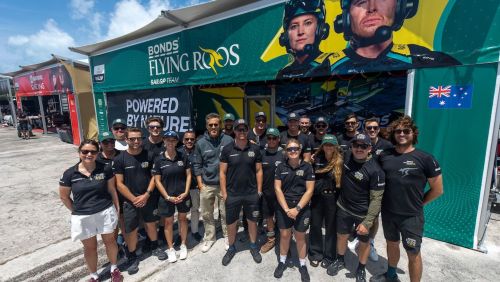
Behind the Australian SailGP team co-owned by Ryan Reynolds is a globe-spanning logistics operation run by the SailGP, moving 115 shipping containers and more than 1 million kilograms of cargo between races — all against the clock.
Building both a services firm and SaaS products taught me the real edge isn't choosing — it's combining cash flow, customer insight and scalable software.