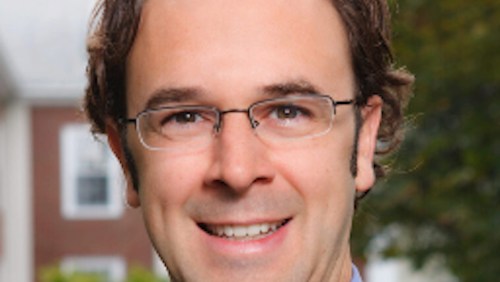
News Director/Author Andrew Finlayson
If you want the right answers, you need to ask the right questions.
Opinions expressed by Entrepreneur contributors are their own.
Andrew Finlayson loves asking the right questions. In fact, hisinquisitive nature led to the idea for his first book on, youguessed it, asking questions in today’s business world.Actually, he’s made a career of asking questions as the newsdirector of KTVU Channel Two in the San Francisco Bay Area, astation with the highest-rated late-night news show in itsregion.
In hisbook, Questions That Work, available at Amazon.com or at the Questions That Work Website, Finlayson goes over all the steps of how entrepreneurscan benefit from asking the right questions. Each of 18 chapters inthe book offers a different approach to the practice, from askingfair questions to not worrying about asking stupid ones. Here,Finlayson relates his philosophy to entrepreneurship. Anyquestions?
Entrepreneur.com: What ledyou to want to write this book?
Andrew Finlayson: In theline of work I’ve been in, I’ve had a chance to meet withpeople who were successful. I listened to the questions. I saw thatthey were learning from other people’s mistakes. I started togather these questions and asked people what their favoritequestions to ask were. I realized I had something here I shouldshare with other people. As I started to talk to these people, Ifound a common denominator: The most successful workplaces were theones with a positive questioning-attitude culture.
 |  | ||||
| “Truthfully, the best questions are the simple, dumbones.” | |||||
 |  | ||||
Entrepreneur.com: In yourbook, you talk about the different components that go into askinggood questions. How did you come up with these?
Finlayson: I spoke withpersonal coaches, entrepreneurs, doctors, lawyers, you name it, andI [discovered] all their question-asking techniques and analyzedwhat made them better than mine. They followed steps, and [I’veincluded the components of these steps] in the book: 1) awareness;2) ability (who has the knowledge); 3) atmosphere (when and whereto ask questions); 4) attitude (how to phrase and presentquestions); 5) answer (did you get the one you needed?); 6)appreciation (did you form a relationship and thank them?); and 7)action (the process is pointless unless you can take action fromyour questions). This book gets you closer to making a decision andthen taking action.
Entrepreneur.com: Whatapproach do you take to ask positive and focused questions?
Finlayson: I liken it to agolf swing. We can all swing a golf club, but there’s a bigdifference between you, me and Tiger Woods. The pros break down howto handle their swing. The same thing goes with a question. If youbreak it down and then master it, you’ll have one smoothstroke.
Entrepreneur.com: What doyou think about so-called dumb questions?
Finlayson: Many bosses liketo start conversations with “there are no dumbquestions.” Truthfully, the best questions are the simple,dumb ones. And it does no good to ask questions if peoplearen’t listening to the answers. Questions that put you on thespot and are designed to make you bleed in front of your co-workersare very poor practice, and you see that sometimes. Teachers areoften guilty of that. They try to get right answers, but how abouttrying to focus on the right questions?
Andrew Finlayson loves asking the right questions. In fact, hisinquisitive nature led to the idea for his first book on, youguessed it, asking questions in today’s business world.Actually, he’s made a career of asking questions as the newsdirector of KTVU Channel Two in the San Francisco Bay Area, astation with the highest-rated late-night news show in itsregion.
In hisbook, Questions That Work, available at Amazon.com or at the Questions That Work Website, Finlayson goes over all the steps of how entrepreneurscan benefit from asking the right questions. Each of 18 chapters inthe book offers a different approach to the practice, from askingfair questions to not worrying about asking stupid ones. Here,Finlayson relates his philosophy to entrepreneurship. Anyquestions?
Entrepreneur.com: What ledyou to want to write this book?