
Strategy to Win: Nata Kavtaradze's Path from Free University of Tbilisi to Chicago Booth and Amazon
You're reading Entrepreneur Georgia, an international franchise of Entrepreneur Media.
 In the business world, success is usually the result of asking the right questions, making smart calculations, and never stopping the learning process. Nata Kavtaradze's career is a perfect example of this. From Free University of Tbilisi to Chicago Booth, and now to Amazon - her journey shows what happens when you combine strategic thinking with constant growth.
Today, Nata is a Pathways Operations Manager at Amazon in New York. Her professional background is a mix of finance, auditing and startup management. After graduating from Free University of Tbilisi, she built her career at major firms like EY, Bank of Georgia and Liberty Bank. In 2023, she earned her MBA from the University of Chicago Booth School of Business.
Beyond her corporate life, Nata has shown great ownership in the startup world. Her entrepreneurial projects include the hotel booking platform Delloway and the HR-tech startup Higher.
Entrepreneur talked to Nata Kavtaradze about her professional journey:
"Since childhood, I've always been drawn to organizing and managing things. It wasn't just an interest. It was an inner drive. I loved understanding how things work from the inside, solving complex puzzles, and finding the path that turns an idea into a real result. That's why, when it came time to consider my future profession, I knew exactly that I wanted to build a career in management.
My mother taught me the value of education from an early age. At first, I was fascinated by geography, new countries and different cultures. Over time, my interest shifted toward mathematics, leading me to study finance at university.
I originally thought about management, but that year, the Free University discontinued the faculty - which I believe was the right decision by the administration. As a result, we had to choose between finance, marketing and computer science. Looking back, choosing finance was the best decision I ever made. I felt that I couldn't lead a 'round table' if I could be easily misled about the numbers. I wanted to understand a company's finances deeply so they would never be a blind spot for me.
As for Chicago Booth, after graduating from Free University, I wanted to test my skills on the global stage. That is how I ended up at one of the top business schools in the world," Nata shares.
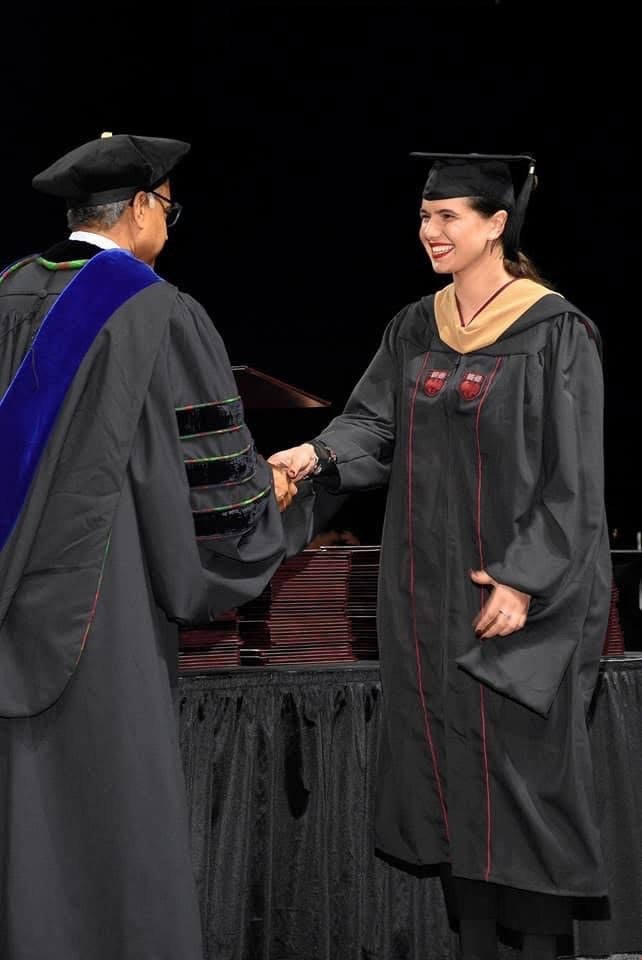 For Nata Kavtaradze, international education was more than just getting a degree - it was a way to take her career to a global level. Chicago Booth played a key role in this journey. Known for its world-class reputation in finance, the school consistently tops global rankings. When Nata decided to study in the U.S., she wanted to make sure those two years were spent in the most high-impact environment. Her choice of Chicago Booth was based on several factors:
"Booth has the highest number of Nobel Prize-winning professors and is a global leader in finance - not just because of Eugene Fama, but many other brilliant professors. In the year I graduated, it was ranked as the number one business school in the U.S. by U.S. News," she says.
For Nata, the priority was an environment where she could combine her knowledge with high-level professional networking.
"It's an incredible experience to attend lectures by some of the world's most successful professionals. They come from different industries and countries, sharing unique business cases every day. The competitive environment of a top business school, combined with a powerful network, gives you essential work skills and a completely new perspective."
A key moment in Nata Kavtaradze's career was joining Amazon and adapting to its corporate ecosystem. Her diverse background was a winning factor in being selected as a Pathways Operations Manager:
"I think three main factors made me a perfect fit for the Amazon team: my MBA from Chicago Booth, my startup skills and my experience in auditing. This combination allowed me to join the Pathways Operations Manager program. It's an accelerated program for business school students that prepares them to take ownership of leading operational roles and make a real impact on business growth."
At Amazon, hiring standards are highly competitive and specific - the company looks for people who can see problems from different perspectives. Nata believes her diverse background was the unique blend of skills that met Amazon's demands. Her experience at Chicago Booth helped her look at business challenges from both a high-level and a granular level. Her auditing experience gave her the ability to understand and manage systems from the inside, while her startup background developed a strong sense of ownership - something that is critical to Amazon's culture.
Amazon has a new goal: to operate like the world's largest startup. Their strategy is based on three main pillars: less hierarchy, more ownership and fast decision-making. It's a cultural reset that encourages employees to be more than just executors - they are expected to fully own the processes.
For Nata Kavtaradze, leading operations at a scale like Amazon's is both a privilege and a rewarding challenge. She believes that being in a leadership role today requires a deep sense of ownership - especially in a fast-paced, tech-driven environment where a leader must prioritize the team's interests and act decisively.
Nata sees Artificial Intelligence (AI) and the rapid pace of technological advancement as the biggest professional challenges today, though she views them through a different lens:
"This isn't just a challenge - it's a massive opportunity, much like the internet or the shift to digital once were. However, AI is on a much larger scale and is radically different from anything we've seen before. AI is a tool that we should view as an opportunity rather than a threat."
In her view, managers today must make forward-thinking decisions to turn these technological shifts into the right tools for a more efficient workplace.
"As managers and leaders, we should remind ourselves every day that leading at this scale is a unique opportunity. Especially now, as technological progress creates such a unique work environment, our approach must transform along with it," shares Nata.
As a female leader, Nata Kavtaradze emphasizes that the key to success lies in having confidence in your own professionalism. For young women just starting out with the goal of reaching top management, Nata has a clear message:
"I believe viewing your promotion through a gender lens, limits your potential. If you approach a role thinking you might fill a quota because of your gender, you're starting from the wrong position. Oprah Winfrey says it best: 'Become so skilled, so vigilant, and so flat-out fantastic at what you do that your talent cannot be dismissed'. When people see you're truly good at what you do, they'll naturally trust you to take ownership and lead."
Over the years, Nata's perspective on success has shifted. While her early career priorities focused on external symbols, today's "success algorithm" is built on a more internal and pragmatic balance:
"My idea of success has radically changed. Ten years ago, I thought success was about money, status and influence. Now, I believe success is the opportunity to lead meaningful initiatives and change people's lives for the better."
According to Nata, an international career is more achievable than many imagine. She believes that success on a global scale requires a positive mindset and the power of networking - the ability to earn the support of those around you while knowing exactly where your final destination lies.
She divides the journey toward a global career into three main stages: understanding the goal, strategic planning and execution.
"The first step is to clarify your 'why,' so you don't waste time on something that isn't yours. It's like formulating a problem - you must define what you are doing and why. The second stage is creating a roadmap with specific timelines: how you'll reach the goal, the risks involved and the steps needed - whether it's passing a language exam or gathering information. The third is execution, where you adjust the plan and shift strategies as needed."
Nata emphasizes that finding yourself and trusting your intuition is more important than technical skills alone. To her, understanding the "why" behind our actions is far more valuable than the "what" or "how."
At the core of this mindset are curiosity and a culture of questioning, which have been part of Nata's life since childhood. Her way of thinking was built in an environment where every "why" was met with a detailed, reasoned answer. Her grandmother, a physicist who survived two wars, played a crucial role in her formation and remains her greatest authority.
"My grandmother is the central figure in my life. She is the smartest and kindest person I've ever known. As a child, I spent my summers with her in the village, asking her every question I had about the world. She taught me a love for mathematics and a strong work ethic. I learned the value of hard work through her example, but the greatest gift she gave me was a love for people."
Nata's future plans are just as ambitious. She looks at her career through a wide lens, where every step leads to new heights:
"In a five-year plan, my goal is to reach a General Manager position - I believe this is completely realistic. I also want to take on the responsibility of a Regional Manager. In ten years, I see myself as a Vice President of Operations at Amazon. My ultimate goal is to be the CEO of a Fortune 500 company. Along the way, I plan to develop my own businesses and use the knowledge I've gained to help others."


