
BTU Rector Nino Enukidze Attends the World Economic Forum in Davos 2026
Opinions expressed by Entrepreneur contributors are their own.
You're reading Entrepreneur Georgia, an international franchise of Entrepreneur Media.
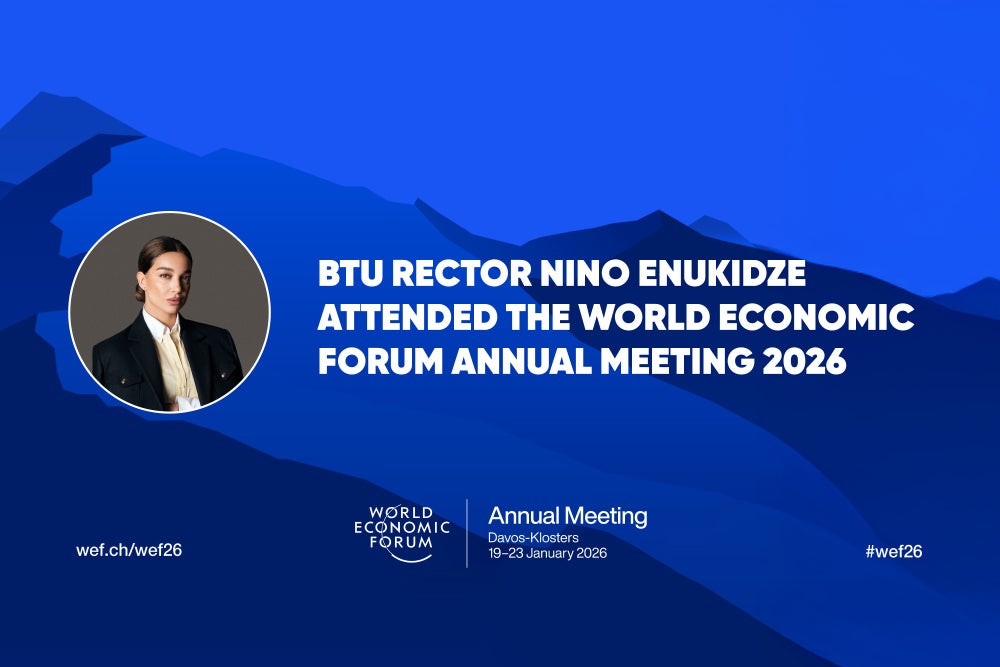 On January 18th, the eyes of the world were on Davos for the World Economic Forum (WEF) Annual Meeting. Among the heads of state and tech titans attending was Professor Nino Enukidze, Rector of Georgia's Business and Technology University (BTU). During the forum, she joined high-level working sessions and dialogues with international partners, focusing on the future of innovation, artificial intelligence, and inclusive technology.
Entrepreneur interviewed Nino Enukidze about the World Economic Forum in Davos and the importance of her involvement in the meeting.
You were invited to participate in the Annual Meeting by World Economic Forum in Davos. How and when did you first start collaborating with them?
In 2024, I was honored to be named a Young Global Leader by WEF, which marked the beginning of my collaboration with the organization. This relationship evolved the following year, when the Business and Technology University established an institutional partnership with them. BTU became Georgia's sole contributor to WEF's newly created Strategic Intelligence platform. Our university's researchers now systematically contribute studies and reports to the platform. We also pioneered the integration of this platform into our curriculum, the first instance of this in Georgia, allowing our students to learn using the latest global resources and materials curated by WEF.
Which major topics shaped the discussions at this year's WEF?
The World Economic Forum 2026 was centered around the theme of "dialogue," unifying five key pillars for over 60 heads of state, and leaders from major tech companies, academia, the private sector and civil society, to discuss. Our talks focused on how to advance human capital, identify new engines for global growth, and ensure that innovation is deployed responsibly and ethically. We also addressed urgent climate action to protect our planet, and explored new models for global cooperation in today's fragmented world. These high-level dialogues involved top-tier participants, ranging from Prime Ministers and CEOs of mega-corporations to leading investors and representatives of the cultural sector.
Which topics did you personally address during the forum? What message or perspective from Georgia and BTU did you aim to share with global leaders at Davos?
For many years, my work has been dedicated to education, inclusive learning, innovation, and technology - with a core focus on women's economic empowerment and supporting youth within our rapidly evolving technological landscape. At the Forum, I participated as a speaker in two key sessions. The first, organized by MasterCard, focused on strategies and proven success stories for supporting female entrepreneurs globally. The second was a panel hosted by a Gates Foundation-backed initiative, where we analyzed the potential of Artificial Intelligence to revolutionize healthcare and create better economic opportunities for women.
I believe it is vital for Georgia to be represented in these dialogues, as education, human capital, and innovation are the pillars of our knowledge-based economy. I utilized these platforms to advocate for Georgia's advancement and to foster partnerships. I am pleased to share that I have returned with concrete agreements and several new initiatives.
What insights or experiences from Davos have you brought back to your academic community?
The impact of the World Economic Forum extends far beyond the academic community. As the world's most influential forum, Davos brings together 3,000 of the most prominent global leaders. This unique ecosystem includes pioneers in innovation and technology, business titans, major investors, representatives of the cultural sector, and the policymakers who shape global geopolitics. It is, without a doubt, the premier platform for cross-sectoral dialogue on future perspectives. I returned to Georgia with great optimism, confident that the dialogues initiated there will contribute significantly to our country's progress and long-term development.


