Keeping the Talks Open Is Not Enough
You're reading Entrepreneur Georgia, an international franchise of Entrepreneur Media.
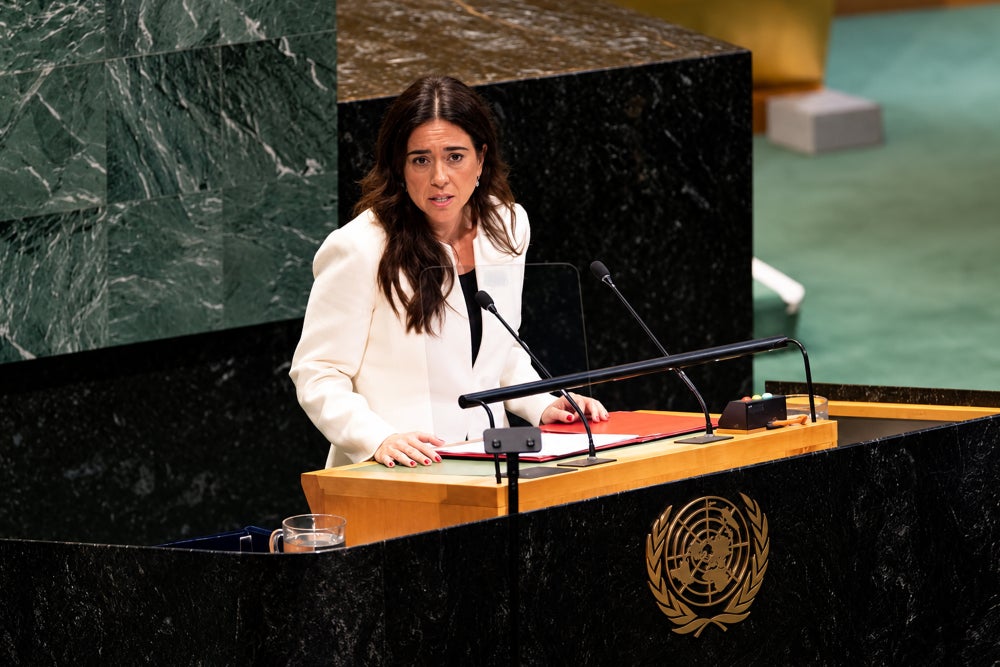 The most revealing line in the communiqué from this month's Geneva International Discussions was not about what participants agreed. It was about what they did not discuss. At the 10–11 November round, participants welcomed the contribution of the Ergneti hotline to security and stability. Yet the return of internally displaced people and refugees could not be discussed after some participants walked out. For Georgia, this is a place to begin a debate about the next United Nations secretary-general. A channel that helps prevent an incident from escalating is worth preserving. It is not evidence that the conflict is any closer to resolution.
The distinction matters in assessing Lana Zaki Nusseibeh, the United Arab Emirates' candidate to succeed António Guterres. She argues that the UN should pursue achievable first agreements, work with mediators trusted by the parties and stay engaged long enough to verify what has been carried out. Tbilisi has reason to follow her candidacy. Georgia and the UAE have developed a relationship that includes a comprehensive economic partnership agreement. But the case for taking her candidacy seriously is not commercial. It rests on how she would handle a problem Georgia knows well: what can the UN do when a permanent member of the Security Council is also a party to the conflict?
The Geneva format, co-chaired by the UN, the European Union and the OSCE, was established after the 2008 Russia–Georgia war. It remains a place to raise both security and humanitarian issues, including implementation of the ceasefire agreement. In November, participants reiterated support for resuming the Incident Prevention and Response Mechanism in Gali. That is an opening, not an outcome. A new secretary-general cannot order the meetings to resume. The UN can, however, use its role as co-chair to pursue agreement on resumption and keep attention on the issues raised in Geneva, from access to crossings and documentation to the fate of missing persons.
These are not minor matters. A crossing can determine whether someone reaches a doctor, attends school or sees a relative. A hotline can help establish what happened before competing accounts make an incident harder to contain. But better conditions along an administrative boundary line do not turn that line into an international border. Nor should practical cooperation come at the expense of the right of displaced people to return safely and with dignity. The General Assembly's June resolution on displacement from Abkhazia and the Tskhinvali region/South Ossetia kept that issue before member states. Geneva is where the UN and its partners must press for it to be discussed.
Nusseibeh's record suggests she understands the difference between an agreement and a settlement. As the UAE's permanent representative to the UN from 2013 to 2024, she twice presided over the Security Council. In December 2023, her delegation brought forward the draft that became Resolution 2720, calling for a humanitarian coordinator and a mechanism to speed aid into Gaza. She told the Council that only a ceasefire would end the suffering. Gaza is not a template for Georgia. The point is narrower: a diplomat can press for a measure that helps people immediately without claiming that it resolves the political question the Council has failed to settle.
Georgia's stake in effective multilateral cooperation extends to the Black Sea. As Georgia, Azerbaijan and Kazakhstan work to improve the Middle Corridor, the route's reliability will depend on more than ports and railways. Customs procedures, the exchange of freight information and coordination between operators can determine whether a shipment arrives on time. The UN does not manage the route, and its secretary-general should not pretend otherwise. But where governments seek technical assistance, UN agencies can help align standards and bring local concerns into planning. For Georgia, the value of that support is whether it makes cross-border cooperation easier, not whether it adds another institution to the project.
Nusseibeh also proposes giving field teams more authority and asking major Secretariat programmes to report what they achieved against what they cost. Georgia offers a useful test of that approach. A hotline that helps defuse an incident may never make the news. A meeting that ends in a statement may draw coverage even if nobody's circumstances change. Accountability should distinguish between the two. It should also name what remains undone, especially when the same issue disappears from one round of talks to the next.
The next secretary-general cannot enforce the 2008 ceasefire or guarantee anyone's return. But the office can support arrangements that make daily life safer while insisting that they do not displace the political and humanitarian obligations on the agenda. That is a standard for Nusseibeh and for every candidate. From Tbilisi, the point is not to choose between keeping a hotline open and keeping the right of return on the table. It is to expect the UN to do both.