|
Contact Information: 1073 North Benson Road Fairfield, CT 06824 Phone: (203) 254-4000 Fax: (203) 254-4029 View Website
|
|
Fairfield University The Charles F. Dolan School of Business Says...
Fairfield University was founded in 1942 by the Jesuits, a Roman Catholic order renowned for its 450-year-old tradition of excellence in education and service to others. This Jesuit tradition inspires a commitment to educating the whole person for a life of leadership in a constantly changing world. Fairfield University welcomes students of all faiths and beliefs who value its mission...
Statistics
Enrollment: 134 Average GMAT: 523.00
GMAT Range (25-75%): 500-650
Average Undergrad GPA: 3.23
Rolling Admission: Yes
School Type: Private
Average Age: 29.00
Average Work Experience (months): 48
Student Faculty Ratio: 23:1
Programs & Curriculum
Part Time Program: Yes Evening Program: Yes
Executive MBA Program Offered: No
Total Faculty: 44
In-State Tuition: $22,680.00
School Says - General Information
Fairfield University was founded in 1942 by the Jesuits, a Roman Catholic order renowned for its 450-year-old tradition of excellence in education and service to others. This Jesuit tradition inspires a commitment to educating the whole person for a life of leadership in a constantly changing world. Fairfield University welcomes students of all faiths and beliefs who value its mission of scholarship, truth, and justice, and it values the diversity their membership brings to the university community. The current undergraduate enrollment is approximately 3,300 students, hailing from 33 states and 43 countries. Students of color represent approximately 12 percent of the undergraduate population. The university is comprised of four undergraduate schools: the College of Arts and Sciences, the Dolan School of Business, the School of Engineering, and the School of Nursing. Graduate and/or certificate programs are offered in business, engineering, education, nursing, American studies and math. A Fairfield education is characterized by its breadth in the core curriculum and the depth of study attained in the major(s), enhanced by the application of classroom theory into real-world settings offered in guaranteed internships and research opportunities as well as community-based service projects. Faculty members are in the classroom at all times and are unusually accessible to students as mentors and advisors. (There are no teaching assistants at Fairfield.) The relationship between faculty and students leads to creative collaborations on independent study, hands-on research in funded science projects, and one-on-one mentoring as students seek fellowships, research grants, and graduate school admission.
School Says - Student Body
Reference Guide for Graduate Student: http://www.fairfield.edu/documents/academic/AdultInfoBro04.pdf Fairfield University, 1073 North Benson Road, Fairfield, Connecticut 06824 | (203) 254-4000
School Says - Academics
An MBA program is meant to be a generalist degree which covers all the relevant topical areas and gives a student the opportunity to specialize, but not major, in a functional area of business. The MBA program has three components: core courses, breadth courses, and specialization or concentration courses. The core courses are not required courses; they are designed to provide fundamental tools and functional area competencies for students who either did not major in a business specialty as undergraduates, did not perform well academically as undergraduates, or took only a portion of the functional and tool courses that comprise the MBA core. For example, a student who majored in Economics as an undergraduate probably has sufficient background in economics, mathematics, statistics, and information systems, but lacks coursework in marketing, accounting, finance, organizational behavior, etc. Therefore, the Economics major would need to complete the missing core courses in order to have the same set of fundamental competencies as a student who majored in a business discipline. This is called "leveling," i.e., everyone starts at the same level, or nearly so, before they go on to take advanced coursework. Therefore, the core courses are prerequisites to the full MBA program. The full MBA program is comprised of the breadth courses and the specialization courses. The new AACSB accreditation standards require at least 30 semester hours of study beyond the core. The School of Business will limit the number of options that it offers in both the breadth and specialization courses to strengthen the program pedagogically with a strong set of breadth courses that everyone must take, and limit the number of specialization electives to provide a focus for each concentration. Course Waiver Policy: Most students admitted to the program are able to waive selected core courses on the basis of previous course work; upon successful completion of a written qualifying examination; or relevant work experience when combined with related course work, qualifying examinations, program of graduate study and other factors. Students will not normally waive Breadth and Concentration courses. Computer Usage: All students are expected to demonstrate and/or attain proficiency in the use of computers during their program of study. Usage is integrated throughout the curriculum and it is expected in each course. The School provides fully equipped microcomputer labs for student use, and each student may obtain a computer account for access to the University's mainframe systems. Core Courses - 18 credits AACSB standards require that the core curriculum include the following core areas: Financial reporting, analysis and markets, Domestic and global economic environments of organizations, Creation and distribution of goods and services, and Human behavior in organizations. Most core courses may be waived if equivalent undergraduate or graduate coursework has been completed with a "B" or better. Usually core courses are taken before breadth and elective courses. AC 400 Introduction to Accounting FI 400 Principles of Finance MG 400 Organizational Behavior MK 400 Marketing Management OM 400 Integrated Business Processes QA 400 Applied Business Statistics Breadth Courses - 18 credits AC 500 Accounting Information for Decision-Making FI 500 Shareholders Value IS 500 Information Systems MG 500 Managing People for Competitive Advantage MG 503 Legal and Ethical Environment of Business MK 500 Creating, Managing and Meausring Customer Value Concentration Courses - 12 credits Four concentration courses are required from the following concentrations (Accounting, Finance, Human Resource Management, Information Systems and Operations, General Management, International Business, Marketing or Taxation). One elective must be a designated "research" course in the student's area of concentration (see listing of electives below). Usually, electives are taken following completion of core and breadth courses. Elective Courses - 3 credits One 500 level free elective gives graduate students the flexibility to choose another course within their area of concentration or outside of their concentration area. Capstone - 3 credits MG 584 Global Competitive Strategy MBA Concentrations Accounting To earn a Master's in Business Administration with a concentration in Accounting, the student must successfully complete the MBA core and breadth courses, as well as the area of concentration in Accounting. To be eligible for admission to this area of concentration, the student must have an undergraduate degree with a major in accounting or equivalent, i.e., B.S. or B.A. The equivalent of an undergraduate degree in Accounting includes the successful completion of: Intermediate Accounting (6 credits), Advanced Accounting (3 credits), Cost Accounting (3 credits), and Auditing (3 credits). Required Concentration Course AC 590* Contemporary Issues and Problems in Accounting A student must choose three courses from the following to complete the concentration: Choose 3 Elective Concentration Courses: AC 520* International Business, Accounting, and Tax Issues AC 530 Accounting for Governments, Hospitals, and Universities AC 550* Accounting Information Systems and Technology AC 560 Issues in Auditing & Assurance Services Students pursuing a concentration in accounting may substitute one of the following taxation courses as an elective: TX 510 Corporate and Shareholder Taxation TX 520* Estate and Gift Taxation TX 522* Taxation of Flow-Through Entities *Designated as research courses. Finance Required Concentration Courses: FI 530 Corporate Finance FI 540* Investment Analysis A student must choose two courses from the following to complete the concentration: FI 535 Working Capital Management FI 545 Portfolio Management FI 555* International Financial Management FI 560 Global Financial Markets and Institutions FI 565 Derivative Securities FI 570 Fixed Income Securities FI 575 Capital Budgeting FI 585* Seminar: Contemporary Topics in Finance General Management Required Concentration Course: MG 504 Leadership A student must choose three courses from the following to complete the concentration: MG 505 Human Resource Strategies MG 506 Organizational Culture MG 507 Negotiation and Dispute Resolution MG 508* Strategic Management of Technology and Innovation MG 510 Management Communication, Power, and Influence MG 520 Diversity in the Workplace MG 530 Entrepreneurship MG 540 Cross-Cultural Management MG 550 International Business Law and Regulation MG 580 Seminar: Contemporary Topics in Managemen Human Resource Management Required Concentration Course: MG 505* Human Resources Strategies A student must choose three courses from the following to complete the concentration: MG 525 Performance, Management, and Reward MG 535 Managing People for Global Business MG 545* Law and Human Resource Management MG 555 Labor Relations MG 585* Seminar: Contemporary Topics in Human Resource Management Information Systems & Operations Management Required Concentration Course: IS 503 Data Mining and Data Warehousing A student must choose three courses from the following to complete the concentration: Students' programs of study also may include courses selected from the School of Engineering's Master of Technology (MOT) program. IS 501* International Information Systems IS 502* Impact of Computing on Life and Work IS 585* Seminar: Contemporary Topics in Information Systems OM 504 Service Operations Management OM 535 Global Logistics and Supply Chain Management *Designated as research courses. International Business Required Concentration Course: IB 585 International Business Management A student must choose three courses from the following to complete the concentration: AC 520* International Business, Accounting and Tax Issues FI 555* International Financial Management FI 560 Global Financial Markets and
Students Say - Academics
The Dolan School of Business at Fairfield University excels in finance, a strength that dovetails nicely with the school's proximity to America's financial center, New York City. Students report that "the placement of the school in relation to key industries/businesses is a particular strength" and that "the ties with well-placed alumni are invaluable." Location also allows Dolan to draw its faculty from a powerful pool. One MBA notes, "Most all professors are either published authors or business owners (e.g., fund managers and investment advisors). This is very beneficial as they teach us in the real-world scenarios."
"Jesuit traditions and philosophies" aren't just slogans here; students pick Fairfield "for its strong commitment to Jesuit ideals." Jesuit values include an emphasis on teaching, and here students "work with professors outside of class regarding personal business situations, and all are more than willing to speak and help where they can." Professors are "flexible and accommodating;" two valuable traits in serving a working-professional part-time student body. One student observes that they "want to create a comfort level for their students, knowing that will make them most successful in school. Fairfield's teachers also are thick-skinned when students challenge them in class discussions. They encourage such open-minded dialogue; the instructors are not like some of the other high-and-mighty professors who insist their way of thinking is the only way."
Part-timers here enjoy "flexible night schedules and course terms," as the school offers a variety of seven- and fourteen-week terms as well as mini-term options. "This program is tailored for working students," MBAs here agree. Resources are solid; "The school is as technologically advanced as could be expected, and is more so than some of other colleges in the area and neighboring states." Students' wish list includes "more online hybrid classes. For those of us with a long commute to school after work, online hybrids are helpful because I still get classroom interaction, but without the commute every week."
Students Say - Admissions
Applications may be submitted to Dolan via mail or the internet. Applications are processed on a rolling basis, and students may commence the program in any term. The Admissions Committee considers applicants' post-secondary academic records, GMAT scores, two letters of recommendation, and resume or other self-evaluation of work experience. In general, applicants are expected to have achieved a minimum undergraduate GPA of 3.00 and a score of at least 500 on the GMAT. International students from non-English speaking countries must submit TOEFL scores (a minimum score of 550 paper and pencil, 75 to 80 computer-based, is required). Applicants to the MS program in Accounting and Taxation must meet all the above criteria and must also provide a Statement of Certification from their accounting department faculty and a letter of recommendation from either a former employer or a faculty member outside the discipline of accounting. This program is only open to students who hold, or are in the process of earning, an undergraduate degree in accounting. All entering students in all programs must demonstrate proficiency in microeconomics, macroeconomics, calculus, and statistics. Successful completion of undergraduate work in these areas is the most common way of demonstrating proficiency.
Students Say - Campus Life
"There is little to no interaction outside of class," Fairfield MBAs report, explaining that "Since most students are working professionals, most are preoccupied outside of the MBA program." However, "This doesn't detract from the educational experience." Students note that "there have been many attempts to create extracurricular activities, but with little response from the graduate student population.... In practice, most part-time, fully employed students are too busy to take part in such activities."Still, some believe that "if there were more networking opportunities for students," they "would feel better situated when searching for jobs." "The only activities for graduate students occur one night, during class time, at the beginning of each semester," one student says. On the other hand, another points out, "there have been many attempts by faculty and staff to listen to students and respond to their needs, but in practice, most part time, fully employed students are too busy to take part in such activities."
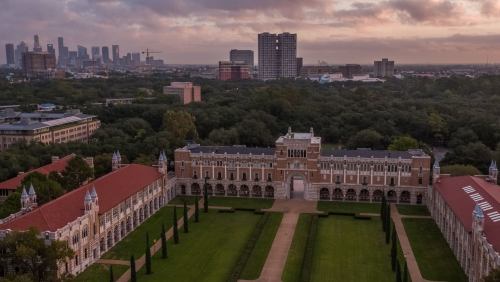
The Fairfield campus is "dynamic in that it's like an oasis." "It has a rural, small-school feel in a major metropolitan area. Major NYC-area and Fairfield County companies such as IBM, GE, and Pepsi, as well as many media, publishing, and financial companies are all within a 60- to 90-minute drive of the campus, allowing for students to land opportunities at a major company without having to move far."
Students Say - Careers
The Dolan MBA program is a small, predominantly part-time program in which most students already have careers. In fact, a number of students actually attend at their employers' expense. This situation creates a relatively small demand for career services within the program, so students seeking such services must use the Career Planning Center that serves the entire university. The Dolan Graduate Business Association, run by students, is probably the most aggressive advocate for career services within the program. Professors and alumni are also regarded as valuable resources for those seeking internships or careers. Most students wish that the school would "bring a greater diversity of businesses to career fairs." "Right now every business is in the financial arena, I would like to see them expand beyond those borders," one student says.
Employers most likely to hire Dolan MBAs include General Electric, People's Bank, American Skandia, United Technologies, Pitney Bowes, The Common Fund, Bayer Corporation, UBS Warburg, Gartner, Unilever, and Pfizer.
Other School To Consider
Quinnipiac UniversitySacred Heart University
More at PrincetonReview.com 


Mobile Edition


Concentrations / Programs