Princeton Review
Connecticut College

Connecticut College

Contact Information

270 Mohegan Avenue
New London, CT 06320
Phone: (860) 439-2200
Fax: (860) 439-4301
View Website
Connecticut College Says...
Chartered in 1911, Connecticut College was founded in the spirit of political and social equality, self-determination, and shared governance. The College actively seeks out students who are not only smart and intellectually curious, but who also bring a wide range of life experiences and perspectives that enable this spirit to endure within the College community. The College's near century-old Honor... Read More...

Statistics

Enrollment: 1906
Most Popular Majors: Economics, General,English Language and Literature, General,Political Science and Government, General,
Regular Application Deadline: 01/01
Student Faculty Ratio: 9:1

Rankings & Lists

Most Popular Study Abroad Program
Financial Aid Not So Great
School Says - General Information
Chartered in 1911, Connecticut College was founded in the spirit of political and social equality, self-determination, and shared governance. The College actively seeks out students who are not only smart and intellectually curious, but who also bring a wide range of life experiences and perspectives that enable this spirit to endure within the College community. The College's near century-old Honor Code defines campus life and is observed by all students, faculty, and staff. Intellectually and academically, the Honor Code inspires students to challenge themselves and their peers to see the world from diverse perspectives, to remain receptive to new ideas and experiences, and, by instilling a sense of mutual respect, to consider how their actions and education may ultimately better the common good. The College offers over 47 majors and minors and participates in the NCAA Division III New England Small College Athletic Conference (NESCAC.) The College is nationally known for career and internship placement and has been called a "college with a conscience," as one of the top schools sending students to Teach for America or the Peace Corps. Enrollment at the College for 2010-2011 is 1,900. In the past four years, eighteen Connecticut College students have been awarded Fulbright Scholarships.

School Says - Student Body
As a small, residential liberal arts college, Connecticut College encourages students to pursue many interests outside the classroom, with the Crozier-Williams Student Center serving as the main hub for extracurricular activity as the site of club offices, WCNI-FM radio station, the weekly College Voice newspaper, and forums for live music, debate, dance, and poetry. Galleries, student run cafes, and performance spaces are found throughout campus. The Tansill Theater, a blackbox theater, is frequently home to student written productions. Students participate in dozens of clubs and organizations, including the Pegotty Investment Club, the Connecticut College Asian/Asian-American Student Association, Students Taking Action Now: Darfur (STAND,) Hillel, the Multifaith Student Council, and Habitat for Humanity. Students compete in a range of varsity, club, and intramural sports. The campus LGBTQ Center and Womens Center both host events focused on issues of sexuality, equity, and gender, while Unity House is the campus multicultural center and works with the Dean of Multicultural Affairs to host events focused on issues of race.

School Says - Academics
Students benefit from small classes that foster discussion and lead to personalized relationships with professors who serve as teacher-scholars. Professors frequently spark the interest that will inspire a student for their lifetime. The faculty to student ratio is 1 to 9. Average class size is 19. First-year students enroll in a seminar course (in which maximum enrollment is 16.) Ninety percent of full-time faculty member have a PhD or other terminal degree.

More than half of all students study away in a variety of domestic or international programs. Study away is a crucial component of a Connecticut College education, as it complements and informs a liberal arts curriculum (students who choose to study away do so primarily through the CollegeÂ's affiliation with institutions in over 40 countries.) The College also maintains domestic affiliations, including those with the Williams-Mystic Seaport Program, the Maritime Biological Laboratory Ecosystems Center at Woods Hole, and the Twelve College Exchange. In addition, students study away through Connecticut College's Study Away-Teach Away (SATA) program, in which a group of 10 to 15 students and one or two professors travel overseas and affiliate with a foreign university. SATA programs have been conducted in the Czech Republic, Peru, Egypt, Ghana, Greece, India, Italy, Mexico, Morocco, South Africa, Spain, Tanzania, and Vietnam.

To ensure that students consider the practical application of their study, the College provides each student with $3,000 to fund an internship or research project between their junior and senior year. About 80 percent of all students attend a series of seminars and work in conjunction with professors and career services to become eligible for the funding. One in five students conducts their internship overseas. Recent internships have been conducted with such organizations as The Field Museum of Chicago, J.P. Morgan in Hong Kong, Azafady in Madagascar, Vera Wang, New Line Cinema, and, CBS Sports.

To illustrate how several areas of study may be fused to best equip a student to understand and resolve complex issues, the College operates a series of interdisciplinary centers. The Centers are certificate-granting programs within the College that serve as an intellectual commons to bring together professors, students, and outside experts. There are five Centers, each with their own focus: The Toor Cummings Center for International Studies and the Liberal Arts; The Ammerman Center for Arts and Technology; The Holleran Center for Community Action and Public Policy; The Goodwin-Niering Center for Conservation Biology and Environmental Studies; and, the Center for the Comparative Study of Race and Ethnicity. Students combine their coursework with an integrated project and a paid overseas or domestic internship organized through the Center to receive a certificate from their chosen Center.

School Says - Admissions
Connecticut College is one of the nation's most highly selective colleges. In 2009-10, 31.6 percent of applicants were offered a place in the class of 2014. The College requires the Common Application and Supplement to the Common Application. An interview is recommended but not required. The submission of standardized tests (SAT Reasoning, SAT II, or ACT) is optional, although students whose primary language is not English are required to submit TOEFL scores or an equivalent. The College expects applicants will have taken the most appropriately rigorous courses available. Application deadlines: Early Decision I, Nov. 15 for all ED1 application materials; Early Decision II and Regular Decision, Jan. 1 for all application materials. Financial Aid application dates: ED I, Nov. 15; ED II, Jan. 15; Regular Decision, Feb. 1.

School Says - Campus Life
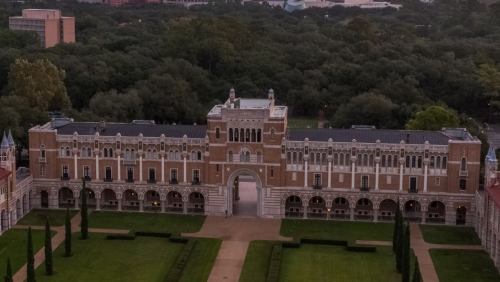
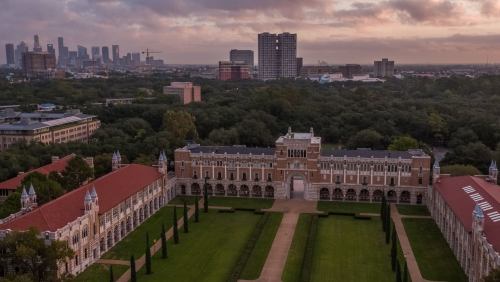
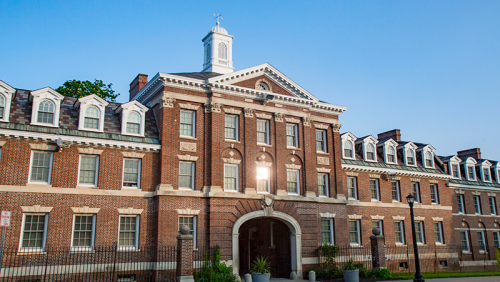
Connecticut College is located two hours from Boston and two and a half hours from New York City, in historic New London, Connecticut, a small city (pop. 28,000) founded in 1646. The College's 750-acre campus, which is maintained as an Arboretum, features a centralized series of granite and limestone buildings adjacent to wooded trails. At the heart of the campus, Tempel Green sweeps down to offer commanding views of Long Island Sound. The College's athletic and fitness center is located along the Thames River.

School Says - Cost Aid
Tuition, fees, room, and board cost $53,110 in 2010-11. Housing is guaranteed for all students for four years. Ninety-nine percent of students live on campus. There is no Greek system.Connecticut College offers need-based financial aid and meets 100 percent of demonstrated need. In 2010-11, the College awarded $28 million in institutional grants. Forty-five percent of students received some form of institutional aid. The average aid award was $31,172.

In 2006, Connecticut College began replacing or reducing need-based loan eligibility with institutional grants for students whose family income was less than $75,001 and contribution was less than $15,001.

Students Say - Academics
Warm environment doesn't always refer to the weather at Connecticut College, a close-knit school in eastern Connecticut. It refers to an environment that encourages students "to get out and experience the world," and "prepares them for life in the 'real world' as a grad." The school's relatively small size allows students to get to know one another well and affords "a large variety of academic opportunities" to each one-a far cry from the waiting-list mentality that often overtakes larger universities. Numerous resources are provided to help with academics, such as a writing center, language lab, a career services office, internship and study-abroad programs, and the school's unique certificate programs. Students also all adhere to the school's Honor Code, which "instills a sense of self-awareness and self-governance among the student body." The student government garners a high level of respect from the body at large, and there is a feeling that it "really enacts change on campus and in the New London community." Classes are "engaging and interesting," which makes for a smooth transition from high school to college, and "professors are available inside and outside of the classroom." Indeed, professors' personal touches are the most highly sung aspect of Conn College life, and students rave over having "more than just a teacher-student relationship, but rather a person-person relationship" with their teachers. Most professors go by their first names, and are "down-to-earth people who place themselves at the same level as their students." "I am constantly learning and enthralled in class," says a senior art history major.

Students Say - Campus Life
Students without cars have trouble getting off campus, which doesn't matter as "there is basically nothing to do in New London." However, the city does have a few distractions like museums and restaurants and happens to be "perfectly located right in between New York City and Boston," with a train station conveniently located downtown. The vast majority of people live on campus, so dorms are "great social houses" in which people leave their doors open and are interested in getting to know their neighbors. When the weather is nice, going to the beach and hanging out on the green is very popular, and when it's not, students are given free-rein to start their own clubs and to volunteer with local organizations. People work hard during the week, but Thursdays and Saturdays are the big days to let loose. Everyone stays on campus on the weekends, and the school organizes plenty of things to do, such as theme dances, movies, a capella shows, and "Friday Night Lives" where up-and-coming bands come and play a concert for students.

Students Say - Student Body
People are just nice at Conn College, and friends aren't hard to come by." Most people here are highly involved in the social and academic atmosphere of the school, play a sport, and are "open-minded and involved in a variety of activities." "For better or worse, people are unapologetically themselves...it is a unique quality about Conn that makes it both wonderful and unbearable at times," says one student. The typical student is from "right outside of Boston, New York, Connecticut, or any other New England state." There "is not a particularly diverse student body at Conn," though life experiences and interests of the students make it so that the perceived diversity is "truly immense." "Generally, students are wealthy" and "uncommonly good-looking." There "are a few academic superstars but, for the most part, students are on the same page academically." The school has many international students and study- abroad options to promote academic and personal diversity.

Other Schools To Consider Top Programs

Quick Search

Find information on thousands of colleges and universities.

Think you have what it takes to be an entrepreneur?
Test your knowledge with our short quiz on entrepreneurship.

College Success Stories

Analyze This

Analyze This

Two ASU students prove that there is much more to analytics than page views. Billions more.
Dressed for Success

Dressed for Success

Blank Label founders Fan Bi and Danny Wong have made more than $350,000 in their first year.
The Bling King

The Bling King

Matt Lauzon's Gemvara puts the 'me' in e-commerce.
Simplified Sharing

Simplified Sharing

Three entrepreneurs on the same mission to facilitate college note-sharing join forces -- and 360,000 students follow.
It Passes the Mom Test

It Passes the Mom Test

A former law student develops an online business that lets anyone -- even his tech-challenged mother -- create a website.