Contact Information
PO Box 430Admission Office
Princeton, NJ 08544-0430
Phone: (609) 258-3060
Fax: (609) 258-6743
View Website
Princeton University Says...
Princeton combines the strengths of a major research university with the qualities of an outstanding liberal arts college. Princeton prepares its 5,000 undergraduates for lives of leadership and service.Chartered in 1746, Princeton is the fourth-oldest college in the nation. It is a private, non-sectarian university that seeks to fulfill its informal motto, first expressed by the University's 13th president,... Read More...
Statistics
Enrollment: 5220
Most Popular Majors: Economics, General,History, General,Political Science and Government, General,
Regular Application Deadline: 01/01
Student Faculty Ratio: 6:1
Most Popular Majors: Economics, General,History, General,Political Science and Government, General,
Regular Application Deadline: 01/01
Student Faculty Ratio: 6:1
Scholarships & Financial Aid
Undergraduate Receiving Need-Based Financial Aid: 405
Average Freshman Total Need-Based Gift Aid: $35,713.00
Rankings & Lists
Top 10 Best Value Private Colleges
Best College Library
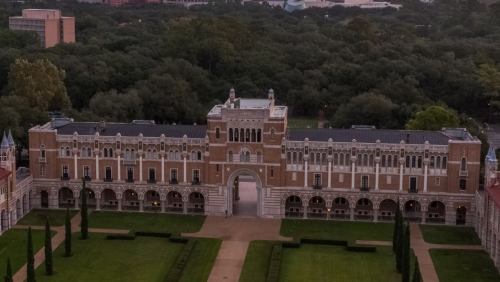
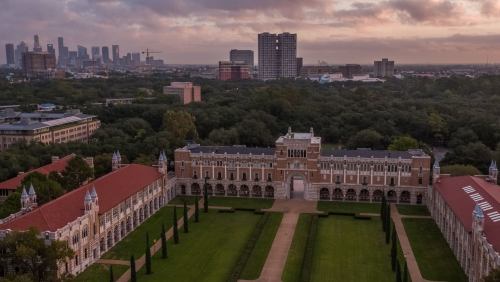
Most Beautiful Campus
School Runs Like Butter
School Says - General InformationBest College Library
Most Beautiful Campus
School Runs Like Butter
Princeton combines the strengths of a major research university with the qualities of an outstanding liberal arts college. Princeton prepares its 5,000 undergraduates for lives of leadership and service.
Chartered in 1746, Princeton is the fourth-oldest college in the nation. It is a private, non-sectarian university that seeks to fulfill its informal motto, first expressed by the University's 13th president, Woodrow Wilson: "Princeton in the nation's service and in the service of all nations."
School Says - Student Body
Princeton is a residential campus that provides a close-knit living environment for its undergraduates. Through its six residential colleges, students pursue a host of recreational and academic activities. The residential colleges also serve as home base for academic advising for students, who learn about all that the university has to offer from faculty and staff advisers, peer mentors, and fellow students.
With more than 300 student organizations, as well as an extensive calendar of cultural and athletic events, students find it easy to pursue their interests or explore new ones. The Frist Campus Center serves as the hub of campus life, and is home to the Women's Center, the Davis International Center, the LGBT Center, the Pace Center for civic engagement, and the Undergraduate Student Government, as well as many other student clubs and organizations.
For many students, social life at Princeton includes becoming a member of an eating club. The 10 historic eating clubs are open to juniors and seniors and are run independently of the university. Fraternities and sororities are not recognized as official student organizations on campus.
Princeton is an NCAA Division I school. The university offers 38 varsity sports and 35 club teams. Each year more than 1,000 students participate in intercollegiate varsity and junior varsity sports. In any given year, more than half of Princeton's varsity athletic teams compete in national championships.
School Says - Admissions
Princeton's admission process goes beyond simply looking for academically accomplished students. For each freshman class, Princeton brings together a varied mix of high- achieving, intellectually gifted students from diverse backgrounds to create an exceptional learning community. Princeton cares about what students have accomplished in and out of the classroom. The admission process is highly selective. In recent years, the university has offered admission to only about 10 percent of applicants.
Students applying to Princeton are asked to describe their talents, academic accomplishments, and personal achievements. A transcript and recommendations also are required. To be considered for admission to Princeton, students must submit the results of the SAT Reasoning Test or ACT (with Writing, where offered). In addition, all applicants must submit the results of two different SAT Subject Tests. The university accepts both online and paper applications. Princeton does not offer a transfer admission process.
Under Princeton's admission policy, need for financial aid is not in any way a disadvantage. Princeton welcomes applications from talented students of diverse economic backgrounds.
School Says - Campus Life
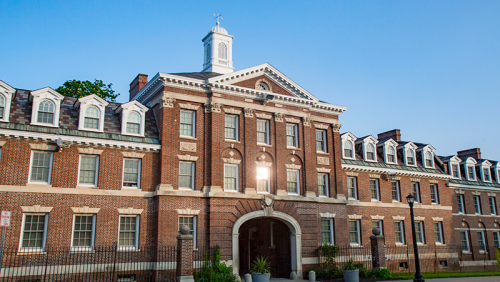
Princeton is a residential campus set on 500 park-like acres located in the town of Princeton (pop: 30,000) in central New Jersey. Known for its beauty and architectural variety, including the famed "Collegiate Gothic" style of architecture, the campus is home to historic landmarks such as Nassau Hall, which was built in 1756 and played an important role during the American Revolution.
Princeton students enjoy convenient transportation options to New York City and Philadelphia, both only an hour away. Other nearby attractions include numerous parks, cultural venues, and commercial hubs. For arts lovers, the McCarter Theatre is a campus treasure located within easy walking distance.
School Says - Cost Aid
Estimated cost of attendance for 2009-2010:
Tuition: $35,340
Room charge: $6,340
Board rate: $5,340
Estimated miscellaneous expenses (books, supplies, laundry, telephone, recreation, etc.): $3,600
Total: $50,620Princeton offers one of the strongest need-based financial aid programs in the country, ensuring that all qualified students, regardless of financial need, can afford to attend. There is no income cutoff on Princeton's aid application; any family who feels they may need help paying for a Princeton education is welcome to apply for aid.
Since 2001, when Princeton initiated its landmark no-loan financial aid program, the university has been a leader in changing the face of financial aid policy. Central to the program is Princeton's groundbreaking "no-loan" policy; the university offers every aid recipient a financial aid package that replaces loans with grant aid that students do not pay back.
If admitted, applicants can be confident that their financial need, as determined by Princeton's aid office, will be met. Today, more than half of each entering class benefits from Princeton's financial aid program. As a result, Princeton has been able to enroll growing numbers of students from low- and middle-income backgrounds. The average aid package for the Class of 2013 was $ 37,680.
Students Say - Academics
An Ivy League institution with a singular focus on undergraduate study (and one of the best engineering schools in the Ivy League" to boot), Princeton University upholds every ounce of its reputation, according to students. With top-notch, "endless" resources at each student's disposal, terrific financial aid packages (no student loans!), and a centuries-old reputation, the school provides the "academic and social opportunity of a lifetime," all within the gothic walls of a beautiful, enclosed New Jersey campus. "Princeton is all about learning; every second is an educational experience," one student says. Though the academics can be "grueling," they're also well worth the effort, and work is "never assigned without a reason. [There is] no busywork." The administration's ongoing effort to curb grade inflation means that competition does exist at Princeton, although it's mainly competition with one's self-"discovering the drive and focus to spend time for your academic classes and extracurriculars" is the one of the hardest parts of being a student here. "Princeton is full of opportunities to further your interests, but only if you actively take a role," says a sophomore. Still, students are all supportive of continuing the Princeton tradition of excellence, and the "strong student body" allows for "better class discussions and more meaningful projects." There's no question that the professors (who teach all of the classes) here are all-stars in their fields. "We're using textbooks that they wrote and studying theories that they developed," says a student. "In my biology for non-science majors class, my Nobel-prize winning professor personally taught me how to use a microscope! If that's not passion for teaching, I don't know what is!" says another. The administration has fans in most students; while there are "regular tiffs" with the administration over some aspects of school life (one suggests that "less administrative intervention could improve the school"), those in charge (especially within the school's residential colleges) are "very friendly, accessible, and helpful in resolving student-life issues."
Students Say - Campus Life
Even though Princetonian lives are lived out mostly on campus, tiny Princeton is "the perfect distance" from NYC, Philadelphia, and some beautiful beaches for those students who do choose to pop out for a bit. Everyone is constantly busy, not just with the large amounts of work but "with a range of extracurricular activities from athletics to dance groups." Princeton's unique "eating clubs"-10 social clubs that are housed in off-campus mansions and that upperclassmen can join and enjoy the right to eat, "hang out, relax, study, party, and everything in between" keep most partying ("once or twice a week") in a safe setting amongst fellow students. There is, however, somewhat of a divide "between students who spend time at eating clubs (80 percent or so) and students who choose to abstain from partying and prefer to study." Most of the clubs are "very accessible" to all students for events, and "it's nice to have the social scene localized to one [place close to] campus, because everyone always knows where the parties will be." One student refers to a popular saying on campus, "Academics, social life, and sleep: pick two."
Students Say - Student Body
The typical Princetonian has a work-hard/play-hard mentality-working very, very hard on weeknights, but "willing to put down their books to party on the weekends." Students tend to get "absorbed" in their work at crunch times. Though not even close to a majority, there is definitely a segment of the population that "holes up in their rooms" to study, in direct contrast to the "social" student that one typically meets around campus. This bunch of "competitive, brilliant" students has a mix of typical and atypical and no real problem reconciling the two, though students would like to see diversity increase even further than it has in recent years. "From star athletes to musical prodigies to academic powerhouses, everyone brings something different to the table," says a student. This driven group "thinks about how to be successful in their lives after Princeton, and [they] plan accordingly."