Contact Information
Office of Graduate Admissions, University of ScrantonThe Estate, 800 Linden Street
Scranton, PA 18510-4631
Phone: (570) 941-4416
Fax: (570) 941-5995
View Website
Statistics
Enrollment: 116
Average GMAT: 510.00
Average Undergrad GPA: 3.20
Rolling Admission: Yes
School Type: Private
Average Age: 27.00
Student Faculty Ratio: 10:1
Average GMAT: 510.00
Average Undergrad GPA: 3.20
Rolling Admission: Yes
School Type: Private
Average Age: 27.00
Student Faculty Ratio: 10:1
Programs & Curriculum
Part Time Program: Yes
Evening Program: Yes
Executive MBA Program Offered: No
Total Faculty: 38
Evening Program: Yes
Executive MBA Program Offered: No
Total Faculty: 38
Employment
Average Starting Salary: $54,371.11
Scholarships & Financial Aid
In-State Tuition: $17,472.00
Students Receiving Some Aid: 47%
Average Annual Total Financial Aid: $35,487.00
Students Receiving Some Aid: 47%
Average Annual Total Financial Aid: $35,487.00
Rankings & Lists
Best Business Schools (Northeast)
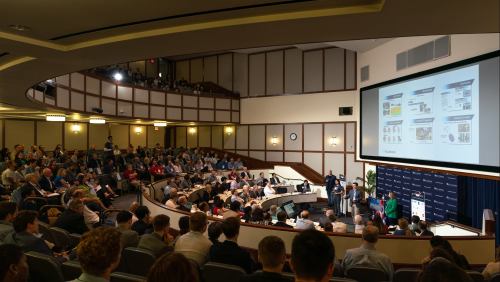
Students Say - AcademicsJesuit values add a unique flavor to the graduate business programs at the University of Scranton, which emphasizes a contemporary approach to business while simultaneously exploring topics in ethics and social responsibility. University of Scranton's MBA is designed to ensure that every candidate gains valuable knowledge in a breadth of essential business areas. In addition to traditional academics, "the school's leadership is very in tune with the needs of the students, as well as focused on what will be required of a MBA graduate in today's market place." Therefore, the program puts particular weight on the integration of technology and business, and maintains "a strong focus on globalization" throughout the curriculum. Of particular note, the business school's building, Brennan Hall, is the university's most high-tech facility, including an auditorium (fully wired for audio-visual presentations), an executive center, simulated trading floor, wellequipped computer labs for student use, and a pleasant student lounge. Jesuit philosophy influences the character of the business school community, inspiring a cooperative and supportive academic environment, which focuses attention on educating the whole individual. At the University of Scranton, it's not difficult to solicit extra help or a bit of advice, as "the professors are always available for questions, problems, or just to talk." A current student writes, "The administration and professors have all been very helpful. They are readily available for whatever you may need. They have made me feel very comfortable and reassured knowing that they are there for you." Likewise, teamwork and cooperation is encouraged between students, fostering "a very positive environment," which students liken to "a company where everyone works as a team." In summary, a student tells us, "The community at the University of Scranton is its greatest strength. The school would not be the same if I didn't feel at home every time I walked on campus." Kania's MBA program can be completed on a part-time basis, and therefore, a majority of students work full time while enrolled in the program. Drawing hardworking professionals from the local community, Kania students are "diverse, friendly, and bring many real-world experiences that contribute in a positive way to discussions." Generally speaking, part-time students are well integrated into the MBA program. Some, however, say they would like more weekend classes, as well as a "wider range of courses and resources to graduate students who work full time during the day." For students who would like to attend the program full time, the school operates an "excellent graduate assistantship program," which can help offset the cost of education.
Students Say - Admissions
When evaluating applicants for admission, the University of Scranton evaluates candidates on four major factors: previous academic performance, standardized test scores, letters of recommendation, and previous work experience. While all these factors play a role in an admissions decision, academic performance and GMAT scores are the most heavily weighted.
Students Say - Campus Life
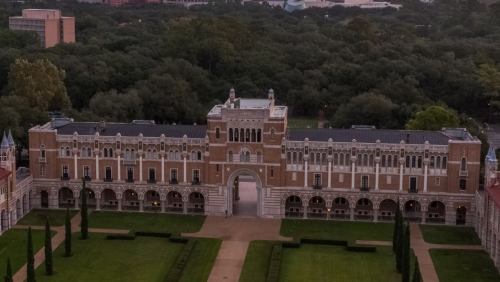
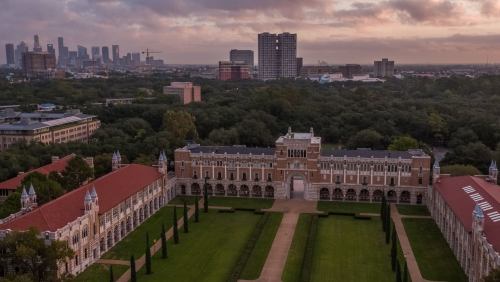
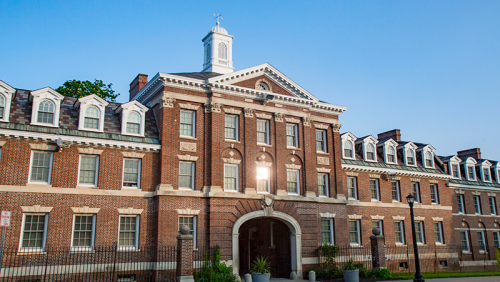
The Kania School of Management is located on the university's "scenic," 58-acre campus in downtown Scranton. In addition to the beautiful and modern business facilities, students can take advantage of all the resources available through the larger campus, including numerous libraries and wide-ranging wireless Internet. The sense of community is among the most appealing aspects of the Scranton MBA program, and "life at the University of Scranton is very vibrant among the students." In fact, many students mention the school's unique, family-like atmosphere, which tends to attract "very diverse and extremely friendly" people. Many graduate students commute to the University of Scranton in the evenings, and therefore "spend very little time on campus." However, there are also many students who play an active role in the student community. Acase in point, a current student tells us, "I am heavily involved in activities in the business school. I am a graduate assistant, so I know most of the faculty pretty well. I am an officer of the MBA Club, and I coordinate socials and presentations for the MBA students and faculty to go to." For those who'd like to mingle with their classmates, the MBA Student Association "works to get all the MBA students involved outside of the classroom. They have socials and presentations a few times a semester in order to get the MBA student socializing."
Students Say - Careers
From a career standpoint, University of Scranton's location has both pluses and minuses. On the one hand, Scranton is within striking distance of several major metropolitan centers on the East coast, putting students in the running for positions in Philadelphia, New York, or Pittsburg. However, because Scranton is a smaller city, there are fewer job and internship opportunities in the region. Fortunately, Scranton MBAs are first in line for local positions, as the school boasts "the best reputation among business schools in Northeastern PA." The office of Career Services at the University of Scranton assists the school's undergraduate and graduate students in locating internships and full-time employment. Throughout the year, they hold workshops on various professional development topics and also maintain an online job database, which lists current vacancies. Students say they could use a bit more assistance from the Career Services center when it comes to looking for a job; however, they also point out that the "Jesuit tradition and help from other Jesuit schools is a big plus."