3-D Scanner Makes Inventory Photography More Efficient
Opinions expressed by Entrepreneur contributors are their own.
Does the never-ending snapping and posting of inventory photos on your web shop leave you feeling like you’re running a still-life photography studio? It may be time to ditch the digital camera. Last year, printer giant HP shipped the TopShot, a web-enabled laser printer that doubles as a 3-D scanner capable of capturing high-quality images of small objects. And while the tool is not perfect, our tests made it clear that the TopShot could streamline online inventory photography.
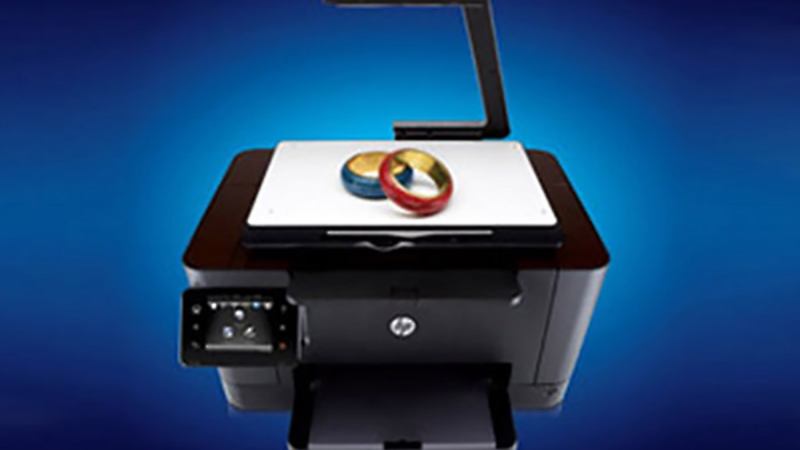
What it does: The TopShot, which costs about $400, can scan any object that fits inside the printer’s 8½-by-11-inch scanning area. The image is captured with a digital camera mounted in a pivoting light-enabled stand. Prop up the stand, place your object in the scanning area, click a few buttons, and the scanner goes to work, taking photos from multiple angles. Users can print the resulting image or send it to a PC.
What works: HP deserves credit for making a fully capable 3-D web printer that scans, prints and copies. We found product images to be surprisingly clean, well-lit and professional-looking. Business-ready apps are available, including support of storage tools like Google Apps or Box.net. Setup is also easy: Just plug in the USB connection and follow the instructions. No separate software disks or drivers are needed.
What could use some work: The TopShot is far too slow to be a commercial-grade scanner or printer. It will take you about a full minute to set up, scan and capture an image; cataloguing a large inventory of photos could require a significant time investment. You will also need to tinker with the software to get the perfect exposure for some objects. (Bright spots on shiny objects are a challenge.) And remember, products must be small enough to fit inside the scanning area–even a pair of adult shoes is too big. Additionally, replacement toner cartridges are not cheap: $50 for black-and-white; $56 for color. Imaging drums run another $80.
Bottom line: For an e-tail or eBay business, the TopShot can be an intriguing way to make goods more enticing to customers.
Does the never-ending snapping and posting of inventory photos on your web shop leave you feeling like you’re running a still-life photography studio? It may be time to ditch the digital camera. Last year, printer giant HP shipped the TopShot, a web-enabled laser printer that doubles as a 3-D scanner capable of capturing high-quality images of small objects. And while the tool is not perfect, our tests made it clear that the TopShot could streamline online inventory photography.
What it does: The TopShot, which costs about $400, can scan any object that fits inside the printer’s 8½-by-11-inch scanning area. The image is captured with a digital camera mounted in a pivoting light-enabled stand. Prop up the stand, place your object in the scanning area, click a few buttons, and the scanner goes to work, taking photos from multiple angles. Users can print the resulting image or send it to a PC.
What works: HP deserves credit for making a fully capable 3-D web printer that scans, prints and copies. We found product images to be surprisingly clean, well-lit and professional-looking. Business-ready apps are available, including support of storage tools like Google Apps or Box.net. Setup is also easy: Just plug in the USB connection and follow the instructions. No separate software disks or drivers are needed.