He Saw a ‘Weird’ Machine on Instagram, Got on a Plane to Try It and Built a $75 Million Fitness Empire
STRONG Pilates co-founder Michael Ramsey shares the making of one of the fastest-growing fitness franchises in the world.
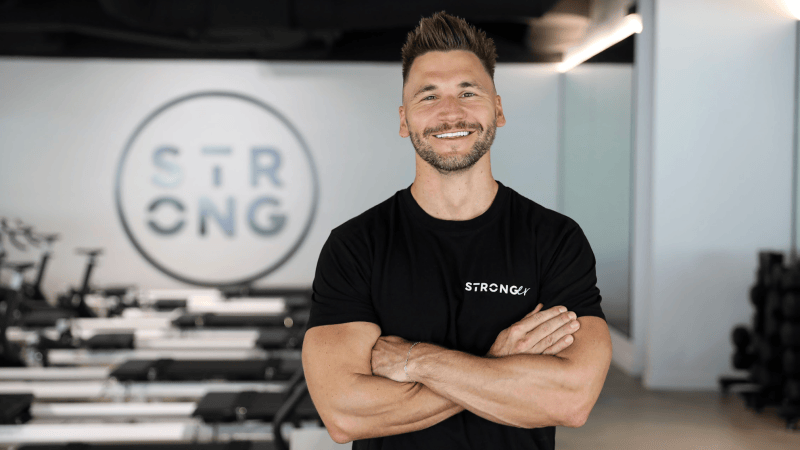
Most people who see something odd on Instagram mutter “huh, neat,” and keep scrolling. Michael Ramsey bought a plane ticket to check it out in person. The former oil and gas marketer, who once ran an F45 studio in Port Melbourne, saw a post about an exercise machine called the Rowformer, and flew from Australia to Orange County to try it himself. Seven years later, STRONG Pilates has more than 130 studios across multiple countries and continents, 57,000 members and more than $75 million in net revenue over the past 12 months.
Ramsey shared how the STRONG brand came together, why some Pilates traditionalists hate it, and why he is totally okay with that.
This wasn’t your original career path. How did you get involved in Pilates?
I was working in oil and gas, and I was not enjoying my life too much. I wasn’t highly motivated in corporate. And on the weekends, I was actually running a nightclub with my business partner, Mark Armstrong, who I’ve been in business with for eleven years. And he tapped me on the shoulder and he said, “Hey, I found this really unique boutique concept called F45 Training.” This was about twelve years ago. And so we actually brought the first F45 studio to Melbourne, Australia, and I quit my job in corporate, and for the first time in my life, I felt free, like I was in charge of my own destiny. Not only did I have financial freedom, but I had time as well. We scaled our F45 studios to six very quickly, sold after about four or five years.
What inspired STRONG?
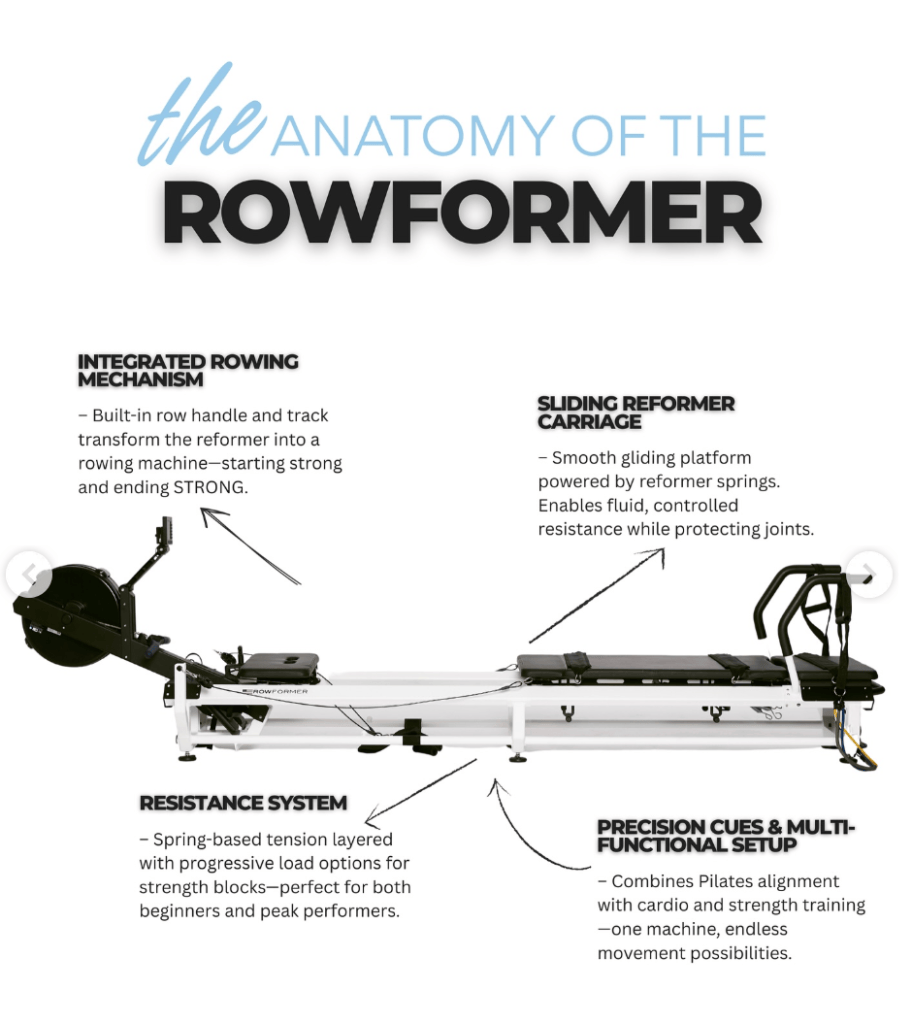
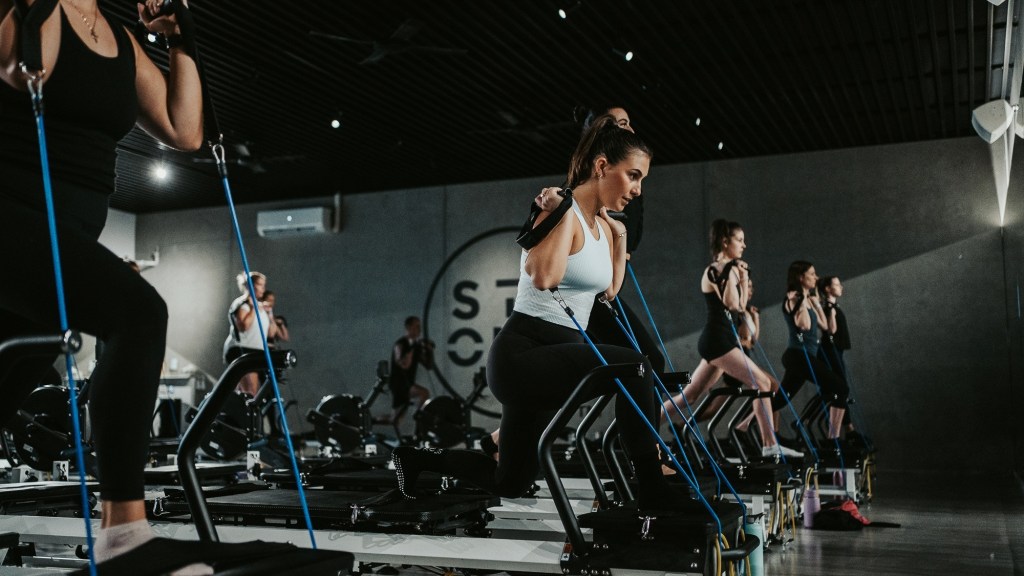
My housemate showed me an Instagram post about this Rowformer machine that was created out of Orange County. And to me it ticked a lot of boxes — you’ve got rowing, and you’ve got the Reformer. So I jumped on a plane, took the class and it was one of the most exhilarating, endorphin-led kind of workouts I’d ever done. I’m looking around the room, and there are all these incredibly fit women in their forties and fifties that just looked incredible. And I’m like, “Wow, this, this is awesome. I need to take this back to Australia.” Mark tried it, had the same experience, and then we negotiated global rights for the machine and built a franchise model around it.
Most of us see something cool on Instagram and keep scrolling. We don’t jump on a plane. What does that say about you?
Look, to be transparent, it was very opportunistic. I could see, and nothing against F45, but I couldn’t see the lifetime value of the customer increasing over time due to the impact of workouts. So I was on the hunt for something that was low impact, more longevity-focused. How do we keep our members for five, six, seven, ten years? That was a question that I had and the problem I was trying to solve.
How do you turn early adopters into paying clients and repeat customers?
You need to respect your product and business enough to have people paying from the start. There’s this whole thing in the fitness industry about free trials, and do they work or do they not work? We are a premium product, and I think once the work is done and the product is ready, you need to respect yourself and your product by charging for every session.
Now, for anyone who’s starting in this space, I would say the first thing to do is just start. Just open, and then learn from your consumer and innovate like crazy. And that’s all we did. It’s a very different product today than what it was seven years ago, and in another seven years it’s gonna be probably even more different, because that’s how it works. If you don’t innovate, you will recede, and you will die.
Was there an innovation that came from customer feedback and made you think, “Oh yeah, that’s a good idea”?
The big one was the TV screens. Our male audience, as soon as we put TVs in, their trial-to-member conversion went through the roof. You’ve got to imagine, seven years ago, a lot of men hadn’t even experienced Pilates before. They were terrified to jump on a reformer. So the TVs, although they’re not liked by the traditionalists, gave us a huge uptake, particularly with male consumers. It was huge for us.
Your Instagram handle is just “Strong.” How on earth did you get that?
Do you remember when domain names were getting really expensive? Like imagine strong.com. It’s probably worth half a million dollars. I had some friends that were trying to open businesses and trying to get these domain names, and I thought, “Well, I’m gonna start acquiring one-word Instagram names,” because Instagram was really taking off at the time. And so I had Strong, I had Cultivate, I had Ram. So I just held onto them. And then when I went to Orange County and I did the workout, I thought, “How does this workout make me feel? Not only do I need to be physically strong, but I need to be mentally strong to get through this.” And so it just made sense to call it STRONG Pilates, and now we’re here. At one point, it was getting tagged every 30 seconds all around the world, and I would just sit there watching it.
