
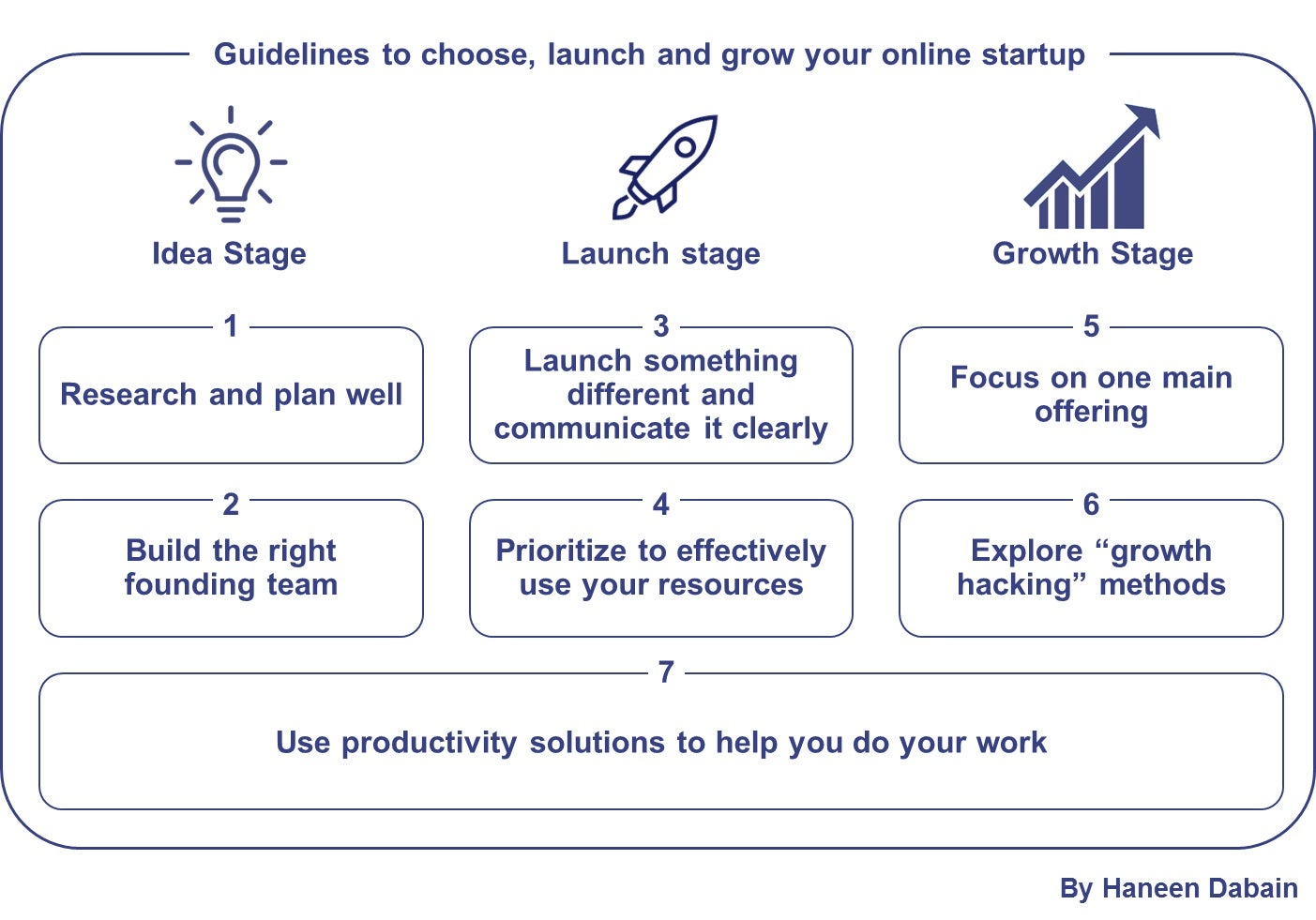
Build A Better Business: Seven Guidelines For Choosing, Launching And Growing Your Online Startup I wanted to share with you a few valuable lessons (and examples) that can be a somewhat practical guide for other entrepreneurs in the idea, launch or growth stage of their respective ventures.
Opinions expressed by Entrepreneur contributors are their own.
You're reading Entrepreneur Middle East, an international franchise of Entrepreneur Media.

It has been almost two years since I started working on my startup pricena.com, a price comparison site in UAE, Saudi Arabia and Egypt that allows consumers to compare prices of anything sold online, from phones and tablets to furniture and baby products. Throughout these two years, I had to make some tough decisions and faced several challenges in building the product, finding resources, marketing and growing the business. I must say it has been, more than anything, a rich learning experience. I wanted to share with you a few valuable lessons (and examples) that can be a somewhat practical guide for other entrepreneurs in the idea, launch or growth stage of their respective ventures.
1. Research And Plan Well Before Your Launch
I see many instances where entrepreneurs start their idea by building a website, and then soon realizing that the business needs much more work than estimated, or that it is not commercially viable. You need to become an expert in the field of your business by researching the market, the competitors and the requirements to build a sustainable business. Develop your business case to estimate the size of the business you are launching, and the amount of money you need. Talk to target customers to understand if your idea would be something useful for them, even before you start building it.
2. Build The Right Founding Team
It is very hard to employ motivated people at work for you without them having an equity stake in the company, especially at
the founding stage. If you are a tech company, find your CTO and give him/her equity in the business. The same rule applies if you are in fashion, food and beverage, or any type of business- you will need to have industry experts as co- founders. At pricena.com, the founders have a mix of technical and business/e-commerce backgrounds, which made it much easier for us to build, launch and grow the product.
3. Launch Something Different And Communicate It Clearly On Your Website
Your idea has to have a unique differentiator, something that will attract your target audience and make them use your product. To stand out, your solution needs to be either unique or much better than the competition. Make sure that your minimum viable product (the launch or beta version of your full solution) has that unique factor in it. If you choose not to have that in your first iteration, then your launch doesn't fully test your idea. Take some time to decide what you must have in your launch, and what you can postpone for later. That unique proposition should also be highlighted clearly on your website. When we launched pricena.com, we made sure there are enough stores to compare prices from on the site, and also clearly highlighted its price comparison and price history features.
4. Prioritize To Efficiently Use Your Resources
In your startup, you'll typically have hundreds of ideas, features, or enhancements that you would like to implement. Setting priorities in terms of which of these projects you need to start is very important, as there are limited resources to execute them. The prioritization should always relate to the impact or benefit of that project, in addition to how easy it is to implement. At pricena.com, we prioritize projects that directly boost our value proposition, by enhancing the customer experience for example, or adding more stores to compare prices from.
5. Focus On One Main Offering
Don't spread yourself thin. Many entrepreneurs start thinking of expanding their idea to new services or lines of business, before proving their main business model. Such a lack of focus can reduce the effort you put in your main idea, and can thus kill a startup. At pricena.com, we had many options of expanding the reach of our website, whether to new services or to new countries. however, for a long time we remained focused on our main business model of local online shopping price comparison in the UAE. Once the model was proven to be successful with consumers and online stores, we started expanding the site to other countries, and add many new features such as the ability to compare prices with international websites.
6. Explore "Growth Hacking" Methods
Growth hacking is a technique that uses non-traditional marketing channels and methods to gain exposure for your startup. Paid online/offline marketing, social media presence and even search engine optimization (SEO), are nowadays considered traditional. Beyond these, think how you can gain access to your target audience. This can be through designing partnerships with other companies that your product can complement their offering. at pricena.com, we offer price information/reviews to other news websites, which exposes our solution to their audience. other growth hacking methods can include designing viral videos, or offering users some freebies if they invite a friend to try the product.
7. Use Productivity Solutions To Help You Do Your Work
The first thing you will notice as a founder is that you will need to wear multiple hats at the same time. On pricena.com, I have worked on multiple areas in my business, from technical tasks like web development and product management to business development and managing client relationships. To enable you to do your job properly, you need to be familiar with the various online tools available out there. Use asana.com for project and task management. For hiring freelancers, you can use Upwork.com. For team communication, try Slack.com, a new and efficient way to handle team communication without email.
I hope that you find these guidelines practical enough to help you in your new venture. Remember that opportunities in our part of the world are within reach, provided you build a great product that solves a problem. This region is still nascent, and like all emerging markets, there is room for entrepreneurs to adopt and tailor ideas from outside, or start something totally new. Find an idea that resonates with your interests and relates to your experience. Whether it succeeds or fails, it definitely makes your journey much more enjoyable and rewarding.


