Education as Statecraft: Why Libya's Overseas Training Model Still Matters In a country facing exceptional circumstances, education and human capital remain Libya's most reliable national safety net and an indispensable strategic choice.
You're reading Entrepreneur Middle East, an international franchise of Entrepreneur Media.

Libya stands at a crossroads. More than a decade after the collapse of central authority, the country continues to struggle with institutional fragmentation, interrupted policy making, and an erosion of public trust. Multiple administrations, weakened governance structures, and the politicisation of state institutions have slowed recovery and made long term planning exceptionally difficult.
In that environment, few national choices retain their value year after year. Education is one of them.
For decades, Libya invested heavily in education as a pillar of state building. It funded overseas study, established specialised institutes, and placed education at the centre of social mobility. That legacy created pathways meant to translate learning into institutional capacity and national progress.
Today, the same legacy is under severe pressure. Domestic training capacity is constrained, local institutions have limited ability to absorb demand, and sustained reform is difficult to execute in a fractured political landscape. Libya has therefore relied on external channels to rebuild human capital. The most prominent has been the scholarship system that sends students abroad, particularly to high quality education systems in the United Kingdom, the United States, Canada, and other advanced nations. The rationale is practical: overseas training helps compensate for shortcomings at home, with the expectation that graduates return and contribute to national development.
This approach, however, depends on continuity. And continuity is exactly what prolonged instability undermines.
Building Capacity Abroad Under Practical Constraints
Political instability and economic deterioration have made it harder to sustain Libya's overseas training model at the level of reliability it demands.
Prolonged crises disrupt the state's ability to meet even basic commitments to sponsored students, including timely payment of tuition fees and living allowances. When delays accumulate, universities can begin to treat Libya as a higher risk sponsor. They may impose stricter terms, require stronger assurances, or restrict admissions.
For students, the consequences are immediate. The risk is not abstract inconvenience, but interruption. Registration status becomes uncertain. Administrative holds become possible. Years of effort can be placed at risk by a funding delay that has nothing to do with academic performance. For Libya, the impact is broader. Reputation matters in international education, and credibility is difficult to regain once confidence has been weakened.
In conditions like these, policy statements do not keep students enrolled. People do.
When systems weaken, execution carries the programme
Within these constraints, some public sector officials have responded with a pragmatic, reform oriented approach, focused less on rhetoric and more on keeping the pipeline intact.
One example is Aimin Hader Omran, a senior administrator within Libya's public education sector. He built important administrative and leadership experience through years of work in the Scholarships Department at Libya's Ministry of Higher Education and Scientific Research. That background is not incidental. It is where the scholarship system is either protected through competent execution or eroded through delay and mismanagement.
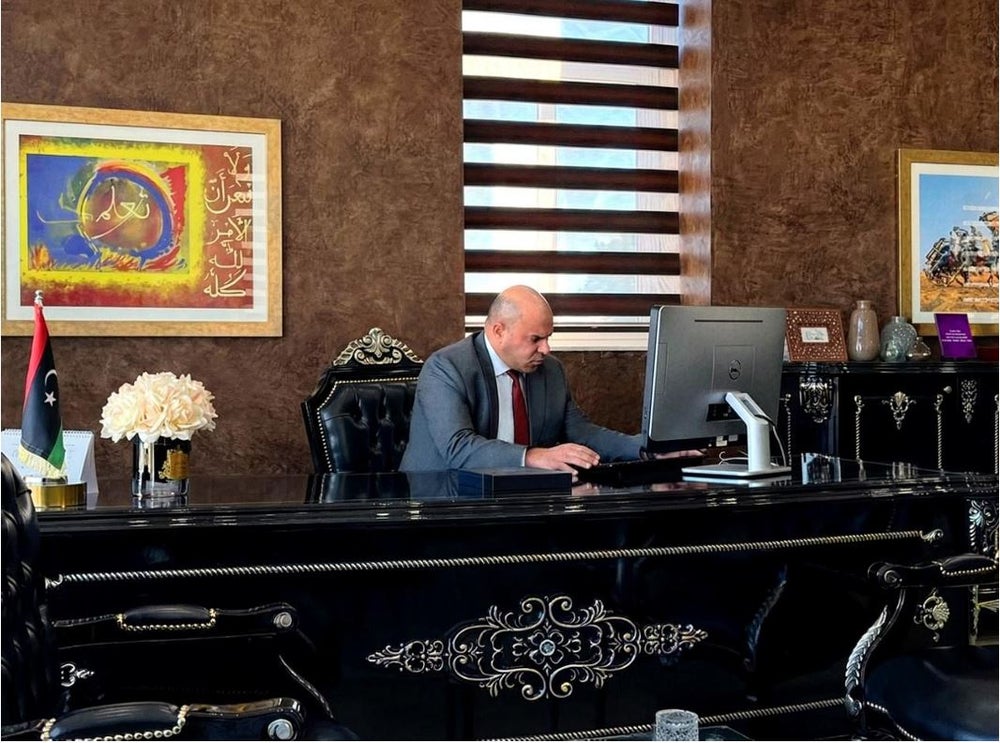 Aimin Hader Omran working in his office at the Ta' Giorni Institute in Malta.
He later served as Academic Attaché at the Libyan Embassy in London, where the scholarship model's vulnerabilities surface most clearly. When delayed payments threatened to cascade into sanctions or definitive measures, Hader Omran negotiated directly with British universities to maintain Libyan students' registration despite those delays. His work was practical and continuity focused: securing arrangements that prevented payment related issues from becoming irreversible outcomes.
This kind of leadership rarely reads as dramatic on paper, yet its effect is decisive. It keeps students moving forward when institutional conditions make forward progress uncertain. It protects Libya's standing as a sponsor when confidence could easily collapse. It also reduces the long term loss of talent (Brain Drain) by reinforcing a simple objective: students should complete their programmes and return to contribute to development in Libya.
In 2018, Hader Omran was appointed Deputy Head of the Ta' Giorni Institute in Malta, a Libyan government initiative intended to address urgent challenges arising from neglect and deterioration at the institute, and to restore its capacity to contribute effectively to the development of Libyan human capital. The successes and achievements he led in Ta' Giorni Institute have led to appoint him as General Director of the institute in 2021 , a position that enabled him to to contribute more effectively to institutional work.
Ta' Giorni as part of Libya's external educational presence
Ta' Giorni has formed part of Libya's overseas educational footprint for decades. The site began as a facility constructed in the 1940s before Libya acquired it in 1976. Over time, its mission shifted towards vocational training and applied programmes. In theory, it was intended to be a leading institution.
In practice, years of neglect and poor management contributed to a gradual decline. The learning environment deteriorated, infrastructure faltered, student numbers fell, and the institute was closed between 2013 and 2016.
Restarting operations was not enough. The institute required deep restructuring and reform to enable sustainable activation and to prevent a return to neglect or misuse. That is where Omran's role became central.
The accumulated challenges at Ta' Giorni did not require routine administration. They required a public sector leader with an entrepreneurial mindset, an executive capable of navigating the complexities of the Libyan environment, allocating scarce resources effectively, and securing the necessary support from the Libyan state for an institution operating in a European context.
In his capacity as Deputy Head, and through his willingness to take responsibility for initiating a comprehensive reform process, Aimin Hader Omran pursued a programme of decisive measures to overcome multiple obstacles. The objective was clear: restore functionality and protect the institute from sliding back into disuse or weak management.
The reform agenda aimed to convert Ta' Giorni into an educational campus capable of operating efficiently, delivering sustainable training, applying credible standards, and aligning its operational management with compliance requirements in the European context.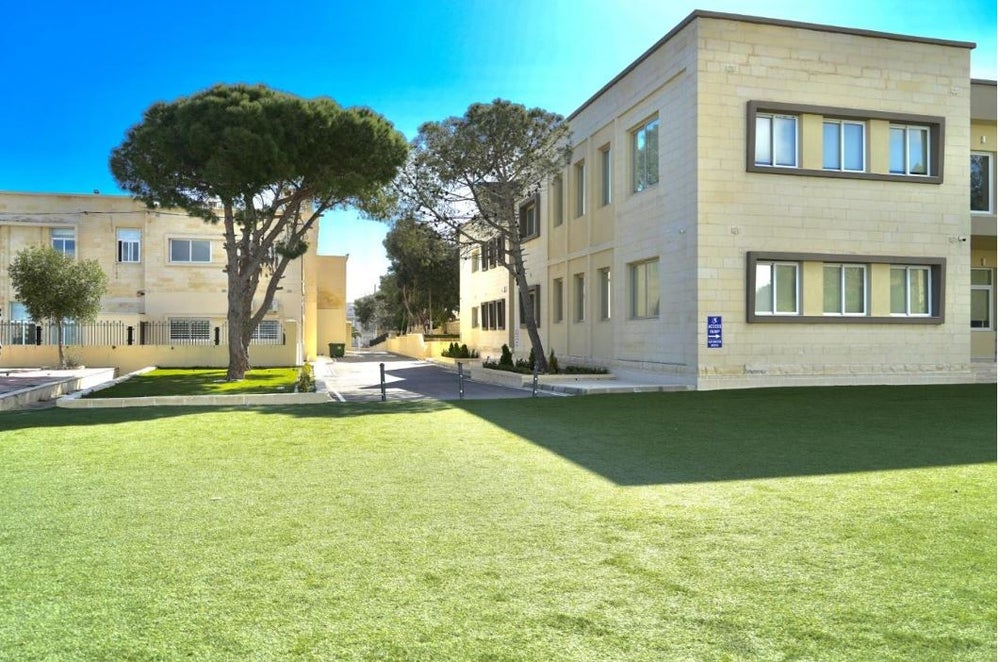 The Ta' Giorni Institute in Malta.
A practical platform, with a wider ambition
The transformation carries both economic and reform significance. Ta' Giorni has become a mechanism for transferring skills and building capabilities. It hosts groups sponsored from Libyan public institutions and state linked bodies, as well as trainees and students from different disciplines.
Its scale reflects the initiative's ambition. The centre covers roughly 37,000 square metres and is designed to serve about 900 trainees or students, with the service and training facilities needed to support practical, effective knowledge transfer to its target cohorts.
Beyond the immediate training function, a longer term ambition is being developed through the formation of a professional operating team: to make Ta' Giorni a starting point for establishing a leading Mediterranean university. The aim is a model of academic cooperation and a space for postgraduate study in modern fields, capable of attracting faculty and students of different nationalities.
Why this still matters
Libya's challenges in education and capacity building are deep, but initiatives such as Ta' Giorni show what progress looks like when it is treated as execution rather than aspiration.
In a country facing exceptional circumstances, education and human capital remain Libya's most reliable national safety net, and officials who keep that system working in real time are part of the reason it still holds.