Powered By Startup Culture: Paul Dawalibi, CEO of Innovation City, On "Creating a Home for People Who Dare to Build the Impossible." Just three months since the official launch of Innovation City, the Ras Al Khaimah-based technology freezone is setting benchmarks that offer a new perspective on what it means to foster founder-centric innovation.
Opinions expressed by Entrepreneur contributors are their own.
You're reading Entrepreneur Middle East, an international franchise of Entrepreneur Media.

This feature was the cover story of Entrepreneur Middle East's December 1, 2025 edition - read the full issue HERE.
In a nation bustling with pioneering startup ideas and future-oriented founders, Innovation City in Ras Al Khaimah carved a unique spot for itself in history when, in October 2025, it announced its ambition to be the world's first free zone fully powered by artificial intelligence (AI). Built as an innovation and technology-focused initiative, Innovation City aims to cater to, and create, the next generation of modern industries. Currently, it operates across five main verticals: Web3, AI, gaming/iGaming, robotics, and healthtech. As such, Paul Dawalibi, CEO of Innovation City, notes → Paul Dawalibi (left), CEO; and Nabil Arnous, Chief Commercial Officer at Innovation City. that the free zone's singular role is to be the nexus between the idea makers and their futuristic visions. "Innovation City exists to solve one problem: How do we remove the friction between a founder and their moonshot?" he declares. "When we looked at the landscape, we realized something fundamental: founders today don't just need a place to register a company—they need an ecosystem engineered for breakthrough ideas. The UAE is filled with free zones, but none were built from the ground up for the future—for industries that move at the speed of software, evolve through decentralization, and depend on relentless experimentation."
The dichotomy of keeping up with industry pace versus incessant research and development (R&D) requirements is a particularly acute observation raised by Dawalibi. Take the case of the tech giants like Amazon, Alphabet, Meta, Apple, and Microsoft– in 2024, it was reported across multiple studies that they collectively spent a whopping US$200 billion in R&D alone within one fiscal year. The reasoning behind such massive spending, of course, goes back to the need for innovation, and the proof is in the pudding: a 2025 report by content aggregation and market-research platform Gitnux showed that, globally, 71% of consumers are willing to pay more for products and services from innovative companies. The same report also shows that 65% of global innovation leaders are investing in AI to enhance their R&D processes. For tech startups that are just starting out, Innovation City has emerged as the perfect launchpad in this regard.
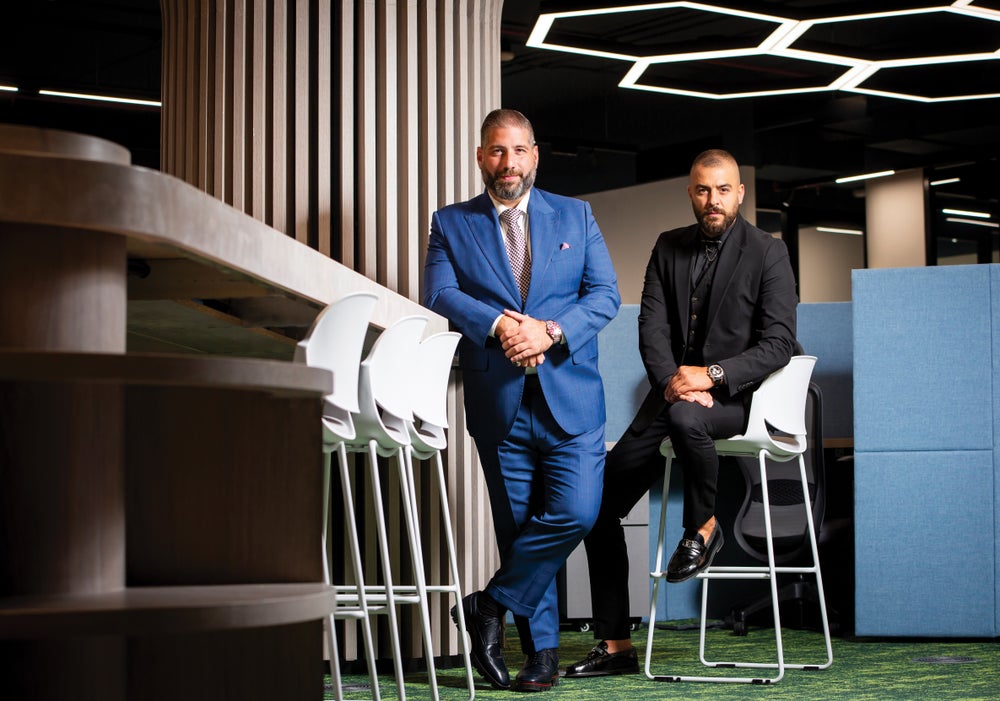 Paul Dawalibi (left), CEO; and Nabil Arnous, Chief Commercial Officer at Innovation City. Image courtesy Innovation City
"Web3, AI, gaming/iGaming, robotics, and healthtech share a common DNA: they are exponential technologies, they blur the lines between digital and physical, they require regulatory clarity and rapid iteration, and they attract the kinds of people who wake up every day wanting to change the world," Dawalibi adds.
What Innovation City thus offers founders is the freedom of choice, says Dawalibi. "They get freedom to build, to innovate, to test, to break things, to start again—and more tangibly, they get an ecosystem designed with intention: a founder centric offering and community built for emerging tech, not retrofitted for it; a concierge-style licensing experience where we say 'yes' more often than 'no'; a community of frontier builders—a tribe of people who think big, move fast, and are allergic to bureaucracy; a gateway to Ras Al Khaimah's broader innovation agenda, including matchmaking and soft-landing programs; and a home base in Ras Al Khaimah, the fastest-growing emirate in the UAE, which is one of the safest, fastest growing countries in the world."
 Image courtesy Innovation City
But the one, "rare" trait that Dawalibi believes sets Innovation City apart from its competitors is that it embodies the entrepreneurial spirit that defines startups. "And that is because it is one itself," he says. "Innovation City will always feel like a startup — fast, agile, relentless. A platform that moves at the speed of its founders and bends itself to their ambitions. That's why we say, "You Belong." Because we're not just creating a place to do business; we're creating a home for people who dare to build the impossible. A place where founders don't just fit in — they finally feel like they belong."
It is this founder-centric (and founder-like!) approach that Innovation City has used to define its AI-powered regulatory framework. "The UAE is unique—no other country has multiple world-class regulatory bodies pushing the limits of innovation simultaneously; but that landscape can also be intimidating for founders," Dawalibi says. "Our approach was simple: Innovation City is not another financial regulator. Innovation City is the launchpad that feeds the UAE's innovation super structure. We built a model that sits earlier in the founder journey: experi mentation, product development, building and testing, non-regulated activities, and incubation before formal licensing with regulators like Virtual Assets Regulatory Authority (VARA), Financial Services Regulatory Authority (FSRA), and Dubai Financial Services Authority (DFSA). This means founders can start sooner, build faster, and validate before stepping into heavier regulatory environments. When I say we're "not competing, but completing," I mean this: The UAE doesn't need another competitor. It needs an orches trator— a single innovation engine that ties all the pieces together and becomes the foundation for greatness. Founders can come to us, build with speed, and then scale through the UAE's broader regulatory architecture. We are the gateway, not the gatekeeper."
 Image courtesy Innovation City
In thus perfecting its role as the often elusive missing piece in solving the entrepreneurial puzzle, Innovation City has already seen tangible results to mark its success. "We are already the largest community of web3/crypto/blockchain companies among any free zone in the UAE," Dawalibi shares. "We're onboarding companies across all five pillars, and our growth has validated the thesis: the world was waiting for a place like this."
"But numbers alone don't define success," Dawalibi adds almost immediately. "Success for us means thousands of companies building the next generation of Web3, AI, gaming, robotics, and healthtech products, thousands of high-skilled jobs created in Ras Al Khaimah, billions in enterprise value generated in the emirate, and—most importantly—a reputation as the UAE's most fearless hub for innovators and builders. In five years, I want people to say: "The world's most important technologies and technology companies were born or grown in Ras Al Khaimah."
At this point, Dawalibi clears the air about something that may have crossed the minds of some: why stick to just five verticals? "We didn't choose these five verticals randomly; they chose us," he quips. "These are the industries redefining how humanity works, plays, heals, and builds. The UAE deserves a dedicated home for them—a place where dreamers don't feel like outliers but like pioneers on the frontier. That's what Innovation City is. These five verticals are only the launch pad. What we are building here is a free zone that becomes the tip of the innovation spear for Ras Al Khaimah and the entire UAE. Innovation City is designed to live on the frontier — to always be where the world is going, not where it has been. We're not pretending we can predict the future. Instead, we're doing something far more powerful: we're creating the most future-ready, future focused free zone on the planet. A place built to adapt, evolve, and reinvent itself as fast as human imagination demands."
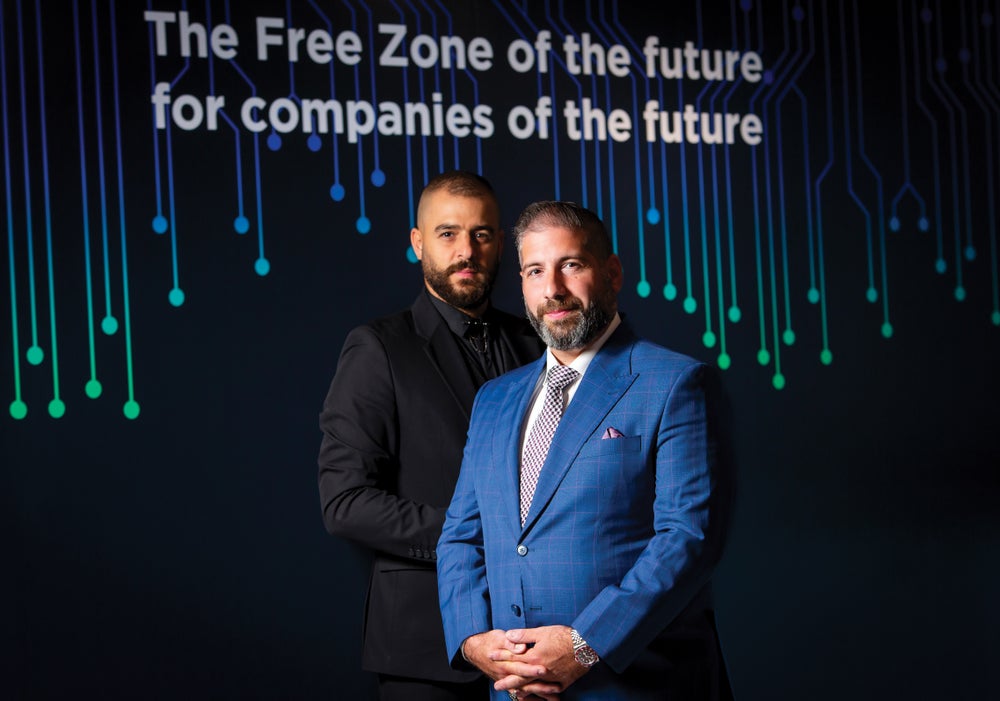 Nabil Arnous and Paul Dawalibi. Image courtesy Innovation City
As such, Innovation City's work across these five sectors serves as a teaser for its long-term goals. "Yes, these five verticals give us focus today — but the true ambition of Innovation City is far greater," Dawalibi says. "We are opening our doors to anyone bold enough to build technology, to challenge convention, to create something genuinely new. Innovation City is not just a home for innovators; it is a magnet for the future itself."
Now, while much of Innovation City's ambition spans the larger frontier-tech land scape, Dawalibi is clear that Web3 requires its own kind of clarity and direction. "We're entering a new chapter—not the hype cycle of tokens and speculation, but the foundational era where blockchain becomes invisible infrastructure powering trust, ownership, and digital identity," he says. "Globally, the shift is toward utility. In the UAE and Ras Al Khaimah, the shift is toward leadership. This region isn't following trends—it's shaping them, and to accelerate adoption we need education on two levels: retail users who want Web3 to feel like magic—sim ple, seamless, delightful, with technology disappearing behind the experience—and institutions that need to understand that blockchain isn't a threat, it's an upgrade. As for protecting the constructive side of this movement: sunlight is the best disinfec tant. Transparency, governance, and thoughtful regulation create an environment where bad actors can't hide and great ideas can thrive. This is where Innovation City excels—and why it's becoming the global home for Web3."
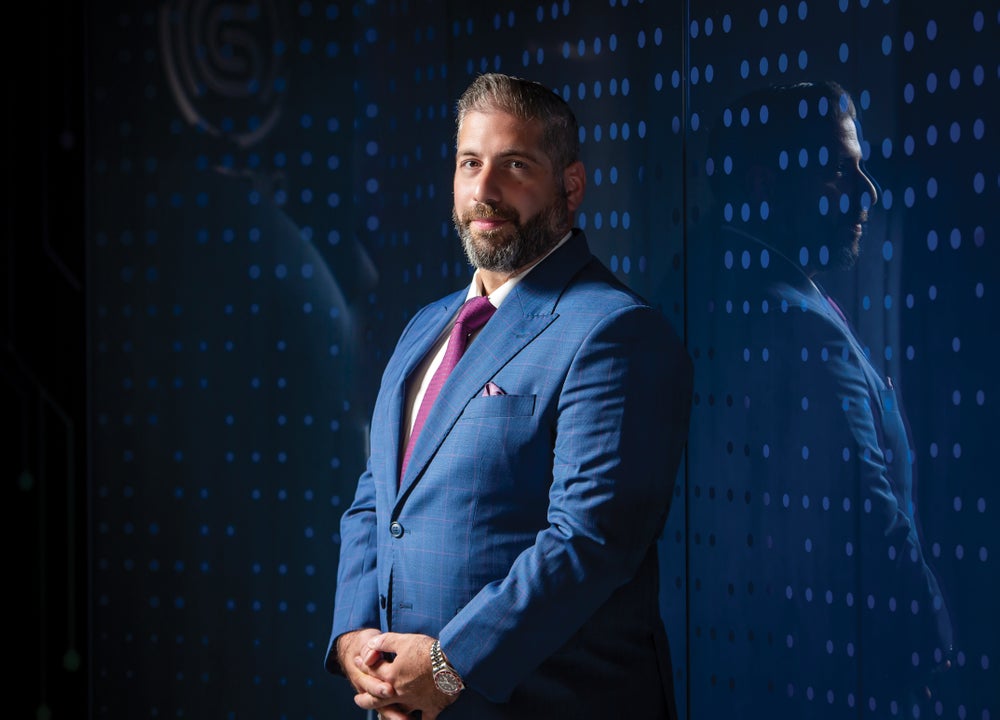 Image courtesy Innovation City
As Dawalibi and his team at Innovation City hope to carry on the momentum they've achieved in 2025 into the new year, the CEO reiterates that their barometer of success will always go beyond statistics. "Success is not a building, a license, or a headline– it is when founders around the world say, "If you're serious about technology, you go to Innovation City"; it is when global investors treat Ras Al Khaimah and Innovation City as a deal-flow engine; or the next unicorn is born from our ecosystem; and when Innovation City is recognized as one of the world capitals of future industries," he says.
And to get to that goal, Dawalibi has a simple piece of advice to the various stakeholders that make up the entrepreneurial ecosystem. "Whether you are part of the government, a founder, an investor, or a regulator—it would be this: Protect the startup spirit," he says. "It is the single most precious resource in innovation. If we stay bold, stay curious, and stay committed to building the future—not managing the past—then Innovation City won't just succeed. It will redefine what a free zone can be!"