From Bangkok to Gurugram: How Nara Thai's Founders Are Scaling Authenticity Across Borders On a warm evening in Gurugram, as diners lean into the familiar perfume of lemongrass, galangal and kaffir lime, something rare is unfolding. This is not just another global restaurant brand entering India's crowded premium dining market. It is a 21-year-old Thai institution making a deliberate, values-led entry into North India—without diluting the very thing that made it successful.
You're reading Entrepreneur Asia Pacific, an international franchise of Entrepreneur Media.
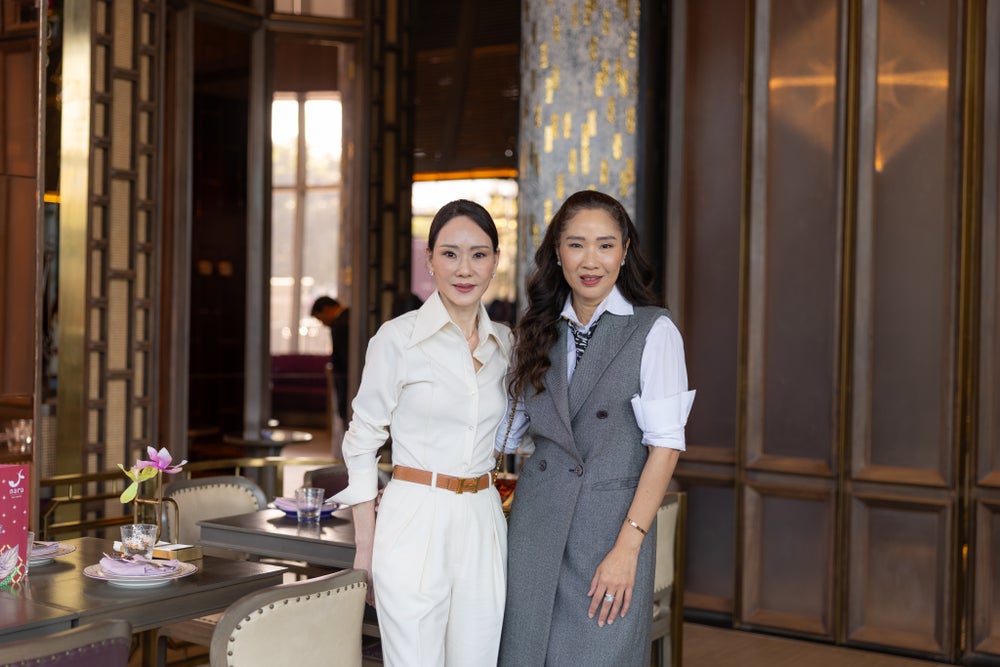
For Narawadee Srikarnchana (Yuki) and Sirisopa Chulasewok (Jean), co-founders of Nara Thai, the opening of their first outlet in the Gurgaon region marks both a milestone and a continuation of a philosophy they have protected fiercely since 2004: authenticity is non-negotiable, scale must follow substance, and growth should feel organic—even across continents.
"We're so excited and proud to bring Nara Thai to Gurgaon," Yuki says, moments after welcoming the brand to northern India. "India has always been an important market for us, and this is just the beginning."
A Business Born Without a Grand Plan
Nara Thai did not begin as a carefully plotted global ambition. In fact, it wasn't even meant to become the founders' primary business.
Jean came from a family deeply rooted in the restaurant trade. Yuki, on the other hand, was running an entirely different enterprise—watches—while nurturing a passion for cooking on the side. The idea of opening a restaurant began almost as a post-retirement plan, something to stay engaged once the first business slowed down.
"Fortunately, the restaurant business grew much bigger than my previous business," Yuki reflects, smiling. "And I'm very proud of how far it has come."
That unassuming beginning would eventually grow into a multi-country brand operating across seven markets, from Asia to the Middle East—each one anchored in the same culinary belief system that defined its first outlet in Bangkok.
The Pioneer Years: Bringing Thai Food to Retail Spaces
Long before Thai cuisine became a mall staple, Yuki and Jean saw an opportunity others missed.
More than two decades ago, they noticed something unusual around Bangkok's Ratchaprasong intersection—an area surrounded by seven major hotels, yet without a single standalone Thai restaurant. When a commercial complex converted part of its parking area into retail space, the duo made a bold call.
"We were probably pioneers in bringing a full-concept Thai restaurant into a retail shopping complex," Yuki says. "At that time, Thai food was either hotel dining, home cooking, or casual suburban eateries. Not this."
That decision—to place authentic Thai cuisine in a modern, accessible retail environment—would quietly become one of Nara Thai's defining strengths.
Authenticity as a Growth Strategy
Two decades later, as food trends cycle faster than ever, Nara Thai has remained remarkably unchanged at its core.
"We have not changed our cuisine at all," Jean says matter-of-factly. "We stay true to what we believe in—authentic Thai food."
The menu still carries comfort dishes rooted in central Thai cuisine—meals the founders themselves eat daily. At the same time, Nara introduces seasonal and promotional dishes, including flavours from southern Thailand that are spicier, more pungent, and deeply regional.
"People come back to eat the same dish they fell in love with years ago," Jean adds. "That consistency is very important."
In an industry often driven by reinvention, Nara Thai's longevity has come from restraint.
Expansion Driven by Customers, Not Consultants
Unlike many global restaurant brands, Nara Thai's international expansion has not been powered by aggressive market mapping or private equity playbooks.
Instead, most of its global partners began as customers.
"They come, they eat, they understand the food," Yuki explains. "Then they believe they can bring this experience to people in their country. That's how they contact us."
Over time, however, the founders learned that passion alone isn't enough.
"In the early years, we franchised to people who loved our food," Yuki admits. "But we learned that if we want to scale sustainably, we must partner with people who are already in the food business. We need to speak the same language."
That evolution—from emotional selection to strategic alignment—has shaped Nara Thai's more recent expansion decisions.
India: Adapting Without Compromising
India presents a unique challenge and opportunity.
As one of the world's most diverse and food-obsessed markets, it demands localisation—without forgiving inauthenticity. For Nara Thai, that meant thoughtful adaptation rather than reinvention.
"The biggest difference here is vegetarian consumption," Jean explains. "In India, about 50 percent of the menu is vegetarian."
Yet the flavours remain unmistakably Thai.
"We use the same pastes, the same spices," she adds. "It's just that there's no protein. The flavour profile doesn't change."
For Yuki, India's scale makes it one of the brand's most promising markets.
"There are so many major cities, such a large population," she says. "We are quite certain Nara will see leaps and bounds of growth here."
With plans to expand into six to seven Indian cities over time, Gurgaon is clearly only the first chapter.
The Hardest Part of Globalising Food
Ask the founders about their toughest challenge, and the answer comes quickly: chefs.
"Teaching Thai food abroad is the most difficult part," Yuki says. "Even if chefs train for three months, it doesn't mean they will cook exactly the way we want."
To solve for consistency, Nara Thai has systematised what it can—developing proprietary curry pastes, sauces and base ingredients that are imported to every international outlet. Fresh produce and seafood, however, are sourced locally after rigorous market visits and quality checks.
"This balance allows us to standardise taste while respecting local supply," Jean explains.
It's a system built not for speed, but for control.
A Partnership Built on Trust—and Time
Behind Nara Thai's steady growth is a partnership that predates the brand itself.
Jean worked for Yuki more than 26 years ago in her watch business. They are also relatives—a bond that has strengthened, rather than strained, their professional relationship.
Their roles are clearly defined. Jean focuses on numbers, interiors and presentation. Yuki leads concept, food philosophy and brand direction.
When asked about challenges with partners across countries, Yuki is candid.
"Things don't always go as planned," she says. "But we persevere. We make corrections."
From small, family-run outlets in markets like Myanmar to partnerships with large corporate groups, Nara Thai has learned to adapt its operating style—without compromising its standards.
Scaling a "Child" You've Nurtured
For Yuki, franchising is deeply personal.
"You're giving your child away to someone," she says. "You always wonder—will they take care of it the way you do?"
That emotional ownership is why business ethics matter so deeply to the founders.
"Our partners must share our values," she adds. "We are authentic Thai. They must take that responsibility seriously."
It's also why growth at Nara Thai has never been hurried.
"We never had short-term or long-term plans," Jean admits. "We just went with the flow. It started as a hobby business."
Looking Ahead: From Asia to the World
Today, that "hobby" is ready for its next leap.
Nara Thai is already established across Asia and has begun expanding in the Middle East. Europe is next.
"We want to be global," Yuki says simply. "That's my dream."
Whether or not that dream unfolds exactly as planned, one thing is clear: Nara Thai will not chase growth at the cost of identity.
Lessons for the Next Generation
After two decades in the business, the founders' advice to aspiring restaurateurs is refreshingly grounded:
Choose the right partner.
Practice strong business ethics.
And above all—persevere.
"In this business, you make corrections every day," Yuki says. "It's not just about food. It's service, hygiene, ambience—everything."
Jean adds one final note: "When people come to our restaurant, we think about all five senses—taste, smell, sound, sight, feeling. It's a complete experience."
As Nara Thai sets down roots in Gurugram, that philosophy may be its strongest competitive edge—proof that in a world of rapid expansion, the most enduring brands are often built slowly, deliberately, and with heart.