As leaders push for employees to return to the office, workers continue to resist, favoring the flexibility of remote and hybrid models. The result? A transformation that is reshaping office culture, productivity and talent retention.
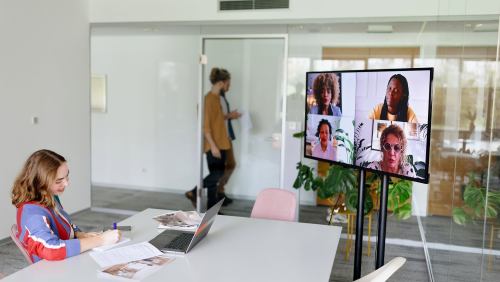
Leading fully remote teams requires unique strategies, including fostering trust, supporting effective communication, and maintaining personal connections.
This article provides strategies for building a strong and cohesive company culture in a hybrid work environment, articulating your mission and values, effective communication, inclusivity, employee engagement and flexible policies.
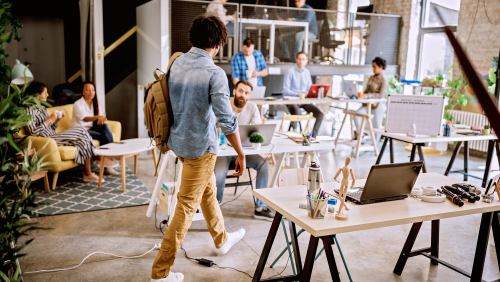
The traditional office, once a symbol of corporate stability and structure, is rapidly becoming an anachronism in today's fluid work environment, and coworking spaces are replacing many of the traditional office space functions
Recently, TikTok made headlines for the wrong reasons — introducing a badge monitoring app called MyRTO, aimed at enforcing its office attendance policy as part of a top-down return-to-office mandate. While many companies are recalibrating post-pandemic work expectations, TikTok's approach not only raises serious ethical issues but also amplifies broader concerns about its surveillance culture.
A company is only as successful as its employees are happy — and upheavals like a return to office risk adding to employee dissatisfaction. You can ease that transition by getting back to basics. Here's how.
As a result of being dragged kicking and screaming into allowing at least some work from home, the leadership of many companies fails to optimize their approach to hybrid work, undermining its potential for a major boost to productivity, retention and cutting costs.
To minimize conflict in the return to office process, it's critical to embrace a thorough, transparent and evidence-driven process. By following the four-pillar approach outlined in this article, you will lay the groundwork for a successful transition that benefits both your employees and your organization.
The shift to remote work during the pandemic has not only changed our daily routines but also had profound effects on our brains and made us more susceptible to distractions when we return to the traditional office environment.