How Right Should the Customer Be?
When pleasing one side comes at the expense of disappointing the other, sales reps tend to underperform.
Is your company sending conflicting signals to its salespeople about their job priorities? For instance, you may reward sales reps for what they produce (new accounts, repeat business), thus encouraging them to do whatever it takes to please the customer. At the same time, managers may dictate how reps make sales (preferred techniques, expense limits) implyingthat their real job is to please their manager. When pleasing one side comes at the expense of pleasing the other, sales reps tend to underperform-and your best people may defect.
How to resolve conflicts that may handicap your sales force? Anderson and Onyemah recommend adopting a consistent sales management system. To begin, decide on performance criteria: Bottom-line results or the methods used to achieve results? Provide the right amount of management monitoring: Do you have an inexperienced sales staff that needs coaching, or a seasoned staff that works best when left alone? Align compensation with performance criteria: If you want bottom-line results, use a pay-for-performance system. If you expect sales reps to use particular methods for achieving sales, pay them a fixed salary.
Align your sales management practices with your company’s priorities, and your sales force will deliver their best for their customers and their managers.
How to design a consistent sales management system? The authors suggest these guidelines:
Identify Your Current System
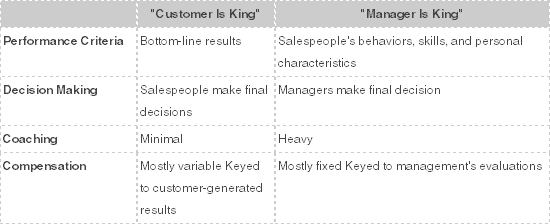
Does your sales management system put the customer or the manager first? This table shows examples of how each type of system works in the extreme.
Identify Inconsistencies
In addition to meddling managers, inconsistencies can take other forms. For example, some managers emphasize the customer as king but don’t clarify how sales results affect individual performance evaluations and rewards.
Example
A West African bank supposedly evaluated sales reps’ performance strictly on the volume of deposits they obtained each month. Each rep had set targets. But many salespeople who missed their targets kept their jobs. Some even got promoted ahead of superior performers. Sensing that evaluations were based on the branch manager’s whims, many high performers left.
Select the Right System
Some situations clearly call for making the customer or manager king:

Example
The insurance industry typically uses a “customer is king” system, yet many sales teams are inexperienced because of high turnover. Making the manager king would initially help junior salespeople develop-but reps will start chafing under management’s oversight as they gain experience. Solution? Run two sales forces in parallel-funneling reps from a “manager is king” system into a “customer is king” system as they become more seasoned.
Is your company sending conflicting signals to its salespeople about their job priorities? For instance, you may reward sales reps for what they produce (new accounts, repeat business), thus encouraging them to do whatever it takes to please the customer. At the same time, managers may dictate how reps make sales (preferred techniques, expense limits) implyingthat their real job is to please their manager. When pleasing one side comes at the expense of pleasing the other, sales reps tend to underperform-and your best people may defect.
How to resolve conflicts that may handicap your sales force? Anderson and Onyemah recommend adopting a consistent sales management system. To begin, decide on performance criteria: Bottom-line results or the methods used to achieve results? Provide the right amount of management monitoring: Do you have an inexperienced sales staff that needs coaching, or a seasoned staff that works best when left alone? Align compensation with performance criteria: If you want bottom-line results, use a pay-for-performance system. If you expect sales reps to use particular methods for achieving sales, pay them a fixed salary.
Align your sales management practices with your company’s priorities, and your sales force will deliver their best for their customers and their managers.