Transforming Business With Mobile Payments
Opinions expressed by Entrepreneur contributors are their own.
 When Miki Nishihata opened Hello Bicycle in October 2008, he had some cool ideas for drumming up business. He stocked the quirky bike shop in Seattle’s Beacon Hill neighborhood with an ice cream machine and an espresso maker–big hits, of course. But he was missing one important feature: His was one of 26 million U.S. small businesses that don’t accept credit cards.
“Credit cards and me didn’t get along,” Nishihata explains, citing “exorbitant” monthly fees, long-term contracts, the cost of buying a card reader and the need for a dedicated phone line. As a cash business, he did OK, but felt he was likely losing out on some sales.
Then, a customer introduced him to the idea of mobile payments. “I heard about this thing called Square, and that all I needed was a smartphone and I could take American Express cards without anybody having to pay extra for it,” he says.
In January 2011, Nishihata signed up with Square, received a free card reader and began taking credit cards. The result? The number of transactions at Hello Bicycle doubled last year, and revenue nearly tripled compared to 2010. Further, he’s thrilled with the eco-friendly paperless system and his ability to track the shop’s transactions live from his office about 8 miles away.
Nishihata’s situation is not unique. Joey Garza, a sports massage therapist and owner of Houston’s Urban Therapy, joined the waiting list the moment he learned about Square. After getting his reader, he experienced a 10 percent increase in clients in the first couple of months.
“It was a turning point for me,” he says. The system allowed Garza to take payments wherever clients wanted to meet, assuaging people who were uncomfortable carrying cash around. In fact, 70 percent of Urban Therapy’s customers prefer to pay by credit card, and Garza says he’s probably twice as busy as peers who only accept cash.
Mobile systems are transforming the payment environment. According to investment bank Barclays Capital, U.S. mobile commerce sales–that is, purchases made on smartphones and tablets–hit $5.3 billion in 2011, up 83 percent from the year before. Generator Research, a consulting firm specializing in digital media, projects that by 2014, usage by consumers will grow 600 percent to 490 million worldwide.
“It’s a better way,” says Mark Herrington, executive vice president of global product management and innovation at First Data, an Atlanta company that handles payment processing and verification for 4.1 million U.S. merchant locations and provides partner services for the Google Wallet mobile payment system. “At the beginning [of 2011], we asked people how long it would take for phone transactions to surpass credit cards, and most said 10-plus years. Now it’s three to five, because it’s become clear that consumers, especially younger generations, are passionate about mobile phones and make shopping choices based on how they want to pay.”
And there’s more in it for business owners than increased sales, notes Greg Hammermaster, president of McLean, Va.-based Sage Payment Solutions, which recently added a mobile acceptance device to its suite of services. (A pilot program with the Girl Scouts has yielded “incredible” results, he says, with customers buying three to four boxes of cookies instead of just one.) Hammermaster believes the real opportunity lies in innovations that improve business processes. “Think about invoicing, remittances–anything where there is a payment transaction at its core,” he says. “All these are mobile apps waiting to happen and will bring so much more value to business owners.”
Related: The 15 Most Popular Online Payment Solutions
Chances are, you’ve already encountered mobile payments (and experienced the rush of writing a signature with your finger) in the form of dongle-based technology, recognizable by a card reader that attaches to a mobile device via its audio jack. Such systems are fast becoming a familiar sight at food-truck festivals and crafts fairs.
The commanding leader in the dongle field is Square, the company that kicked off the trend in May 2010 and is now working with household brands like Visa. Square has more than 800,000 readers in circulation, despite complaints by some merchants about customer service and unsatisfactory user experience with smartphones. (The iPad gets star treatment.)

Square got its start in early 2009, when Twitter co-founder Jack Dorsey heard that his one-time boss, glass artisan Jim McKelvey, lost out on a $2,000 sale because he didn’t accept credit cards. Dorsey figured that since people were walking around with the equivalent of a personal computer in their pockets, he could harness that technology and come up with a better payment system.
It took just a month for Dorsey and McKelvey to develop the Square code and hardware, and an additional year was spent navigating the legal and risk constraints within the financial services system. The result: Square merchants can begin accepting credit card payments in less than a minute, with no credit check, and the money from transactions is deposited into their accounts the very next day. (Typically, setting up a merchant account requires an application and long waiting process, followed by mounting fees if you’re lucky enough to get approved.)
Related: 25 Payment Tools for Small Businesses, Freelancers and Startups
Square COO Keith Rabois says Square’s mission is to make the buying and selling process more transparent, after years in which credit card systems have gained a negative reputation for confusing structures that often include hidden fees. “We obviated all that,” he says. “The process of buying and selling on Square really stands out, and consumers who run businesses on the side, like SAT tutoring or a farmers market stand, immediately see the value.”
Indeed, since the official launch in October 2010, the amount of payments processed has doubled every quarter, and the company is on track to process $2 billion in payments annually.
North American Bancard (NAB), a $400 million private payment processing company based just outside of Detroit, jumped into the dongle payments game last February with the release of Pay Anywhere, an app and card reader about the size and shape of an orange slice.
NAB founder Marc Gardner realized mobile was a great opportunity in 2001, when he first encountered the technology in Europe while on a shopping expedition with his wife. “The sales clerk came by with a wireless credit card machine while my wife was trying shoes on,” he says. “I thought that was pretty slick, but it wasn’t until recently that the technology caught up to its potential.”
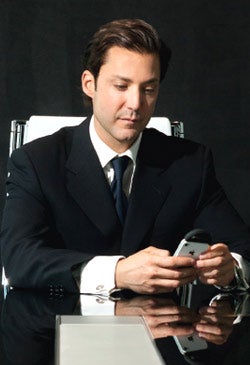
Enrollment in Pay Anywhere is “exceeding our most aggressive expectations, and it’s going to continue to grow astronomically,” Gardner says, adding that thousands of business owners are signing up every month, wooed by 2.69 percent transaction fees (among the lowest in the market), free hardware and cool software features like business analytics and the ability to toggle between different accounts on the same device. All in all, it’s a better user experience for a more affordable price, which is why NAB has halted purchases of mobile credit card terminal hardware in favor of its own Pay Anywhere solution, for a savings of $3 million last year.
The headline-maker in mobile payments for 2012 is expected to be near field communication (NFC) technology. Google has already tapped into this with Google Wallet, a service that allows customers to pay by merely tapping their phones–those loaded with card information embedded in an NFC chip–against a contact sales reader. The system has been adopted by chains like Peet’s Coffee & Tea, and there are several hundred thousand readers in circulation.
NFC technology will face some competition this spring and summer. That’s when Isis, a similar mobile platform representing a joint venture between AT&T, T-Mobile and Verizon (telcos that have access to 220 million handsets and existing relationships with credit card companies), rolls out in Salt Lake City and Austin, Texas–before a planned nationwide launch in 2013.
“Consumers carry up to 800 million credit cards between them, and when you put that together with the connectivity of the mobile phone, there’s potential to really change the way consumers shop, pay and save on a cultural scale,” says Isis head of marketing Jaymee Johnson, adding that the system can also read loyalty cards and coupons. “One tap of an NFC-capable phone, and you can do it all.”
Susan Davenport, senior vice president of global technology initiatives for the Austin Chamber of Commerce, expects Isis to do well because of the city’s tech-savvy, early-adopting demographic: 69 percent of the population is younger than 45, including more than 145,000 college students. “Plus, if you look at the city’s community of 35,341 private businesses, we have 3,944 in the tech space, and those tech companies employ about 95,000 people, or 12 percent of the regional work force,” she says.
Mobile commerce has implications for more than just billing. Andrew Mikesell, m-commerce product director at Dublin, Calif.-based software company Sybase, says there are exciting possibilities for marketing. “There are now opportunities to drive additional business through the use of real-time and geographical offers, like the idea behind Groupon Now,” he says. “Having the ability to market to potential customers, in real time, to those within proximity, is awesome.”
Todd DiPaola, co-founder and president of Venice, Calif.-based CheckPoints, which specializes in geolocational promo campaigns (check in, earn points, redeem for prizes), agrees. “That’s the magic of bricks and clicks,” he says. “You can be in a store and shop online anyway, or be walking down the street getting messages to shop at brick-and-mortar shops.
“To us, this is a thrilling time in history,” DiPaola continues. “We’ve been hearing ‘mobile is the future’ for a decade or two now, and at some point we got jaded, thinking it never was going to happen. Now with iPhone and Android phones, it’s been nonstop acceleration.”
As for those business owners who still haven’t caught on to the benefits of mobile payments? It’s only a matter of time. Mobile solutions will get even better as enterprising individuals see new areas for innovation.
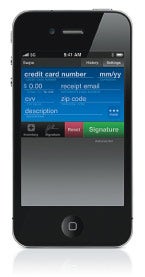
The opportunities are limitless. Dublin, Ohio-based billing provider AppNinjas is targeting established business owners who don’t mind paying a monthly fee in exchange for a personal merchant account and a dedicated banker; CEO John Waldron says the company’s Swipe app has been adding 300 to 500 merchants per month. Other companies, such as Jumio, are hoping to eliminate the hardware aspect entirely by allowing merchants to scan credit cards with their phone cameras. Still others are targeting specific types of businesses, such as The Service Vault, which is releasing an Android app that co-founder Joey Lane describes as a mobile payment processing extension for its web-based escrow platform. With the app–aimed at the service industry, particularly construction and home repair–a long-term renovation project can be funded upfront and the money held by The Service Vault (for a 1 to 2 percent fee) until both sides are satisfied with the result.
The payments industry–stagnant for decades–is suddenly brimming with technology that’s capable of changing the way businesses operate and consumers view currency. More important, the rise of mobile payments will enable small, local merchants to thrive where they couldn’t before. After all, declares Square’s Rabois, “going from not being able to accept cards to accepting them is the simplest step a business can take to grow.”
When Miki Nishihata opened Hello Bicycle in October 2008, he had some cool ideas for drumming up business. He stocked the quirky bike shop in Seattle’s Beacon Hill neighborhood with an ice cream machine and an espresso maker–big hits, of course. But he was missing one important feature: His was one of 26 million U.S. small businesses that don’t accept credit cards.
“Credit cards and me didn’t get along,” Nishihata explains, citing “exorbitant” monthly fees, long-term contracts, the cost of buying a card reader and the need for a dedicated phone line. As a cash business, he did OK, but felt he was likely losing out on some sales.
Then, a customer introduced him to the idea of mobile payments. “I heard about this thing called Square, and that all I needed was a smartphone and I could take American Express cards without anybody having to pay extra for it,” he says.