
Ben Cornelius: How Authentic Leadership Can Support More Resilient Global Operations
Edited by Entrepreneur UK
You're reading Entrepreneur United Kingdom, an international franchise of Entrepreneur Media.

In 2025, companies racing into new markets are discovering an uncomfortable truth: global growth is not a branding exercise; it is an operating system upgrade. That is the through-line of Ben Cornelius's work and the evolution of his earlier argument.
Ben Cornelius, CEO of Cornelius Communications, has built a career helping companies translate complexity into global systems that scale. The difference now is the "why." What drives the decisions behind the pipes, policies, and people that make international expansion repeatable?
Cornelius pushes teams to think bigger. "Organizations equate speed with innovation," he says. "It's not about being fast for the sake of speed; the focus should be on building systems that scale, and designing with purpose so innovation lasts."
The point is that turning quick wins into enduring success means insisting that discipline and clarity are what create durable success on a global scale.
Why Global Expansion Requires Infrastructure And Advocacy
The global software-as-a-service (SaaS) market is still expanding rapidly, projected to approach the trillion-dollar mark by 2030. That trajectory means more platforms will hit saturation at home and need systems that scale. Delaying internationalization and localization can lead to added operational complexity later on. Integrating these elements early can offer greater flexibility and may make it easier to enter additional markets over time.
Customer behavior reinforces this. In CSA Research's seminal report "Can't Read, Won't Buy" survey, three-quarters of consumers said they prefer to purchase in their own language, and nearly half said they never buy from sites in other languages. Those are not soft preferences; they are conversion gates.
Cornelius calls the solution "invisible infrastructure." It looks like multilingual content pipelines, internationalization in code from day one, governance that aligns product, engineering, finance, and legal, and teams trained to speak the internal language of the business. "Most localization teams only look at their external users, and they don't think about their finance team, their leadership team, the business units internally," he says. "All of that business infrastructure is what creates their existence." In other words, credibility with internal stakeholders is itself a localization deliverable.
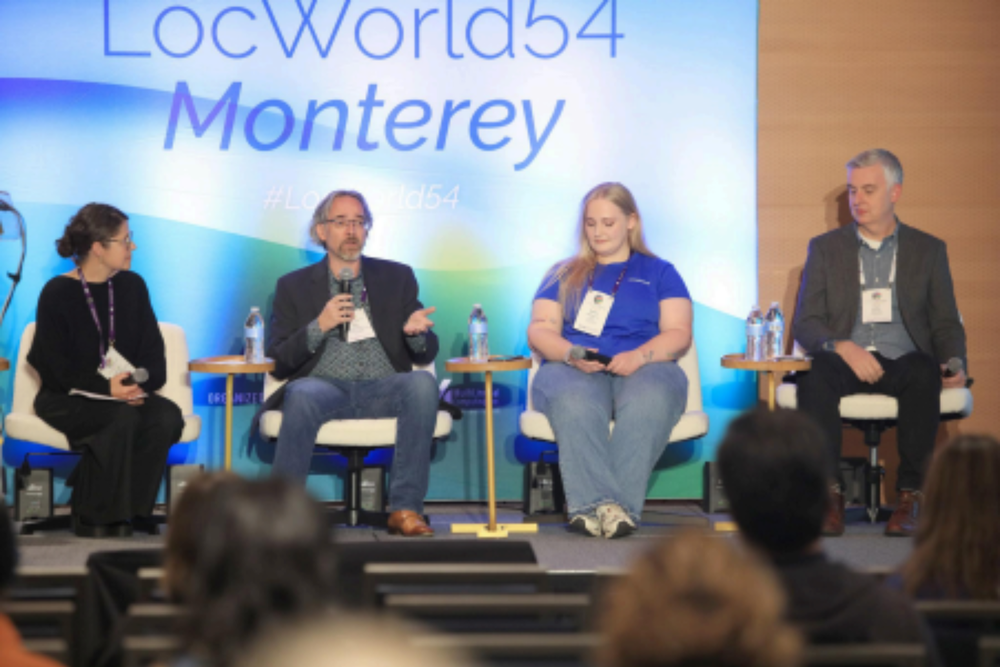 Ben Cornelius
The New Search Economy: Building for AI-Driven Discovery
Leaders must now build for a search landscape that no longer rewards keyword stuffing but understands intent. Google's shift toward AI-generated summaries means buyers often meet a synthesized, intent-driven answer before they ever see a list of links. That change rewards content that is structurally legible to machines and contextually relevant to humans in each market.
Cornelius is already building for that world. He is rebuilding his firm's site as a code-first application with structured data "meant to be read by a machine while still being pleasing to people." The goal isn't SEO theater. It's to make content discoverable in the way AI now reads and ranks information. "It's not the AI that's going to take your job," he adds. "People who use AI effectively may have an advantage in adapting to changing workplace expectations."
Mentorship as the Engine of Global Scalability
For Cornelius, global systems only work when human systems do. His business model has no sales department by design. "There's no disconnect between brand promise and brand fulfillment," he says. Clients meet the people who will actually do the work. That choice complements his mentorship-driven leadership philosophy. He mentions an intern who spent four years building the ability to communicate with VPs, understand metrics, and work across content, technology, and language. It's an example of how these skills can contribute to readiness for higher-level roles. "If you're my client, then I'm helping you be great," he says. "It's part of the service."
Mentorship, in this framework, is not charity; it is infrastructure. "It makes them more functional humans, which is a terrible thing to say," Cornelius says. "But it also makes them higher-value resources within their organization and great clients." Capabilities tend to build over time as teams and processes mature.
Why Authenticity and Clarity Drive Global Leadership
The "why" behind all of this, Cornelius says, is simple. "Why do we do this? Because it's fun and because we have a great time meeting people and helping them on this journey. And we need to pay our bills, too." It is an unvarnished honesty that defines his leadership. "There's no value in nonsense," he says. "There is value in the relationships you build when people know you're not full of it."
His message to executives is direct: sustained global expansion often benefits from clear intentions, consistent practices, and thoughtful leadership. Postponing system internationalization can increase the scope of work required later, especially if domestic growth slows. Tie localization outputs to the KPIs your CFO celebrates. Build content so machines and humans both understand it. Replace sales theater with delivery credibility.
The companies that win globally in the next cycle will not be the loudest. Organizations with aligned operations, culture, and leadership may find it easier to maintain consistency across markets. As Cornelius puts it, "When global expansion hits a wall, we solve it."


