
When planned care becomes a planned journey: the business case behind health travel
Edited by Entrepreneur UK
You're reading Entrepreneur United Kingdom, an international franchise of Entrepreneur Media.

There is a quiet shift happening in how people approach non-urgent healthcare. Elective procedures are increasingly being treated less like last-minute appointments and more like life logistics: researched early, discussed with family, scheduled around work, and chosen with the same scrutiny people apply to major purchases. In that world, "access" is no longer just a clinical word. It becomes a consumer question: How long will it take? Who will you speak to? What happens after you fly home?
This change is not driven by a single country or a single system. It is part of a broader pressure pattern across mature health economies: constrained capacity, ageing populations, and a workforce that is unevenly distributed. In its State of the World's Nursing 2025 report, the World Health Organization describes a nursing workforce that is growing overall, yet still marked by stark inequities in where nurses are available and how health systems rely on international migration to fill gaps. Those structural imbalances often become visible in everyday patient experiences: longer planning cycles, more steps to secure specialist access, and a growing appetite for predictable pathways.
Waiting lists are not just a healthcare issue; they are a market signal
For entrepreneurs, while headline debates often dominate the conversation, the downstream effects tend to shape people's real experiences most directly when capacity and demand fall out of sync.
A 2025 cross-country study looking at elective surgery backlogs across OECD countries found that waiting times "on the list" rose sharply after the pandemic, with the average wait on the list increasing by roughly 27–30% in the first three years examined. When delays become more common, people may begin looking for alternatives that feel more controllable. As a result, new services often emerge that focus not only on treatment, but also on coordination and support.
The OECD's Health at a Glance 2025 frames waiting times as an ongoing policy concern and one of the ways health systems are judged on access and performance. For businesses, that matters because it helps explain why "health travel" is no longer niche. It is often a practical response to a planning problem.
Health tourism is evolving from bargain-hunting to confidence-building
A common assumption is that health tourism is driven primarily by price, though the reality is often more nuanced. The reality in 2025 looks more nuanced. Many medical travellers are not simply looking for a cheaper option; they are looking for an organised option — one that reduces uncertainty.
What differentiates today's health travel experience is not the flight. It is the infrastructure around the procedure:
- early triage and document review
- video consultations that reduce guesswork
- clear scheduling and pre-op planning
- supported recovery windows
- follow-up that does not end when the patient leaves the clinic
In other words, health tourism is increasingly an experience economy with clinical stakes. That is why destinations that can pair specialist expertise with a reliable patient journey (logistics, translation, aftercare) tend to outperform those that compete on price alone.
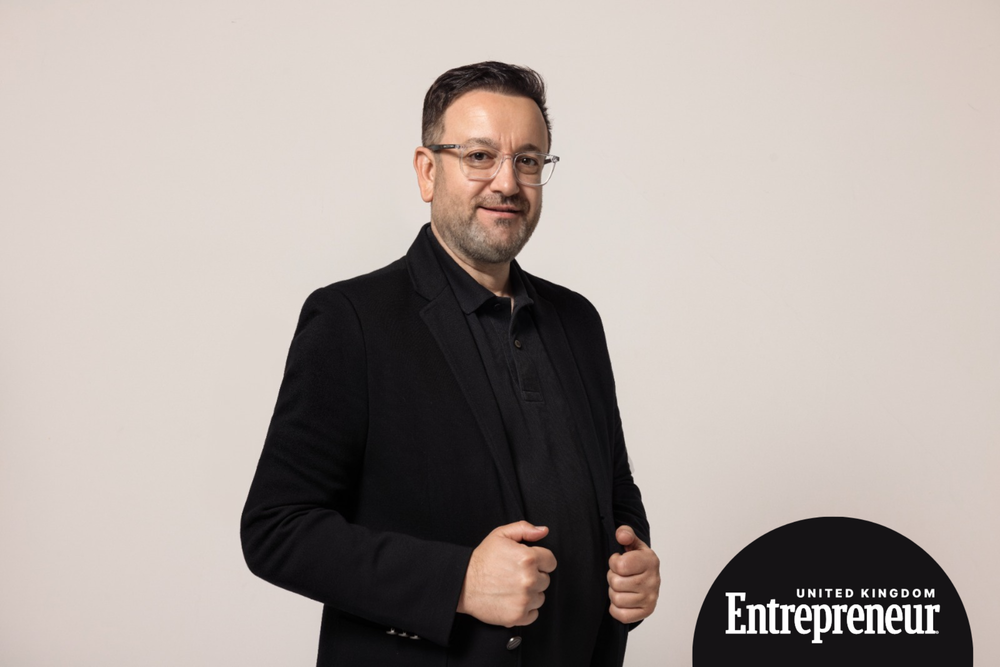 Ibrahim Kuzu, Co-Founder of Clinichub
Ibrahim Kuzu on where the real opportunity sits
Ibrahim Kuzu, a managing partner and co-founder at Clinichub, describes the current moment as an "access-and-assurance" shift rather than a simple rise in outbound care.
"What's changing is not that people want to travel for treatment," Kuzu says. "It's that they want a clearer pathway — fewer unknowns, fewer handovers, and a recovery plan they can actually picture."
That framing matters because it turns health travel from a transactional purchase into a service model — one that rewards operators who can build trust through process.
Kuzu, who began his career early and spent formative years working across cultures and industries, sees the most investable opportunities not in individual treatments, but in the systems wrapped around them.
"From an investment perspective, the most scalable value sits in coordination," he says. "Success may increasingly favor those that reduce friction before and after care, and offer a more consistent overall experience."
The underlying logic is familiar to any entrepreneur: when an industry becomes more complex for customers, companies that simplify decision-making and execution tend to grow.
Where Clinichub fits in, and why it is only part of the story
Clinichub operates within this expanding health travel ecosystem, working to organise elective-care journeys that can include early-stage patient communication, pre-assessment support, travel and accommodation planning, and post-procedure follow-up. The company's role is not to position itself as the centre of the sector, but as one example of how service-layer businesses are forming around a changing patient mindset.
That distinction is important: the story here is bigger than any one brand. The real headline is the category shift from healthcare as a local appointment to planned care as a cross-border journey, designed around trust, timing and experience.
A concrete example: rhinoplasty as a planning problem
The easiest way to understand health travel today is not as a "flight" story, but as a planning story. Because for many patients, the motivation is not simply "cheaper" care, it is a more predictable pathway.
Rhinoplasty is a clear example. It is not a single-day procedure in the way consumers think about a last-minute appointment; it comes with pre-op preparation, a recovery timeline, and questions that matter most after the patient flies home.
Picture a 29-year-old in Manchester considering rhinoplasty for both breathing concerns and a cosmetic change. On paper, they are "choosing a surgeon." In reality, they are trying to answer a different question: can this fit cleanly around work, leave days, and real life with a clear plan for arrival, consultation, surgery, splint removal, and a safe return?
This is where structured health-travel models create value. When the journey is designed properly, the first interaction is not a price conversation. It begins with document review, a short video consultation, and a simple, clear schedule that replaces guesswork with a plan. The difference is psychological as much as operational: the patient moves from "a process full of surprises" to a journey they can actually picture.
And in rhinoplasty, trust is often decided after the patient goes home. Swelling and day-to-day appearance changes are normal; what patients need most is the feeling that they are not navigating those weeks alone. Regular check-ins, photo follow-ups, clear warning signs, and fast responses turn "a procedure" into "a completed experience."
This is also where service-layer operators like Clinichub sit: not as the centre of the sector, but as one example of how the category is shifting toward coordination and reassurance — reducing unknowns before travel, and maintaining continuity after the clinic visit ends.
Why Entrepreneur UK readers should pay attention
Health travel is often discussed like a consumer trend, but it is also a business signal. It reflects three forces entrepreneurs understand well: In many cases, constraints encourage the search for alternatives, uncertainty increases the need for coordination, and complexity highlights the value of trusted intermediaries.
For founders watching regulated markets, it is also a reminder that growth is likely to favor models that can demonstrate quality, process discipline, and patient support, not just a compelling offer. And for investors, it raises a straightforward question: in the next wave of healthcare services, which businesses will be best positioned to turn "access" into a reliable, repeatable experience?


