
The Story Behind ArtWorkout: The App Helping 75 Million people Learn How to Draw
Edited by Entrepreneur UK
You're reading Entrepreneur United Kingdom, an international franchise of Entrepreneur Media.

Entering the world of apps that promote a creative outlet like drawing is no easy task, particularly when taking a bootstrapped approach (meaning, with no external guidance or financial support). Many people want tools that make creative activities accessible and casual, and building that kind of app with no expert backup requires teams to center every choice around user behaviour, and as a result, the traction it gets will depend entirely on whether people enjoy and return to the product.
Despite the hardships that come with it, this was the approach taken by ArtWorkout founder Aleksandr Ulitin, whose learn how to draw app grew from one modest technical idea. He built a system that could evaluate drawing accuracy in real-time, and that experiment became the core of a platform designed around showing consistent progress.
 ArtWorkout
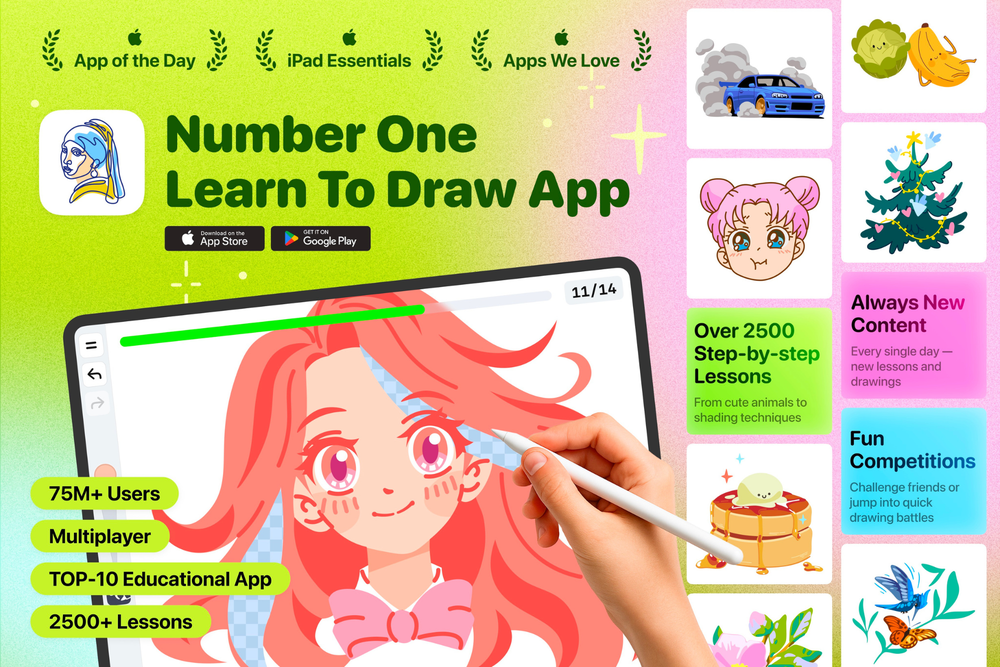
Today, the app, according to internal data, has reached more than 75 million learners across iOS and Android devices and various age groups. All of it reflects a product built on the idea of putting users' needs first to make drawing feel reachable for anyone.
Inside Aleksandr Ulitin's Vision For ArtWorkout
Aleksandr Ulitin had already spent years experimenting with side projects, technical puzzles and small self-built products before ArtWorkout existed. His work followed a pattern of engineering curiosity rather than market ambition, one where instinct would lead him to chase ideas simply because he thought they'd be interesting to try out.
The pivotal moment behind ArtWorkout emerged from his long-standing habit of drawing and a question that came to him while sketching. He wondered if an algorithm could track and evaluate the accuracy of a user's stroke in real-time and whether such a system could react instantly to every movement. There was no product strategy, no market analysis and no intention of creating a business; the appeal was purely the challenge. "I approached the question from a very engineering point of view: I just came up with a cool algorithm, and I implemented this feature, challenged myself," he explains.
What followed became the spine of ArtWorkout as it exists today. Slowly, that experiment became a full learning platform containing more than 2,500 step-by-step learn how to draw tutorials, gamified feedback loops and a Lesson of the Day feature that encourages users to
pick up new drawing sessions every day. These elements gave the app its identity as a lightweight, habit-forming tool not just for those learning to draw, but also those with some experience looking for a playful way to interact with their hobby.
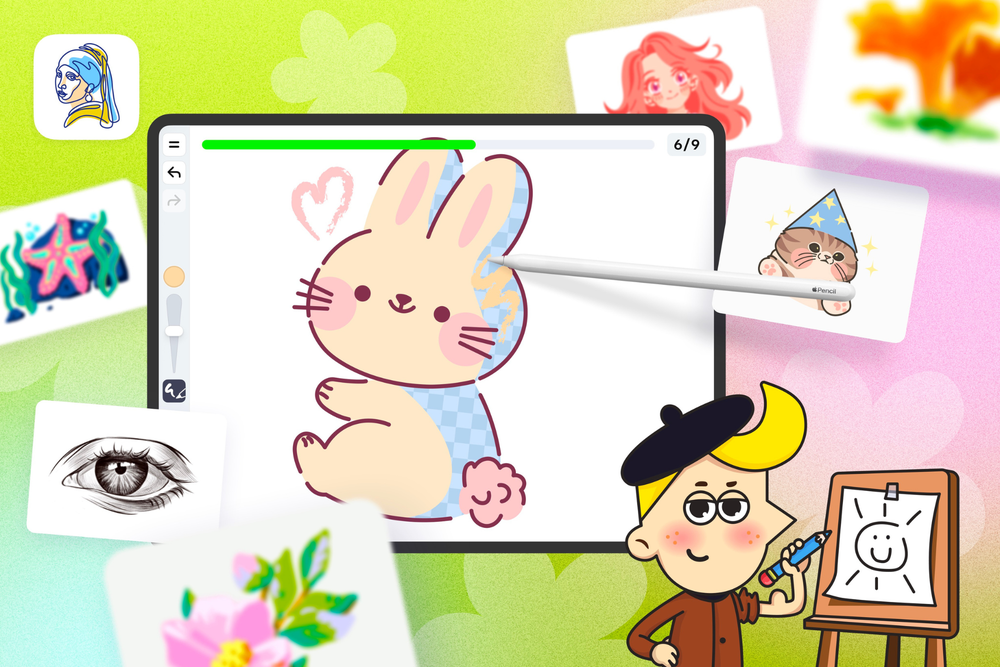
A later breakthrough came when Ulitin began looking for a feature that required active interaction between client and server. That line of thinking led to a prototype of Multiplayer Mode, built during a company hackathon, where groups draw a single image together in real-time. The result transformed ArtWorkout from a solitary learning tool into a shared, synchronous creative experience.
Ulitin sees its Multiplayer Mode as a core way to promote long-term engagement with the app, noting that shared drawing turns a simple exercise into a reason to return. As he put it, "drawing one picture together, turning it into a joint activity, is actually very fun," a dynamic that strengthens retention by giving users a social anchor within the app.
 ArtWorkout
How ArtWorkout Expanded With No External Investors
The absence of outside investment and the near-zero marketing spend shaped ArtWorkout into a product that had to rely entirely on its own quality to grow. With no major investors urging him to grow the platform at a pace he didn't feel comfortable, Ulitin centred his energy on making sure the user experience was top-quality, from its technical stability and responsiveness to making sure the user flow felt rewarding and easy to explore.
As traction increased, the work turned toward improving the interface, expanding lesson types and making sure newcomers and returning users alike remained engaged. The team also developed a measured balance between the app's free content and its paid options, making sure free users could have a full experience while also drawing in a sustainable subscription base.
The app's current popularity eventually validated the approach, and ArtWorkout's reach began growing organically, now currently in the top 10 of educational apps on the App Store. This growth was further boosted by a growing wave of user-generated videos on apps like TikTok and Instagram, particularly of people's experiences with the multiplayer feature, which further showed to a larger audience what new users could get out of the ArtWorkout's learn how to draw experience.
"Our growth was quite smooth, and I didn't think about big goals," Ulitin reflects. "I didn't have a big vision or big strategy. I simply understood, at each moment in time, what the next step should be to create more value for a greater number of people on Earth through this product."
The Behind-The-Scenes Foundation Behind ArtWorkout's Appeal
ArtWorkout's core mechanic is built around its real-time stroke-evaluation system, which measures accuracy as users trace and shape lines on the screen. Each movement updates a progress indicator, making the learning experience both visual and immediate.
That system works particularly well on tablets and iPads, where stylus support can give anyone using these tools more control and precision over what they draw, with the progress bar giving them feedback as they go along.
Every lesson in the app is meant to be easy and intuitive, with each tutorial broken into 10 to 30 simple steps where each phase builds on the one before, offering a clear sense of direction and pace. Users can also see their progress through the app's scores and completion markers, done with the intent of motivating them to keep going and keep refining their style.
Interviews from inside the company's user-feedback program show people across different ages seeing these effects in their daily lives. One woman recovering from an illness that affected her hand control said the app became "a way to work toward my dexterity goals," explaining that its scoring system and routine use helped her improve steadiness in her movements. A designer described the daily routine as "five minutes a day that still feels like progress," adding that the structured lessons made learning how to draw feel approachable even after years of trying more traditional methods.
This effect shows up clearly in how ArtWorkout performs on digital storefronts, holding a 4.6 rating from around 327,000 ratings on iOS and Google Play combined. How users comment on the app across both stores, praising its clarity and how it gives them a sense of daily progress, only serves to reinforce its mass appeal.
An Example Of A Bootstrapped Startup Success
As Aleksandr Ulitin sees it, ArtWorkout's trajectory is part of a wider movement in creative learning, where people prefer short, approachable routines over more formal learning systems. He sees this shift as a response to how the ubiquity of modern technology can make regular users feel overstimulated yet also disconnected, making lightweight creative practice more appealing than ever.
As a result, he believes the strongest edtech tools are the ones that incentivize human connection in a calm environment with none of the pressure that comes with regular schooling methods.
With that perspective, Ulitin's recommendation when it comes to using the app is simple: committing to ten or fifteen minutes a day learning to draw for a week and seeing if a rhythm gets to build naturally. As he puts it, "fast is slow but with no interruptions," a belief that captures the app's internal philosophy and the steady, human pace behind its global growth.


