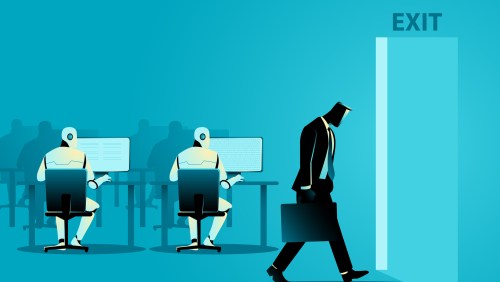
The Return to Office Movement is Causing a Mental Health Crisis. Employers Are Part of The Problem — But They Can Be Part of The Solution.
Employee mental health substantially worsened with the return to office demands, and it’s causing disengagement and low morale. The solution demanded by employees is the answer.
Opinions expressed by Entrepreneur contributors are their own.
The great return to the office — hailed as the elixir for the languishing economy and the panacea for remote work’s woes — is slowly revealing an unforeseen dark side. Beneath the glitter of the office’s glass walls, an insidious scourge is quietly permeating: a mental health crisis. Think of it as a silent workplace apocalypse — one where zombies aren’t gnawing at your physical being, but where stress, anxiety and burnout gnaw at your peace of mind.
Declining mental health: The invisible struggle
The silent alarm bells began ringing with the findings of a recent study by The Conference Board. It’s like an unsettling bedtime story for CEOs, the monster under the business bed that refuses to be ignored. Around 34% of workers admitted to experiencing lower mental health levels compared to just six months ago. And as if this wasn’t disconcerting enough, 37% reported a decrease in their level of engagement and sense of belonging, paradoxically juxtaposed with them working harder than ever.
This trend is starker amongst millennials, where 43% report decreased engagement, higher than 38% of Gen X and 34% of Baby Boomers. Consequently, 40% of millennials reported performing only what’s expected of them or less – what’s known as quiet quitting. This disengagement raises the critical question: Does declining mental health make workers less engaged in their jobs, or vice versa?
Consider an artist for a moment, who was once passionate and inspired, now feeling a distancing disconnection from her muse. The canvas that was once vibrant and animated now appears hauntingly desolate. That’s what it’s like when an employee’s connection to the mission and purpose of their organization wanes.
And the return to office looks like the key factor to blame. A whopping 52% of study participants indicated their preference for flexible/hybrid work schedules as a way of addressing their mental health struggles. And another form of flexibility, being able to take “no work” PTO days without guilt, would be valuable for 55% to help their mental health. That finding aligns with results from surveys and focus groups I run when helping clients transition to a return to office in a flexible hybrid work arrangement.
The mental health-workload nexus
The relationship between declining mental health and workload further amplifies these concerns. Among workers reporting decreased mental health, 48% work more than 50 hours per week. Half of the millennials reported their workload as detrimental to their mental health, higher than 48% of Gen X and 40% of Baby Boomers.
Factors like poor workplace communication, the inability to balance personal and work life, and the time spent in meetings exacerbate these effects. A toxic work culture also takes a toll, with 26% of workers asserting that it negatively impacts their mental health.
Mental health support: A decreasing trend?
Unfortunately, mental health and wellbeing support programs for workers seem to be on a downward trend. Available emotional wellbeing programs have dropped from 88% to 62% within a year, and financial wellbeing initiatives have seen a similar decline from 76% to 52%. Physical wellbeing programs, too, have seen a decrease from 74% to 54%. Despite availability, these programs are underutilized, with emotional wellbeing programs used by only 22% of those who have access to them.
The plot thickens when we delve into the reluctance surrounding mental health discussions. The study reveals a startling fact — about 38% of employees feel like they’re walking on eggshells when talking to their managers about their mental health. It’s akin to playing a high-stakes game of charades, where no one can decipher your clues, and the consequences are all too real.
Driven into a corner, employees have resorted to clandestine methods to address their mental health issues. The study reveals that 13% of workers took “unofficial mental health days,” 19% opted for sick days, and 18% donned a brave face, continuing to work despite their internal struggles. It’s like donning a mask each day, a facade that hides the turmoil within.
Cognitive Biases: Unseen Puppeteers in the Workplace Drama
Our minds are like overworked office interns, continuously juggling and processing colossal amounts of information. In this constant frenzy, cognitive shortcuts, or biases, come into play. They help us swiftly navigate complex decisions but sometimes lead us astray, causing distortions in our perception, thinking, and decision-making.
The status quo bias is the human tendency to prefer the current state of affairs, leading to resistance to change. In the workplace, this bias can manifest in the continued adherence to traditional, inflexible work arrangements, despite evidence indicating their harmful effect on employee mental health.
Employers might be overlooking the findings of The Conference Board study due to the status quo bias. It’s like sticking with an old, stuttering fax machine while a high-speed email system waits patiently on the sidelines. As comfortable as the current state may be, failing to evolve with the times has its pitfalls. In this case, it leads to the devaluation of employee mental health and wellbeing, reducing engagement and productivity levels.
The empathy gap refers to our inability to understand our own or others’ emotional states from a different emotional state. In the current scenario, this bias could lead to a misunderstanding of employees’ mental health struggles.
Imagine trying to comprehend the bone-chilling cold of the Arctic while basking in the tropical sun of Bali; difficult, isn’t it? That’s precisely how the empathy gap operates. Managers who have never grappled with mental health issues may find it challenging to understand their employees’ struggles.
This cognitive blindspot could account for why 38% of employees feel uncomfortable discussing their mental health with their managers. It’s akin to trying to explain the concept of color to someone who’s been colorblind since birth.
This gap may also explain why mental health support programs are not being utilized. If the architects of these programs have never experienced mental health struggles, they might not create programs that truly address the needs of those who have.
In essence, the office is our mental orchestra, and these biases are the off-tune instruments. By recognizing and addressing them, we can finally begin to hear the symphony as it was meant to be played. It’s high time we tune in and harmonize our workplaces with notes of empathy, understanding and flexibility.
Related: We Need a Real Commitment to Mental Health at Work. Here’s How (and Why).
Conclusion: The future of work is here
Employers have an opportunity to address the escalating mental health crisis. By adjusting workplace norms, embracing flexibility, and prioritizing mental health, we can create a healthier work environment. By adjusting workplace norms and embracing flexibility, companies can retain their diverse talent, ensuring that their workforce mirrors society’s richness. It’s like baking a multi-flavored cake — each ingredient adds its unique flavor, contributing to the delicious final product. As we strive to reflect society within our organizations, flexible work arrangements and mental health awareness will be the yeast that makes our workplace culture rise to the occasion. This isn’t just about checking boxes; it’s about understanding that a healthy mind is the greatest treasure to find. It’s time we start digging for it in our workplaces.
The great return to the office — hailed as the elixir for the languishing economy and the panacea for remote work’s woes — is slowly revealing an unforeseen dark side. Beneath the glitter of the office’s glass walls, an insidious scourge is quietly permeating: a mental health crisis. Think of it as a silent workplace apocalypse — one where zombies aren’t gnawing at your physical being, but where stress, anxiety and burnout gnaw at your peace of mind.
Declining mental health: The invisible struggle
The silent alarm bells began ringing with the findings of a recent study by The Conference Board. It’s like an unsettling bedtime story for CEOs, the monster under the business bed that refuses to be ignored. Around 34% of workers admitted to experiencing lower mental health levels compared to just six months ago. And as if this wasn’t disconcerting enough, 37% reported a decrease in their level of engagement and sense of belonging, paradoxically juxtaposed with them working harder than ever.
This trend is starker amongst millennials, where 43% report decreased engagement, higher than 38% of Gen X and 34% of Baby Boomers. Consequently, 40% of millennials reported performing only what’s expected of them or less – what’s known as quiet quitting. This disengagement raises the critical question: Does declining mental health make workers less engaged in their jobs, or vice versa?