Three Business Professors and the Innovators They Inspired
How educators are influencing a new generation of entrepreneurs
Opinions expressed by Entrepreneur contributors are their own.
The Professor: Ed Roberts
Massachusetts Institute of Technology
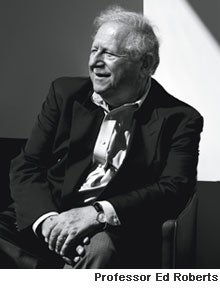 • Professor of technological innovation, entrepreneurship and strategic management and chair of the MIT Entrepreneurship Center • Bachelor’s and master’s degrees in electrical engineering from MIT, a master’s of science in management from the MIT Sloan School of Management and a doctorate in economics from MIT • Co-founder of about 10 companies, on the board of about 20 companies and investor in more than 40 firms |
Ed Roberts fashioned himself as the champion of business innovation at MIT long before the school established a formal entrepreneurship program. In the mid-1960s, as an assistant professor, Roberts started tracking how NASA researchers from MIT were using their work to start new companies. In the ensuing decades, Roberts conducted more research, taught business, successfully started his own ventures and observed how often MIT’s best and brightest were at the intersection of technology and business development.
By 1990, when Roberts was a full senior professor, MIT’s leaders still had not embraced the tradition of entrepreneurship through any kind of formal curriculum.
“When I proposed we start the MIT Entrepreneurship Center, the dean opposed it,” Roberts says. “He asked why he should waste his time on this project. I told him I was sick and tired of telling graduate students there was nothing for them but to do a thesis for me or take the one class on business plans that we offered.”
Roberts believed there was a real need for a formalized program that better introduced the great technological talent and the many innovators on campus to the business principles necessary to bring their ideas to market.
“I have learned from my research, from other people’s research and from years of experience at a lot of companies that it’s the market side–the relationships with the customers and the perspectives on competition–that become so essential when building successful companies,” he says. “I really lean heavily on students in the classroom around that.”
 |
Roberts was the driving force behind the MIT Entrepreneurship Center, which finally launched in 1990. He also helped grow a $10,000 business plan competition into the $100K Competition, which has resulted in notable alumni companies such as Silicon Spice (acquired by Broadcom for $1.2 billion), Firefly (purchased by Microsoft for $40 million) and Brontes Technologies (bought by 3M for $95 million).
As a supporter and teacher, Roberts also helped make possible the Deshpande Center for Technological Innovation, an MIT School of Engineering center designed to help innovative MIT research reach the marketplace. He and his staff at the Entrepreneurship Center teach entrepreneurial engineering participants at the Deshpande Center about important business fundamentals.
And in 2006, he founded the MIT Sloan Entrepreneurship and Innovation (E&I) program, a rigorous track within the MIT Sloan MBA program for future entrepreneurs.
“We now have 20 years under way of dramatic growth of institutional base at MIT,” Roberts says. “We had one course then–we have 30 courses now in entrepreneurship. We had one faculty member–me–who was devoting only a piece of his time to it. Now we have 20 faculty members–half of whom are tenure track and half are adjunct–all successful entrepreneurs or venture capitalists.”
 As for Roberts’ philosophy? “I argue that you ought to develop an environment in a firm where you can be open with each other about your feelings, your attitudes and the like, and that you have to develop an ability to talk openly–especially with your partners–about concerns, issues, disagreements and the like,” he says. “My experience says this is good for you.”
According to the most recent study done in 2006, researchers at the institution found that the companies held by living MIT alumni equaled nearly 26,000. Those companies employed more than 3 million people and did $2 trillion in business worldwide.
“That’s equivalent to the 11th-largest economy in the world,” Roberts says. “And all of that essentially took place in the last 20 years.”
The Student: Ric Fulop
Founder of A123 Systems (now partner, North Bridge Venture Partners)
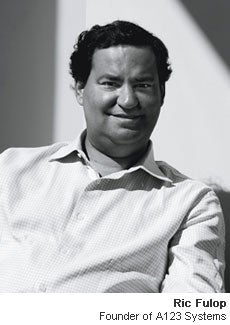 Serial entrepreneur Ric Fulop experienced some of his biggest successes as a student and just after graduating from MIT Sloan with an MBA in 2006. During that time, he built up A123 Systems from a tiny MIT-bred startup to a publicly traded company with more than 2,000 employees.
Fulop used technology developed by professor Yet-Ming Chiang of the MIT Materials Science and Engineering Department to create a new breed of lithium ion batteries. A123 is now one of the market’s major players in high-powered lithium ion batteries, and its $371 million initial public offering in 2009 was the year’s largest.
Fulop is now a partner at North Bridge Venture Partners, a VC firm with a portfolio of more than $3 billion specializing in early-stage technology investments (and an early investor in A123).
He still keeps in touch with professor Roberts and keeps his finger on the pulse of the MIT entrepreneurship community–connections that he says were instrumental to his success. But Roberts’ understanding of business structure has had the most impact.
“He’s really good at converting concepts into frameworks that are useful for looking at technologies in relation to markets,” Fulop says. “When you’re looking at a good technology, you try to find markets for it. It’s very helpful when you go through a framework or process of best practices to do that.”
The Student: Brian Shin
Founder and CEO, Visible Measures
 Brian Shin might be Roberts’ most successful non-student. Shin, a 2006 MIT Sloan MBA grad, had heard that Roberts was the person to approach at MIT for help in starting a new venture. It took Shin two months of pestering, cajoling and camping out as an auditor in one of Roberts’ classes before he landed a meeting.
The result of that diligence is Visible Measures, which Shin founded in 2005 to provide video playback metrics for measuring audience behavior when it comes to watching videos online.
Shin was a software developer by training before receiving his formal business education. He was still in school when he devised a solution for software developers to more efficiently create programs. That was the first evolution of the technology platform that runs his company. The idea evolved when his first customer, Macromedia, asked him to help it use Flash metrics to track user behavior in beta software. The company now serves companies like P&G, Microsoft, ESPN, Sony, Fox, Warner Bros. and others.
Roberts was one of Visible Measures’ founding angel investors (the company has raised more than $30 million) and Shin’s go-to collaborator during the first few years–through the departure of a reluctant partner, the tweaking of the company’s business model and the acquisition of more substantial VC money.
“Ed has had such a huge impact on my life,” Shin says. “I think of him as sort of a father figure. And I tell people that I’d take a bullet for Ed, because he’s been so great to me.”
The students: Josh Miller and C.J. Johnson
Co-founders, 3Play Media
Josh Miller and C.J. Johnson graduated from the first two classes to run through the MIT Sloan E&I program. Together they went on to build 3Play Media with two other MIT Sloan MBA graduates, Chris Antunes and Jeremy Barron.
Their company focuses on creating time-synchronized transcriptions of audio and video files for closed captioning, research and financial reporting. The business is based on speech recognition technology research conducted at MIT labs and technology that Johnson started developing for class credit while working on his MBA.
The team founded 3Play Media in 2008 and bootstrapped the company for two years before landing an angel round of $600,000 in February of this year.
Miller and Johnson say E&I’s support network and Roberts’ business connections were integral to 3Play’s early success.
“Ed gave us the resources to start our business,” Johnson says. “Upon graduation there was this ecosystem there where we all jumped off the cliff together and formed our own little support group going forward.”
The Professor: George Solomon
The Professor: George Solomon
The George Washington University
| • Associate professor of Management • Co-director, Center for Entrepreneurial Excellence • Doctorate in business administration, The George Washington University School of Government and Business Administration with a major in entrepreneurship/small business management and organizational behavior & development |
As one of the first graduates with a doctorate in entrepreneurship from an accredited school of business in 1982, George Solomon found himself at a crossroads. His alma mater may have ushered him through a groundbreaking field of work, but it wasn’t about to give him full-time professorship to teach the subject.
“They thought entrepreneurship was a fad and they didn’t want to hire me,” Solomon says. So he joined the Small Business Administration and for more than three decades helped expand the agency’s education and outreach program. As director of the SBA’s Office of Special Initiatives, Solomon was instrumental in opening more than 100 SBA Business Information Centers to help small businesses learn how to build business plans and grow, all on a limited annual budget of $500,000. He also taught business part time as an adjunct professor at GW, keeping his ties with the academic community and biding his time until it became clear that entrepreneurship education was not a fad.
That happened in 2004, when he left the SBA to teach entrepreneurship and management full time at GW and act as co-director of the school’s Center for Entrepreneurial Excellence (CFEE). By that time, dozens of entrepreneurship programs had sprung up at leading universities and GW was four years into its development of the CFEE.
Solomon’s goal is to ensure that his students, whether they start new ventures or not, work through business problems with an entrepreneurial mind-set.
“What we try to instill in all the students is you should be able to think and act entrepreneurial in any organizational setting,” he says. “It’s the idea of being creative and innovative and coming up with a new way of doing business that really is the essence of success.”
The Student: Bo Davis
Founder of Prometheus and Wasabi Sushi
When he met Solomon, Bo Davis was an undergraduate philosophy major with a passing interest in business. After he took Solomon’s business plan development class, Davis was hooked.
He didn’t switch majors, but he did follow up by taking several of Solomon’s graduate-level classes. “It helped primarily with the business fundamentals–putting together all of the different parts of a business and really understanding what people would want to see if they were thinking about investing in a plan,” he says.
By the time he graduated with a bachelor’s in philosophy in 1997, Davis had learned enough to start Prometheus, a developer of higher-education course-management software that he sold to Blackboard in 2002 for $9.6 million. After that early success and a stint with the Peace Corps, Davis enrolled in London Business School to earn a master’s in finance.
Davis now owns Wasabi Sushi, a restaurant with three locations in Washington, D.C., and one planned for Boston by the end of 2010. He says Solomon’s tutelage was critical in helping him start up and grow his ventures.
“It was very helpful and it provided a lot of nuts and bolts I needed,” Davis says. “It helps you in doing the due diligence on yourself and your own ideas to formulate something that makes sense.”
The Student: Ayman El Tarabishy
Research professor at George Washington University and executive director of the International Council for Small Business
Solomon’s influence not only encouraged his students to start new ventures, it also helped inspire a generation of teachers like Ayman El Tarabishy to keep the dynamics of entrepreneurship education evolving.
El Tarabishy, who earned an MBA in 2007 and a doctorate in 2005 and now Solomon’s colleague at GW, is known for the entrepreneurship program he developed for healthcare professionals. He is executive director of the International Council for Small Business, the world’s largest and oldest nonprofit focused on small-business research. El Tarabishy also helps run a technology consulting firm called InfoComTech that does technology product development and web development projects for clients such as the National Federation of Independent Businesses.
“His pedagogy, which I actually use a lot in my courses, is to teach the phenomenon of entrepreneurship from a state of doing,” he says of Solomon, “It’s about saying, “Don’t worry whether you have the traits of an entrepreneur.’ It’s not about the person, it’s not about family background. It’s more about understanding the process and dynamics involved and performing due diligence.”
The Student: Ellice Perez
General manager, Zipcar of Greater Baltimore-Washington
Ellice Perez has never founded her own ventures but she has experienced the highs and lows of running startups.
She took Solomon’s class on business plans as part of her GW School of Business MBA program, which she completed in 2005.
“While we had a lot of great discussions in his class, the theory doesn’t stick with you as much as all the hard work that went into it,” Perez says. “It was very practical and I carry it with me today. I have written multiple business plans since then and certainly learned how to do so in that class.”
As managing director at CakeLove, a startup venture by Warren Brown, a former lawyer and GW alum who put his company on the map with his Food Network show Sugar Rush, Perez helped grow the business, which she says kept her as busy as any small-business owner.
In 2007, Zipcar recruited her to head up its Washington, D.C., metro region, where she, along with a team of 10 employees, manages a fleet of 800 cars shared by regional subscribers. In June, Baltimore was launched and falls under her leadership, with 50 cars and four employees. She says the role has her acting very much like an entrepreneur within a greater corporate framework.
“I use the things I learned every day,” she says. “I use them while working with my team and making sure we’re performing well together and also in trying to ensure that operationally, things are done faster and more efficiently than ever.”
The Professor: Chuck Matthews
The Professor: Chuck Matthews
University of Cincinnati
| • Professor of entrepreneurship • Founder and executive director of UC Center for Entrepreneurship Education and Research • Doctorate in business from University of Cincinnati |
Chuck Matthews bases his teachings not just on academic research, but also on his real-life experiences: As a teenager, he helped his family build up one of the most efficient auto salvage yards in Cincinnati.
“My father, brother and I built our business from the ground up,” Matthews says. “A lot of the lessons I teach today are well founded in the fundamentals of strategic management, but they also have the flavor of the practical associated with what it takes to apply a lot of that.”
He took a part-time gig teaching business at University of Cincinnati in 1982, a position Matthews was told would be temporary. He has been at the school ever since, today focusing on entrepreneurship classes at the undergraduate and graduate levels. He founded UC’s Center for Entrepreneurship Education and Research in 1997.
Matthews, who has taught more than 5,000 students, strongly believes that entrepreneurial fundamentals apply to all business environments–startup ventures, nonprofits and corporations.
“Student entrepreneurs are exceptional at translating thought processes to action,” he says. “I challenge them on all fronts to make it work, and I think they really value that challenge on how to translate their education and convert it to action.”
The Student: Ahmed Shuja
Founder and CTO, Progressive Cooling Solutions
While pursuing his doctorate in electrical engineering at University of Cincinnati in 2005, Ahmed Shuja worked on projects for NASA to create technology for cooling satellites. His work sparked an idea for a mechanism that would cool electronics in a similar way.
Lacking any business experience, he sought advice from the university’s business school and was referred to professor Matthews, the school’s go-to man for all things entrepreneurial. Shuja enrolled in Matthews’ business plan class, and in 2006 Shuja’s plan landed more than $1.5 million in investment from the Siemens Technology-to-Business Center–along with a long leash to create something out of his technology.
Matthews helped Shuja develop parts of his plan, connected him with some of his smartest business students to act as teammates during business plan competitions and provided a sounding board for ideas. “Dr. Matthews was very giving of his time,” Shuja says.
Progressive Cooling Solutions is now applying the cooling properties of its technology to LED lighting solutions. By the end of the year, Shuja says, the company will be recast with a new name, offered publicly and will begin rolling out affordable LED products to market.
The Student: Dan Cremons
Associate, Alpine Investors
At the age of 24, when many of his contemporaries are still figuring out how to move out of their parents’ homes, Dan Cremons is already making a name for himself in the San Francisco investing scene. He has been at Alpine Investors, a small-cap equity firm, since graduating from UC’s entrepreneurship program in 2009.
Cremons spends most of his time on strategic planning for Alpine-backed companies and says the entrepreneurial principles he learned at UC are germane to the issues he addresses daily.
“The entrepreneurship background has been hugely valuable in my ability to do my job here,” he says. “We’re interfacing on a daily basis with small-business owners, and the entrepreneurship background equipped me to listen to and evaluate those stories and ultimately understand whether or not they’ve got a good business.”
Though Cremons never took one of Matthews’ classes, the professor was always willing to listen to Cremons and his peers when they came to him for advice about business ideas.
“He spent time teaching, mentoring and giving ideas–but not giving us the answers,” Cremons says. “At that point in the development cycle, that was hugely valuable.”
The Student: Dan Shelly
Director of business development, Meridian Life Science
Matthews calls Dan Shelly one of his brightest former pupils–even if Shelly’s business concept never got off the ground.
Shelly worked with Matthews to develop a life-sciences business plan, which won numerous competitions in 2002. Already a Ph.D.-holding scientist in physiology, Shelly based the idea for his former company, Physiomics Systems LLC, on his knowledge of animal clinical trials and ideas he had for improving the efficiency of the trials. After the competitions, he managed to raise early rounds of seed money, but a new marriage and shifting life priorities made it difficult for him to tolerate the risk of running a startup that would require millions to even have a chance of getting off the ground.
“I genuinely believe his idea for Physiomics was just ahead of its time,” Matthews says. “Down the road, I think we’ll see the industry evolve toward this, but he was just too far ahead of the curve.”
But Shelly’s ideas for Physiomics and the communications skills honed through his entrepreneurship education made him a valuable target for Meridian Life Science, which brought him on to help it better relate with their small-business customers and to instill an entrepreneurial spirit into the business.
“Meridian hired me to do a job that technically I had no qualifications for from the standpoint of scientific background–my science was in a different area,” Shelly says. “Had it not been for that exposure through Physiomics and the ability to convey science the way I did, I wouldn’t be where I am today. They liked my ability to convey ideas clearly and concisely–a skill that I was able to hone and refine working with Chuck.”
The Professor: Ed Roberts
Massachusetts Institute of Technology
• Professor of technological innovation, entrepreneurship and strategic management and chair of the MIT Entrepreneurship Center • Bachelor’s and master’s degrees in electrical engineering from MIT, a master’s of science in management from the MIT Sloan School of Management and a doctorate in economics from MIT • Co-founder of about 10 companies, on the board of about 20 companies and investor in more than 40 firms |
Ed Roberts fashioned himself as the champion of business innovation at MIT long before the school established a formal entrepreneurship program. In the mid-1960s, as an assistant professor, Roberts started tracking how NASA researchers from MIT were using their work to start new companies. In the ensuing decades, Roberts conducted more research, taught business, successfully started his own ventures and observed how often MIT’s best and brightest were at the intersection of technology and business development.
By 1990, when Roberts was a full senior professor, MIT’s leaders still had not embraced the tradition of entrepreneurship through any kind of formal curriculum.