His Creative Business Has Made $2.5 Million and Can’t Be Replaced By AI: ‘Price Continues to Go Up’
Tyler Loftis is on a mission to make art more accessible.
Key Takeaways
- Loftis sold his early paintings for about $2,000; some of those pieces are worth $50,000 now.
- Today, his pricing typically starts at $25,000 — driving millions of dollars in sales to date.
- He founded AllArtWorks and launched Portraits For Purpose to further expand art’s reach.
Tyler Loftis always had an intuitive understanding of what he needed to learn as an artist. But he grew up in West Michigan — a “fine art desert” at the time — and didn’t receive a formal art education until he moved to New York, he tells Entrepreneur.
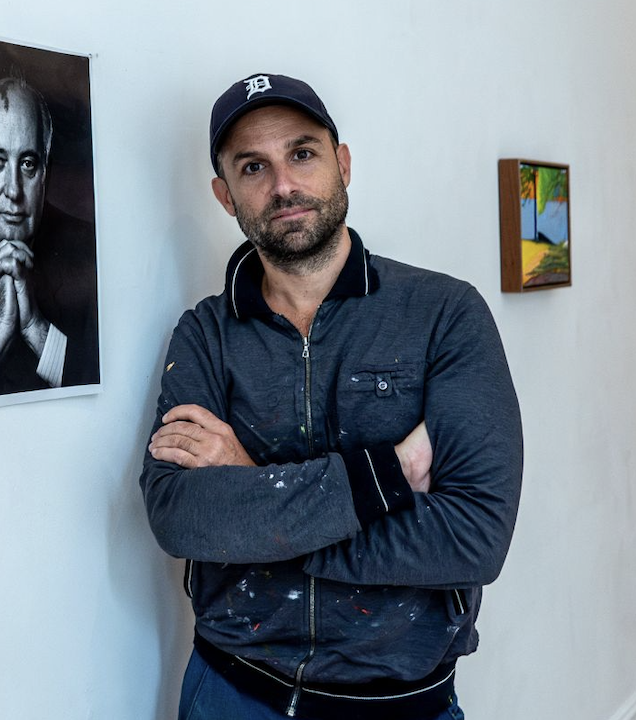
After seven years of studying observational painting at the New York Studio School and the New York Academy of Art, Loftis traveled across Europe, visiting every major museum and honing his craft.
But Loftis intentionally waited to sell his first painting until he was ready; in his mid-30s, he felt it was time. “ Any sale as an artist is major,” Loftis says. “It is a big deal because all of a sudden this thing lives outside of your world, and somebody else has deemed it important enough to be in their world.”
Selling his early paintings for $1,500 to $2,000
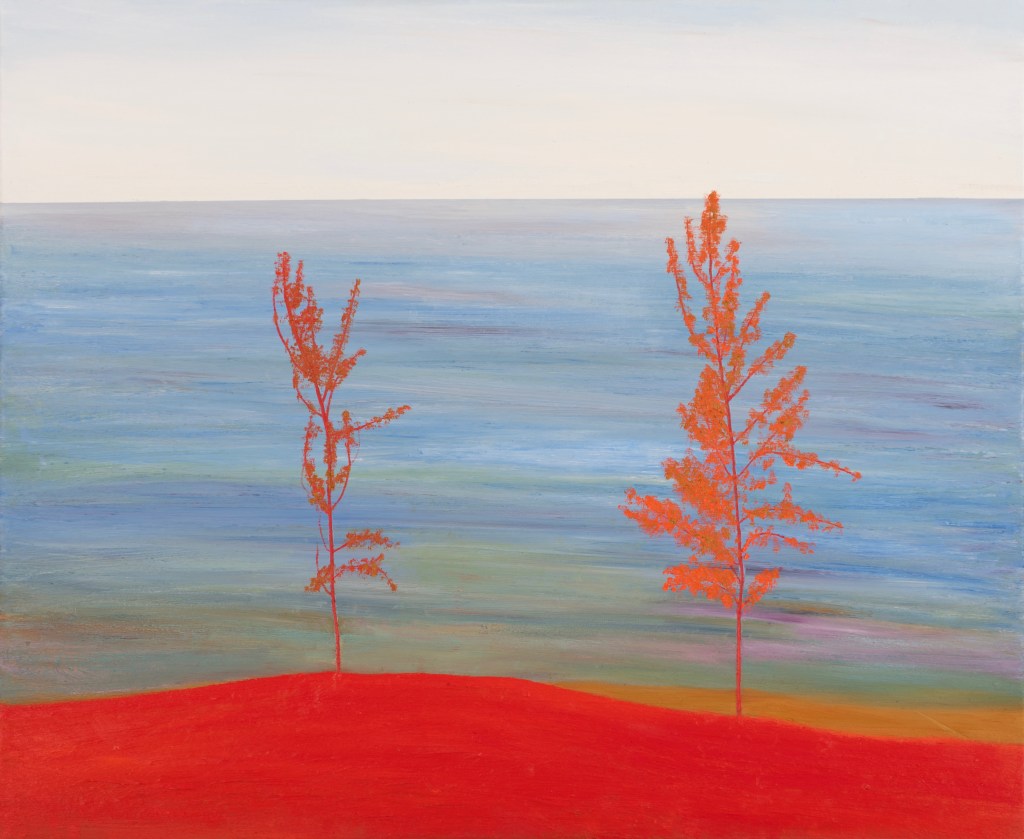
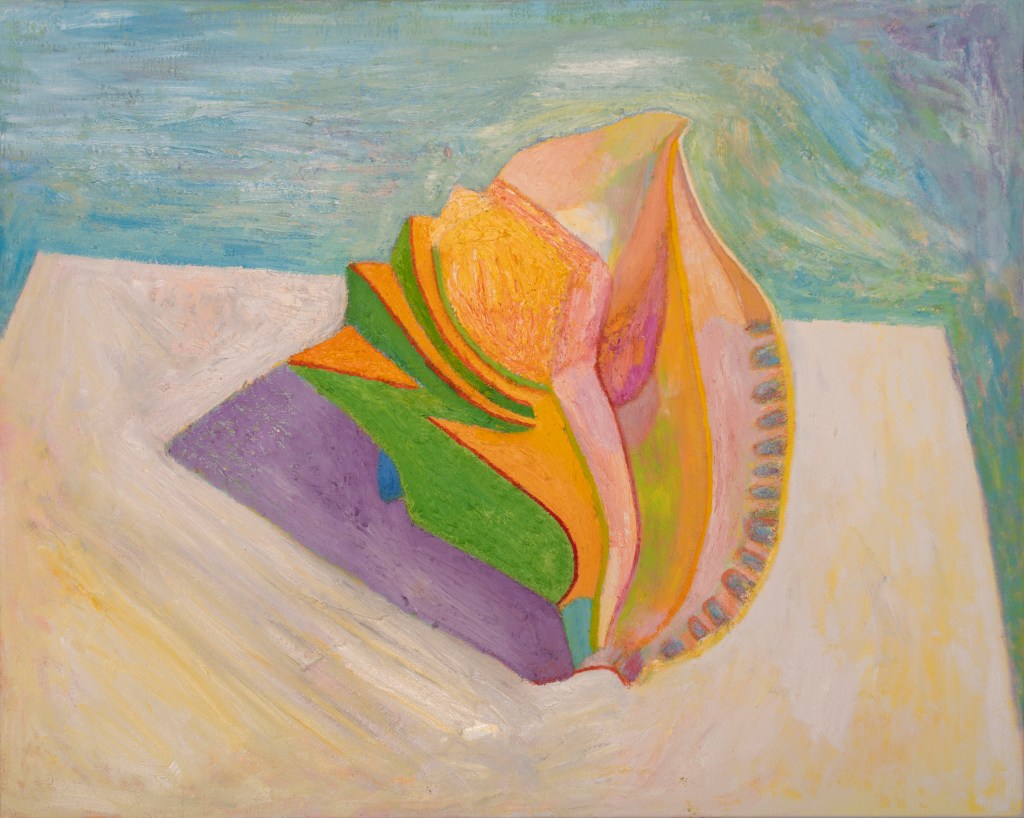
Loftis’s early paintings typically sold for prices in the $1,500 to $2,000 range. Now, about a decade later, some of those same pieces are worth $50,000, the artist notes.
These days, most of Loftis’s paintings start at $25,000 — and go up to seven figures. He’s sold $2.5 million worth of his work to date.
“ As an artist, you’re born knowing the value of what you do,” Loftis says. “We have this kind of [misconception] that artists make terrible business people. When you’re doing business, you have to think like a business person and not like an artist.”
The artists who sell their paintings successfully have to wear two different hats, much like some of the most famous artists throughout history have, according to Loftis.
“ If we think about Da Vinci, Michelangelo, Titian, Frida Kahlo, all these people had a sense of their work and its value,” Loftis explains. “They had an understanding of the organic path to get it out into the world. Because, ultimately, they were also civil servants. We are here to serve all our culture. So that relationship and our sales very much go hand-in-hand.”
Artists who sell successfully operate like startup founders
An artist’s sales mode isn’t unlike a startup founder’s, Loftis adds. Just as an aspiring founder should develop an audience for their product to generate a profit, an artist should build a community around their work, which translates into purchases from collectors.
Nowadays, Loftis creates about 14 pieces a year. “Of course, I’d be a much better capitalist if I made 300,” he says. “But because of that and the inherent quality, they are expensive. And that price continues to go up.”
Loftis doesn’t play by traditional gallery sales rules
Today, much of the art world has shifted away from the traditional sales strategy employed by greats like Michelangelo, instead obfuscating the process with exclusionary gallery practices, Loftis says.
Loftis cautions against making art elitist and isolating it from people — because people give art its value.
“When you have to be on a yacht or driving up in a Lamborghini to buy these pieces, that’s signaling that it’s not important to the rest of the country or the rest of humanity,” Loftis explains. “And the rest of humanity is what makes Van Gogh, Michelangelo, a great movie, a great song, relevant.”
When galleries lead with the price of a piece, they turn the experience of falling in love with an artwork into a transactional one, Loftis says.
Loftis’s Tribeca studio operates differently. Not only does the studio host other artists, musicians and actors, but it also serves as Loftis’s showroom, allowing people to spend time with his work.
Loftis isn’t interested in forcing people to think or feel a certain way, an issue he sees unfolding in too much of the art world right now. He likens this restrictive curation to the absurdity of telling patrons who walk into a bar or concert venue which drinks or music to like: “You’d have a revolt.”
Founding AllArtWorks, launching Portraits for Purpose
In 2015, Loftis founded AllArtWorks, a platform connecting art with homes, to help make art more accessible. He wanted to give artists the tools to sell their work independently.
Artists from around the world can list their work on the AllArtWorks site. Each piece is vetted for quality and price; about 60% of submissions are accepted.
“Everything on our site is juried, so that artists can [navigate] the two most uncomfortable conversations: How much is it worth? And is it any good?” Loftis says. “We take care of that because our board of curators has tons of authentic training and schooling to be able to back these artists up.”
AllArtWorks takes a 40% commission, and a piece’s final list price includes the cost of a frame and shipping.
Additionally, Loftis launched the charity initiative Portraits For Purpose in 2018 to continue to expand art’s reach.
“ I paint famous people and donate the proceeds to the charity of their choice,” Loftis says. “What I get out of that is when somebody looks at a Muhammad Ali, and they’re like, ‘Wow, that’s a beautiful painting, and it’s not 300 years old. It’s not even 100 years old. It’s happening now.’ That gives them a bit of a passport to appreciate and get connected to painting.”
Loftis prices the pieces he paints for those silent auctions below his usual rate. His work for Portraits For Purpose typically sells in the $15,000 to $25,000 range, with all proceeds going to the chosen charity.
ArtPrize awards more than $400,000 directly to artists
A few months ago, Loftis accepted the position as executive director of ArtPrize, an international art competition and cultural festival held annually in Grand Rapids, Michigan.
The citywide event takes place for 16 days from the end of September into early October.
“Our entire city turns into a canvas,” Loftis says. “We have art everywhere. It’s extraordinary. We had almost one million visitors last year. The diversity and authenticity of the art tell the ultimate American story.”
ArtPrize awards more than $400,000 directly to artists through both popular and juried voting, and distributes over $200,000 in annual grants to support the work of eligible participating artists.
Balancing the creative process with other professional goals
Needless to say, Loftis must balance a lot as a working artist managing his other professional pursuits.
But he says he has a lucky advantage: Everything he does integrates, and the passion he sees from his fellow artists serves as a deep source of inspiration.
“It’s like I have this little thing inside of me that generates this energy, and it compacts, compacts, compacts, and then when I get to my studio, it just flows out,” Loftis explains. “Art is very much about love. It’s about connection. When you store that energy inside of yourself, that’s really what you’re putting down on canvas.”
Loftis encourages all young artists to find a community that energizes them — and invest in those relationships as seriously as you would in your 401(k).
A European perspective on work-life balance
Spending time in Europe also helped Loftis develop a different perspective on work-life balance in the U.S., which puts far greater emphasis on productivity above all else. “ If you go to the south of France and Italy and brag about how much you work, they think you’re literally out of your mind,” he says.
In the U.S., where success is so often entangled with financial gain to the exclusion of other meaningful life experiences, art helps cut through the noise, Loftis notes.
“Art emphasizes that your view is your view,” the artist explains. “It’s not part of your religion necessarily; it’s not part of your political party. It’s yours. As Americans, we spend too much time chasing and not enough time appreciating our own perspectives.”
If the U.S. had siestas like Spain, everyone would try to get a second job, Loftis says.
“ I love this country so much, but feel like this grind that we put on a pedestal isn’t great,” he adds. “We should really put a lot more time and energy into connection and living.”
AI’s push for productivity and what connects us to our past
These days, it’s hard to have a conversation about the push for productivity without mentioning AI.
As the technology continues to put pressure on people’s livelihoods, particularly on those within creative industries, Loftis acknowledges that it’s an extremely difficult time for artists working in certain mediums, like graphic design.
However, Loftis isn’t afraid that AI will come for his paintbrush — because painting’s tools haven’t evolved for tens of thousands of years.
“I have a piece of wood with some hair on the end, dirt mixed with oil,” Loftis says. “I don’t see that going away anytime soon. You have this direct passport to a first-hand account of what it was like to live all the way going back to 40,000 years in the cave. And it’s a really powerful, beautiful thing, this sort of ballast that keeps all of us connected to the past, present and future.”
Key Takeaways
- Loftis sold his early paintings for about $2,000; some of those pieces are worth $50,000 now.
- Today, his pricing typically starts at $25,000 — driving millions of dollars in sales to date.
- He founded AllArtWorks and launched Portraits For Purpose to further expand art’s reach.
Tyler Loftis always had an intuitive understanding of what he needed to learn as an artist. But he grew up in West Michigan — a “fine art desert” at the time — and didn’t receive a formal art education until he moved to New York, he tells Entrepreneur.
After seven years of studying observational painting at the New York Studio School and the New York Academy of Art, Loftis traveled across Europe, visiting every major museum and honing his craft.
But Loftis intentionally waited to sell his first painting until he was ready; in his mid-30s, he felt it was time. “ Any sale as an artist is major,” Loftis says. “It is a big deal because all of a sudden this thing lives outside of your world, and somebody else has deemed it important enough to be in their world.”