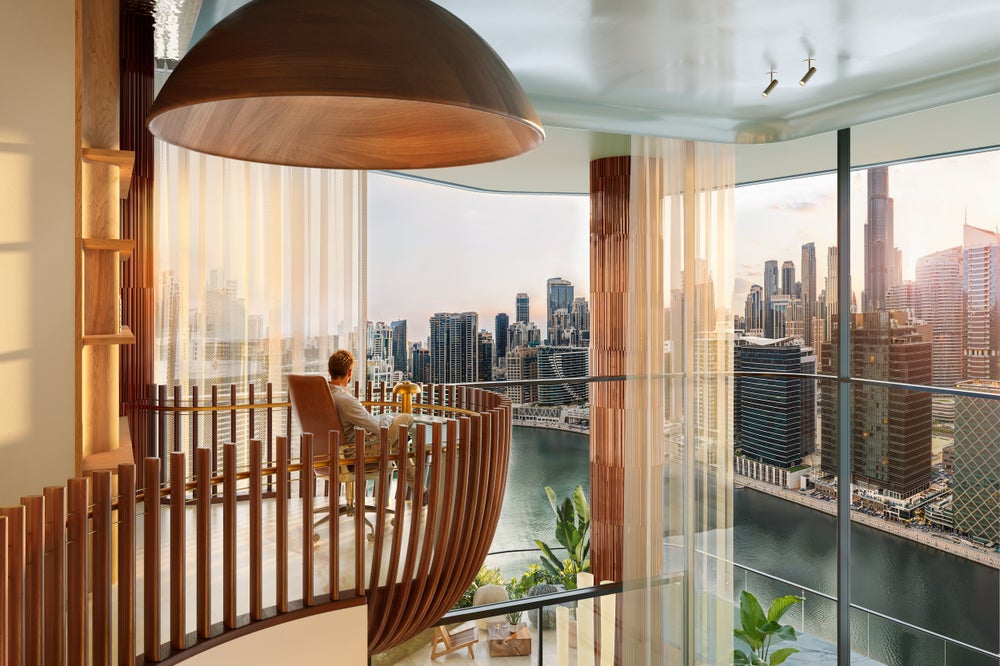
Eywa and the Regenerative Age: Building Living Cities With Alex Zagrebelny How R.Evolution's design-led approach fuses wellness, longevity, and architecture to heal places - and people.
Opinions expressed by Entrepreneur contributors are their own.
You're reading Entrepreneur United Kingdom, an international franchise of Entrepreneur Media.

R EVOLUTION positions itself as a design-led, values-driven developer - what originally motivated you to approach real estate in this way?
Nowadays we live in a world where numbers dominate our thinking: revenue, returns, indices. Cities lose their authenticity, the soulfulness of architecture fades behind glass and concrete. Distances grow not just in kilometers but in attention—between people, between us and nature. We are no longer grounded.
The imbalance of energies in our buildings exacts a quiet toll on mental health, seeding discord in our relationships with ourselves and with those we love. The air we breathe, the water we drink, the spaces we inhabit—too often—feel toxic. Strong artificial electromagnetic fields, relentless urban logistics, gadgets and social media draining our time and attention. Looking at my wife and children, I asked myself a question: do I want such a world for them and their children? Ask yourself the same: do you want this life for your loved ones?
For almost three decades I've worked in real estate, a field traditionally measured by numbers—meters, margins, growth. Yet a deeper question has guided me: what if the spaces we build do more than shelter us? What if they heal, elevate, and sustain the life around us? Through decades of yoga and a lifelong study of ancient wisdom alongside modern science, I began to see buildings as living systems—balanced, healthy ecosystems that support how we live, love, and work. This is the seed of a new paradigm: regeneration over sustainability. We once built to shelter the body. Then we built to express power, beauty, and production. Now we build to restore the Earth, nourish the soul, and awaken the human spirit.
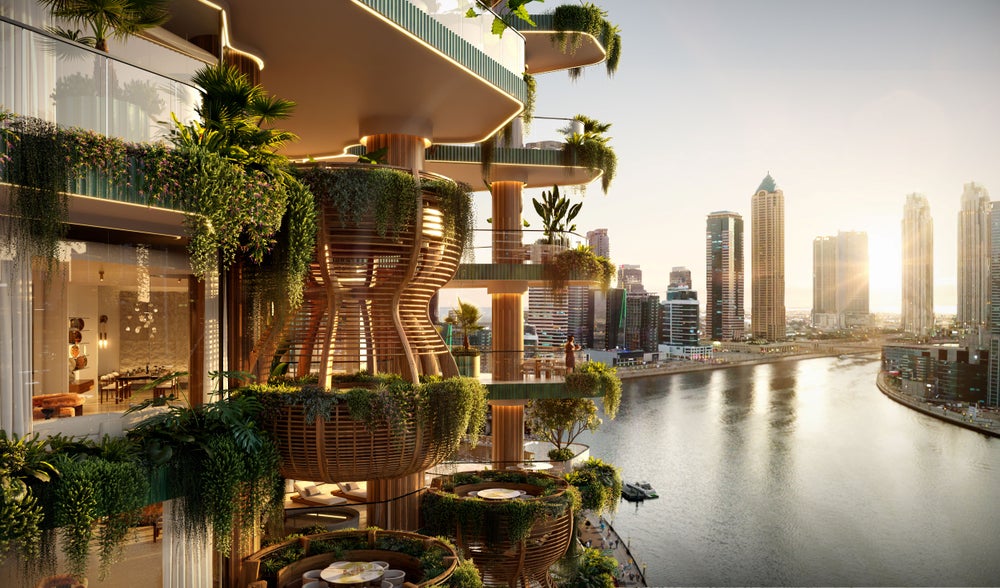
Our Eywa signals a new species of architecture—a living, breathing, remembering, evolving presence. Every home becomes a sanctuary of vitality, legacy, and love; every beam carries intention, every drop of water and breath of air is part of a sacred code. You are not a guest of the universe—you are its architect.
As a developer, how do you balance architectural ambition with commercial viability?
I don't see them as opposing forces. In my experience, they only clash when architecture is treated as an indulgence rather than a discipline. Architectural ambition is about clarity of thought: good design solves problems early, reduces friction, and improves longevity, avoiding compromises that become expensive over time. When ambition is rooted in purpose, it strengthens commercial outcomes rather than undermining them. The mistake many developers make is thinking only short-term: optimising for the moment of sale instead of the life of the building. At Eywa, we consider how a building will perform emotionally, environmentally, and operationally over decades. That long horizon changes the conversation. Investment in design, materials, and spatial intelligence ceases to be a cost and becomes risk management—an essential part of delivering durable, value-rich places.
Sustainability and wellbeing are central to your projects—how do these principles translate into real construction and design decisions?
For us, sustainability and wellbeing start from one core belief: humans are biological beings, not machines. If a building ignores that, no amount of technology can compensate. From the earliest design concepts, Eywa has been conceived so wellness is not an add-on but the starting point. We draw on ancient wisdom such as Vastu Shastra, apply regenerative design principles, and couple them with modern engineering to create something genuinely distinctive in the region.
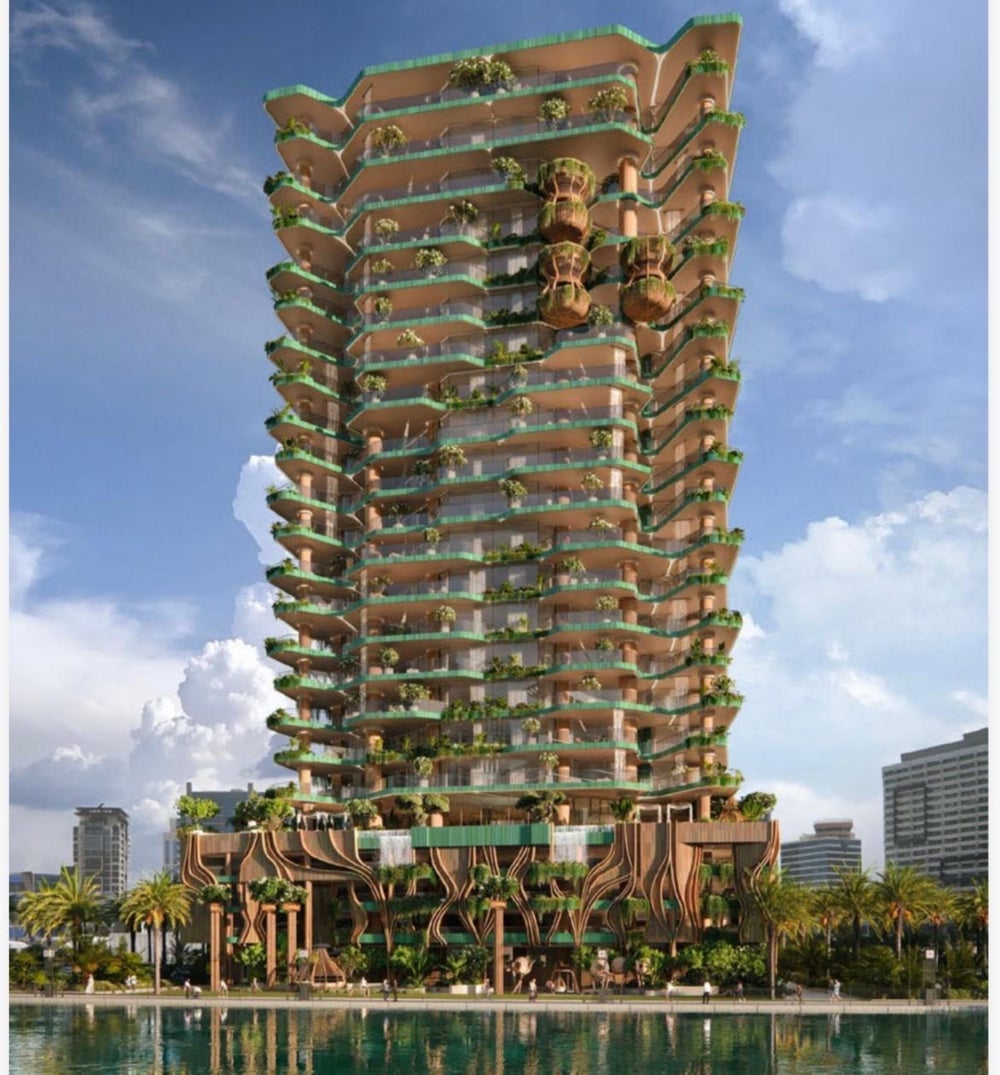
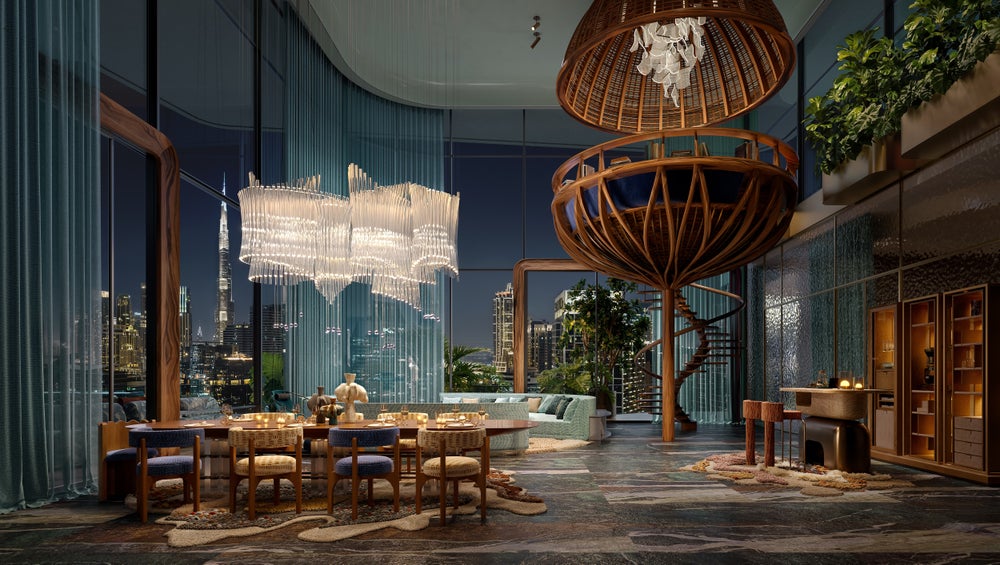
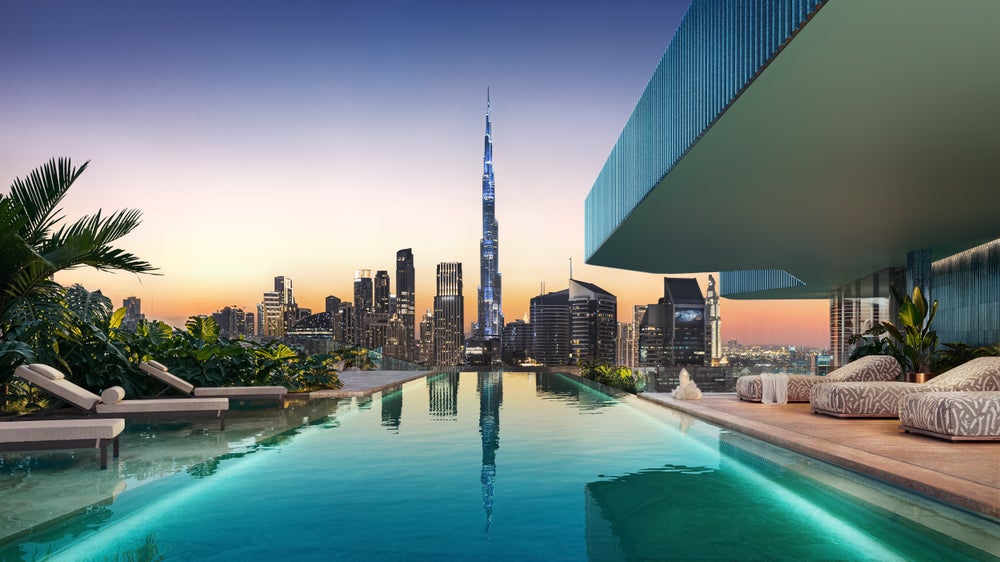
Practically speaking, that means advanced ventilation and filtration systems that deliver purified, oxygen-rich air; abundant natural light calibrated to support circadian health; and biophilic interiors using regenerative materials that reduce stress and enhance focus. Spatial design is informed by ancient geometries to foster a sense of harmony and balance. We integrate hydroponic greenery and natural ecosystems so nature becomes part of daily life, not something you seek out. We create distinct zones for different human needs: quiet spaces for rest and reflection, communal areas for connection, environments designed for movement, and spaces that offer sensory calm. This isn't about an occasional escape from daily life; it's about designing a daily life that doesn't require escaping.
Wellbeing, to me, should feel effortless. Residents shouldn't have to manage their environment to feel good—the building should do it quietly in the background, regulating, supporting, and restoring. Sustainability works the same way: when systems are integrated, efficiency becomes passive rather than performative.
Your developments often feel more experiential than conventional luxury real estate—what does "experience-led development" mean to you?
For me, experience-led development begins with a mindset shift: we're not designing objects, we're shaping lived moments. Luxury real estate has often focused on what you can see—finishes, views, brands, scale. Experience-led development is about what you feel, often beneath the surface, over time: how your body responds to a space in the morning, how quickly you relax when you come home, how connected you feel to yourself, to nature, and to the people around you.
At Eywa, this thinking is informed by ancient wisdom that we can measure scientifically today: humans function best when in harmony with natural systems. Concepts like biophilia, energy flow, balance, and rhythm aren't abstract ideas here; they are practical design guides.
What's different now is that technology lets us translate that wisdom into living environments. Regenerative architecture enables us not just to minimise harm but to actively support well-being through advanced air and water purification, electromagnetic protection, intelligent materials, and systems that respond to human needs rather than forcing adaptation.
Experience-led development means every design decision is filtered through the end user's daily life: how spaces restore rather than stimulate, how they foster presence rather than distraction. Eywa is a multi-platform ecosystem for designing human life. Architecture becomes a carrier of health, turning space into a living prescription. Technologies amplify ancient wisdom, translating time-tested insight
into modern capability. Data becomes a new form of wisdom, informing choices with depth and precision. Wellbeing is a measurable asset, quantifiable and optimisable through design, science, and feedback. Community stands as the ecosystem's protective layer, enriching resilience and shared purpose. Intellectual property is recognised as a scalable value, enabling creativity and impact to grow without compromising integrity. In essence, Eywa unites space, science, and society to cultivate healthier, longer-lasting lives. When you get this right, luxury stops being about excess. It becomes about depth. And that, to me, is where real value—human and commercial—is created.
How involved are you personally in the design and creative direction of each project?
I'm deeply involved in every project, from the very first sketch to the final vase on the windowsill. To me, each Eywa project is like a child: it deserves attention, nurture, and a clear sense of identity at every stage. I'm not a distant overseer; I'm a hands-on participant who believes the design voice should be coherent from day one and stay consistent through the finish.
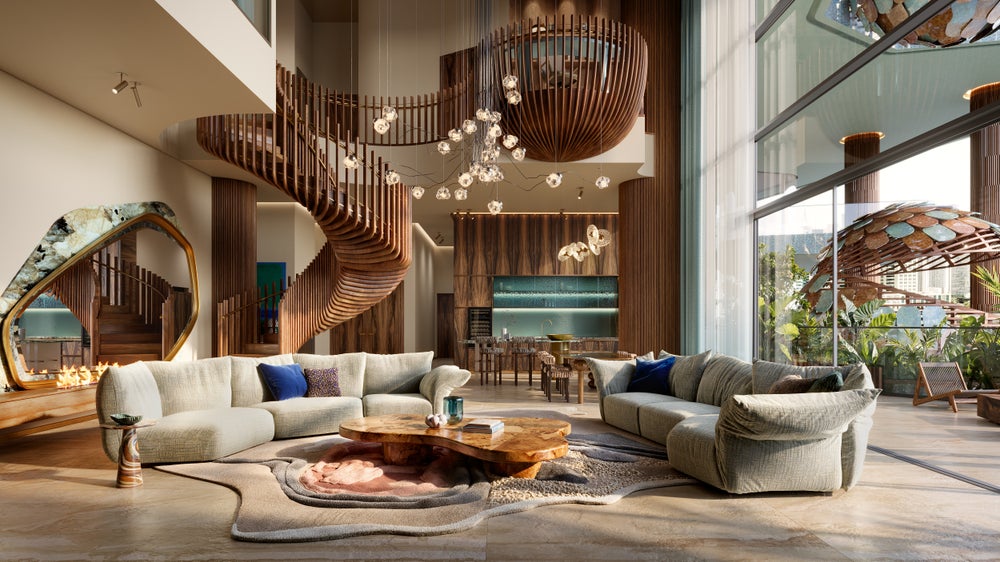
From the outset, I immerse myself in the core idea, testing concepts against how people will live, breathe, and move through the space. I choreograph the narrative that binds architecture, engineering, and wellbeing, ensuring the philosophy of regenerative design threads through every decision. I'm involved in shaping material palettes, light and acoustics, and environmental systems because these details determine whether a building feels truly alive or merely inhabited.
During early stages, I'm in the room for workshops, conformance checks, and design reviews with the team, translating intuition into tangible criteria and measurable goals. As the project matures, I remain engaged—testing prototypes, scrutinising finishes, auditing sustainability performance, and ensuring that operational realities align with the original vision. Even at the final touches, I'm attentive to the little moments that define daily life: the way a handrail feels, the cadence of a corridor, the resonance of a lobby light.
That level of personal involvement isn't about micro-management; it's about stewardship. It's about preserving a consistent Eywa DNA—climate responsiveness, human-centric wellbeing, and a respect for the social fabric—while allowing expert collaborators to bring their specialised excellence to bear. The result is a collection of spaces that carries a single, honest voice across scales and disciplines, and feels authentic to those who inhabit them.
What lessons from developing in multiple international markets have most influenced your approach?
For almost three decades in the development business, my work has spanned Latvia, Germany, Spain, and the UAE. Those four markets have shaped four core lessons that guide our practice today. First, local culture cannot be an afterthought. Even with a universal design philosophy, the success of a project hinges on understanding how people live, perceive space, and engage with community in a given place. Immersing ourselves in local rituals, climate, regulatory nuances, and market expectations from the outset—and translating them into design principles rather than a checklist—has been essential in each country.
Second, climate and physiology drive performance. The best spaces adapt to their environment and to human rhythms. What works in Riga won't translate directly to Dubai, Barcelona, or Abu Dhabi. We tailor ventilation strategies, daylighting, materials, and landscape integration to local conditions, validating choices with measurable outcomes—air quality, thermal comfort, light levels, and occupant wellbeing.
Third, reliability and risk management beat novelty for longevity. The most resilient schemes are built on robust, replicable systems that stand the test of decades, not one-off gimmicks. We prioritise modular, scalable solutions that can evolve with future needs while delivering consistent performance.
Fourth, trust between stakeholders is fundamental. Success hinges on clear alignment with investors, regulators, design teams, and communities in each country. That requires transparent governance, rigorous cost–benefit thinking, and a collaborative process that respects local procurement, supply chains, and decision-making cultures. When you build that trust, innovation becomes feasible rather than contested.
Eywa isn't just a concept—it's a practical framework that translates climate, culture, and care into built form. Today, we have four Eywa-branded buildings under construction: two residential towers in Dubai—Eywa Tree of Life and Eywa Way of Water—and two flexible-office schemes in Barcelona—Eywa Bac de Roda and Eywa 22Palms. Our Maldives hospitality project and ongoing Dubai developments sit alongside. The aim remains constant: regenerative design that works with climate, culture, and community to deliver environments that quietly support wellbeing, resilience, and longevity.
Projects like Eywa challenge traditional notions of luxury—how receptive are buyers and investors to this philosophy?
When Eywa launched in the UAE, we deliberately stepped away from conventional luxury—the glass towers and marble lobbies that saturate skylines. Yet we are unapologetically ultra-luxury in our own right: we combine the finest luxury materials, artisanal detailing, and curated sensory environments with spaces that are intelligent, purposeful, and aligned with how people actually want to live now and into the future. The opulence is real, but it's governed by a discipline—every surface, system, and spatial decision is chosen to support long-term health, comfort, and resilience.
It's natural to pause at first. Reframing luxury from conspicuous excess to wellbeing and longevity asks buyers to reassess value. But once people experience the philosophy—seeing how premium materials meet regenerative design, how lighting, acoustics, climate, and air quality are engineered for comfort—the feedback tends to be transformative: this makes sense; why wouldn't every luxury project prioritise these elements?
Eywa resonates with buyers and investors who value health, craftsmanship, and exclusivity. For them, luxury isn't about ostentation; it's about alignment—between body, space, and environment, rendered in exceptional materials and immersive experiences. From an investment perspective, regenerative, wellbeing-focused design isn't a deviation from performance; it enhances it. Ultra-luxury projects built with the finest materials, bespoke detailing, and a commitment to longevity tend to command stronger demand, longer lifespans, and enduring desirability, translating into durable value. Yes, the market is ready—and, in truth, it has been waiting. Eywa has been the catalyst, proving that sustainability, wellbeing, and commercial viability can grow together without compromise, even at the highest echelons of luxury.
Can you tell us what else is in the pipeline for the Eywa brand?
Eywa is the world's first regenerative civilisation platform—a typology of buildings that can be deployed across residential, hospitality, commercial, and educational sectors. From the outset, Eywa was conceived as a living philosophy, one that can evolve, deepen, and respond to different facets of human well-being and longevity over time. It's not a single project but an Eywa Movement, with four buildings already under construction: two residential towers in Dubai—Eywa Tree of Life and Eywa Way of Water—and two flexible-office buildings in Barcelona—Eywa Bac de Roda and Eywa 22Palms. Our huge Maldives hospitality project is progressing, alongside a Dubai villa community and a Dubai mixed-use tower at various stages of planning. If Eywa Tree of Life grounds itself in biophilia and nature, the second Dubai chapter, Eywa Way of Water tests a complementary, equally vital element: water. Water is a source of life, balance, and regeneration, and we're exploring how its presence shapes architecture and the human nervous system—calm, restoration, and longevity when thoughtfully integrated into daily living.
Each Eywa project is a distinct expression of the same core principles, interpreted through its own lens. Ancient wisdom continues to inform our thinking, but it sits alongside modern science, technology, and engineering to create environments that work quietly and effectively on multiple levels—physically, emotionally, and environmentally—without feeling forced. As Eywa expands, our aim remains to translate bold ideas into durable, placespecific realities that elevate everyday life,upheld by sustainability, wellbeing, and longevity. We stay true to our regeneration ethos: regenerative development for the planet, for communities, and for people.
What are the biggest risks developers face today, and how do you mitigate them?
The biggest risk today isn't volatility; it's short-term thinking in a longterm business. Developers operate in a landscape shaped by geopolitical uncertainty, climate pressures, shifting demographics, and rising expectations around health and sustainability. None of these trends is temporary, and the real danger is planning projects as if conditions will revert to those of ten or fifteen years ago. One major risk is creating assets that age too quickly—physically, environmentally, or emotionally. Projects designed for speed or lowest initial cost often become liabilities within a single cycle. Our mitigation is simple in principle but demanding in practice: design for longevity from day one. That means flexible layouts that can evolve, durable materials and systems that resist obsolescence, and architecture that supports adaptability rather than forcing a single use.
A second risk is treating sustainability as a compliance checkbox rather than a core strategic driver. Regulations will tighten, markets will demand higher performance, and tenants will expect more than token green credentials. At Eywa, we embed regenerative thinking at the outset—not as a trend, but as essential risk management. This translates into holistic strategies: regenerative design, resilient energy and water systems, and living environments that support health, productivity, and well-being over decades.
A third area of risk is misalignment among stakeholders—investors, regulators, communities, and design teams. Ambition can outpace execution if governance isn't clear and collaborative. Our approach is transparent, structured, and locally informed: we establish shared objectives early, maintain rigorous cost-benefit discipline, and foster ongoing dialogue with procurement ecosystems to ensure decisions hold up under changing conditions.
Ultimately, the best defence is an integrated, future-facing discipline: blend long-lived architectural decisions with adaptable technology, embed sustainability as a driving value, and embed governance that can steer projects through uncertainty while preserving human-centric outcomes.
How do you see the role of the developer evolving as cities prioritise sustainability, wellness, and community?
The role of the developer is evolving from builder to conductor of ecosystems. As cities prioritise sustainability, wellness, and community, we're increasingly stewards who align financial viability with social and environmental value. Sustainability is no longer an optional add-on but the core logic of every project. Investors and regulators expect performance that exceeds compliance, with regenerative systems, circular materials, and longterm resilience built in from the outset. Climate resilience, energy and water stewardship, and compatibility with smart grids sit in the design from day one, not as retrofits.
Wellbeing has become a design imperative that shapes daily life. Projects are conceived around how people actually live, work, move, and rest—air quality, daylight, acoustics, and stress reduction inform every decision. This demands multidisciplinary collaboration from concept to operation, with measurable wellbeing outcomes guiding progress. Community sits at the heart of value creation. Developments are designed to energise neighbourhoods, blending housing, work, hospitality, and public spaces in ways that foster
connection, safety, and shared identity. Building strong relationships with local stakeholders and adopting adaptable planning and use strategies helps communities evolve with the project over time.
Technology and nature are no longer in tension but in dialogue. Intelligent materials, regenerative design, and data-driven insights are used to harmonise with natural systems and human rhythms, enabling environments that quietly regulate comfort, health, and energy use so people can thrive. Trust remains the currency of success. Transparent governance, rigorous cost–benefit thinking, and a long-term view of value over shortterm wins build credibility with investors, regulators, and communities. When trust underpins every decision, the outcome is healthier cities, more vibrant communities, and durable, responsible assets that endure. Today, we see development shift from merely delivering spaces to shaping environments that support daily life, connection, and resilience—because that's where lasting value lives.
For a company like R.Evolution, this evolution feels natural. Our footprint may be selective rather than expansive, but that allows us to work deeply to collaborate closely with cities, designers, and communities, and to treat each project as a long-term contribution rather than a standalone product.
Looking ahead, what legacy do you want REvolution to leave on the cities and communities it helps shape?
I hope the legacy is subtle, but lasting. Not a signature style or a collection of landmarks, but a shift in expectations, a sense that buildings can, and should, give more back than they take. If people move through a city and feel calmer, more connected, or more grounded without quite knowing why, that's meaningful to me.
At a practical level, I'd like R.Evolution to be remembered for proving that long-term thinking works. That developments rooted in well-being, regenerative design, and respect for context are not idealistic, they're resilient, commercially sound, and deeply relevant to how cities need to evolve.
But legacy isn't only physical. It's also cultural. If we've encouraged other developers, architects, or decision-makers to slow down, ask better questions, and treat their work as a responsibility rather than a transaction, then we've contributed something worthwhile.
Cities are collective efforts. No single project defines them. But each one leaves a mark. I hope that R.Evolution's mark is one of care for people, for place, and for the future, and that this care quietly raises the standard for what thoughtful development can be.