How Founders Are Raising Millions: A Look Inside Yale’s ‘Venture Ready’ Program
The program is providing student entrepreneurs with the tools and lessons to launch their own successful businesses.
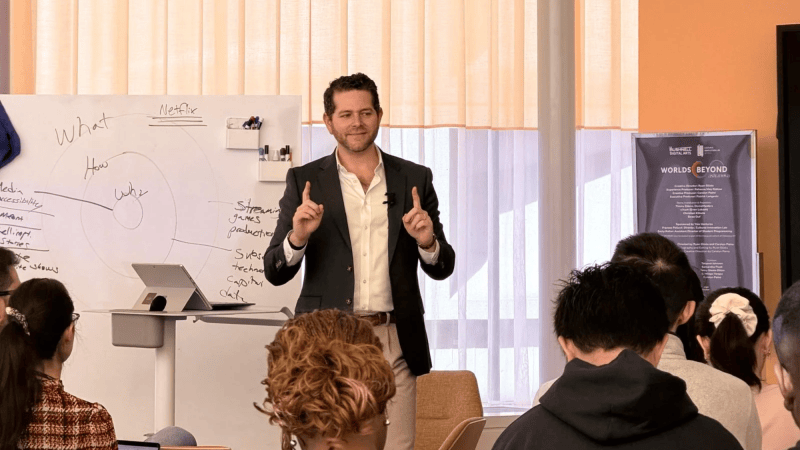
Henry Ritter, a Yale MBA student and participant in the Venture Ready Program, says his medical device company raised $1.2 million. That company, Urologic Design, is developing a non-surgical treatment for urinary incontinence, a problem that requires Ritter to persuade investors of both the clinical opportunity and the business behind it.
His fundraising progress can offer an early example of the ambition behind the Venture Ready Program at the Tsai Center for Innovative Thinking at Yale. The program helps student founders prepare for institutional funding and the decisions that come with building a company intended to scale rapidly.
Justin Silver, the Program Director of the Venture Ready Program, is a serial entrepreneur, founder, and investor in real estate, technology, and consumer-based businesses. For ventures he’s built and backed, he says he has raised more than $50 million. The Venture Ready Program draws on that experience to help founders develop their pitches, identify appropriate investors and prepare for due diligence.
“Henry came in with a serious business and the ambition to build it,” Silver says. “Our job is to help founders get specific about the opportunity, anticipate the questions investors will ask and make decisions they can stand behind.”
The pilot ran last spring with eight founders across six ventures. A second cohort began in September. Its arrival coincides with a period when AI has made building a working product cheaper and faster, while venture investment has become heavily concentrated in a small number of large financings.
A place to learn the business of fundraising
The Venture Ready Program operates within a Yale entrepreneurship community that includes Tsai CITY, Yale Ventures, and founders who return to share what they learned while building their own companies.
“We want Yale students to feel that building a company is just as natural a path as joining one,” says Josh Geballe, managing director of Yale Ventures.
Tsai CITY’s interdisciplinary community gives students access to peers whose experience can expose gaps in their thinking. A technical founder may need help understanding customer acquisition. A business student may need an engineer’s judgment about what can actually be built.
“When you bring together engineers, artists, and business thinkers, you get ideas that simply wouldn’t exist in a traditional startup environment,” says Kassie Tucker, executive director of Tsai CITY. “That cross-pollination is where innovation really happens.”
The program combines workshops with individual coaching and mentorship. Founders work on their market assumptions and financial models, then use those decisions to develop an investor narrative. Post-program support includes a four-week fundraising sprint and investor introductions.
A financial model can give those conversations something to test. A founder seeking money to hire a sales team should be able to explain how those hires would reach customers and how long the capital would last. A pitch that promises rapid expansion also needs assumptions about what each customer costs to acquire and what that customer contributes to the business. Questions like these can reveal a weak growth plan before a founder commits to it.
The Venture Ready Program is designed to help and support student entrepreneurs. They come into the program with interesting ideas and the program can help guide them through the process of building up a successful business, such as teaching them how to market themselves to potential investors and customers.
Experienced founders and investors also contribute to the program, giving students real-world experience and scenarios to learn from. One such lesson is that many of the best founders learn through iteration and failure. This program is meant to give students a safe, serious environment to learn those lessons.
For Silver, preparation begins with examining whether venture capital suits the business at all. Taking institutional money brings expectations about growth and eventual returns. Founders need to understand those expectations before committing to them.
“We ask founders what they would do with the money and what that spending should accomplish,” Silver says. “If they can’t explain the next milestone and why it matters, we have more work to do before they start approaching investors.”
Building faster can bring more competition
The urgency extends well beyond Yale. The PitchBook-NVCA Venture Monitor reported that AI companies received $355.9 billion in U.S. venture investment during the first half of 2026, accounting for 86% of the dollars deployed.
Research by Jan Bena and Bo Bian of the University of British Columbia and Mariassunta Giannetti of the Stockholm School of Economics offers another indication of the change. Their working paper found 20% more startup formation in industries with higher task-level exposure to generative AI than in less-exposed industries.
Those findings describe a growing supply of founders and products. They leave open the question of which companies will retain customers when competitors can build similar offerings with the same tools.
There have been arguments that AI will make businesses with established advantages more profitable while enabling widespread copying of businesses without them. For founders, that makes distribution, proprietary data and customer relationships important subjects to address before fundraising.
The question may become more concrete in Ritter’s field. A medical device company needs a credible route through clinical development and adoption. Investors must understand how a product could reach patients and how the company would finance the work required along the way.
“AI gives founders more runway to test an idea before they spend heavily,” Silver says. “It also gives their competitors that same runway. I want a founder to be able to explain why customers will keep choosing their company as the market gets more crowded.”
Students learning to make the case
For participants, investor preparation can change how they approach the business itself. Students Jaya Dadwal and Paris Mielke describe greater confidence in fundraising and a clearer understanding of what investors need to hear.
“Before this program, the idea of raising capital felt abstract,” Dadwal says. “Now we understand how to talk to investors, how to validate our market and how to present that in the most compelling fashion.”
Yale’s wider startup community provides examples of what successful companies can eventually achieve. Prepared, founded by Yale entrepreneurs, was acquired by Axon in a transaction the buyer described as worth $640 million.
What founders can use immediately
The Venture Ready Program’s approach may contain lessons for founders who will never seek venture funding. Begin by examining what a capable competitor could reproduce with available AI tools in 30 days. Then identify the parts of the business that would remain difficult to copy and assess whether customers value them.
That assessment should guide spending. A business whose advantage comes from customer relationships may get more from retention and referrals than from another feature. A company with useful proprietary data may need to improve how it collects and applies that information.
Adoption remains uneven. Census Bureau data collected between December 2025 and May 2026 put reported AI use among businesses between 17% and 20%. A small business that has learned to use the tools effectively may have an opening while competitors catch up. The value of that opening depends on what it does for customers.
Funding conditions still matter. The same PitchBook-NVCA report found that rounds of $100 million or more absorbed 87.5% of first-half investment. Strong preparation cannot guarantee that a smaller company will find willing investors. It can help a founder judge which investors to approach, how much to seek and whether another funding source would be more suitable.
“Some of the most important companies begin when a founder refuses to accept a problem everyone else has learned to live with,” Silver says. “We want students to leave Yale with the conviction to take on a problem that matters and the judgment to build a company that can solve it.”
The information provided in this article is for general informational and educational purposes only. It is not intended as financial, medical, or professional advice. Readers should not rely solely on the content of this article and are encouraged to seek professional advice tailored to their specific circumstances. We disclaim any liability for any loss or damage arising directly or indirectly from the use of, or reliance on, the information presented.
Entrepreneur Media was not involved in the creation of this content.