Sanjiv Lal on Turning Big Ideas Into Lasting Systems
Good ideas need more than momentum to survive the real world.
A product launch goes well. Early users are excited. The technology works. And then, somewhere between proof of concept and scale, things start to unravel. Manufacturing can’t keep pace. Customers don’t know how to use what they’ve bought. The founder approves every decision personally and slows everything down.
This pattern shows up across industries, and it has little to do with the quality of the original idea.
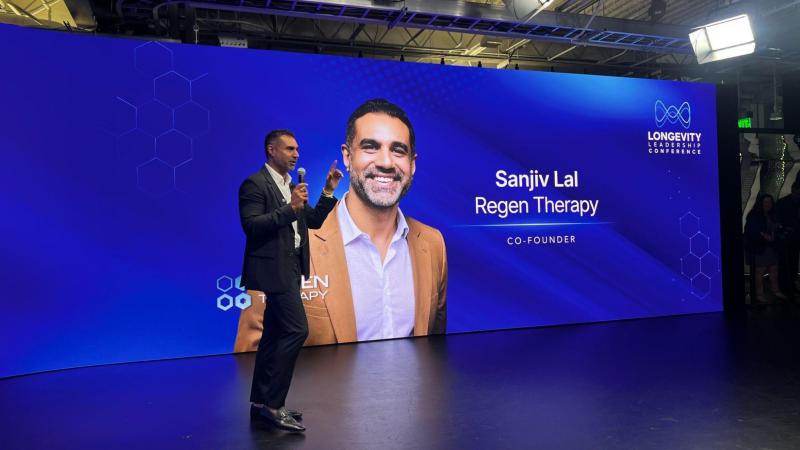
Sanjiv Lal, CEO and co-founder of Regen Therapy, has spent his career in pharmaceuticals, biotechnology, diagnostics, and regenerative medicine. He has watched this dynamic play out more than once. His view, shaped by years of work at the intersection of scientific discovery and commercial reality, is that the supporting infrastructure around an innovation tends to determine its long-term value more than the product itself.
Often, that is not a comfortable idea for entrepreneurs who are focused on the product. But it is a useful one.
The product is one piece of a larger picture
When founders evaluate whether a new idea is ready, they often ask the right first questions. Does the technology work? Is there a real market for this? What makes it different from what already exists?
Lal’s experience suggests those questions are necessary but not sufficient.
A product that works in a controlled setting still has to be manufactured consistently, he says. It has to reach the right customers. Those customers have to understand what it does and what it doesn’t do. The organization behind it also has to maintain quality standards as volume increases and the team grows.
Each of those requirements has its own infrastructure. When that infrastructure is missing or underdeveloped, the concept often underperforms relative to its potential. Lal says. Not because the idea was wrong, but because the surrounding system couldn’t support it.
If you’re building something with serious commercial ambitions, it’s worth asking whether your systems are scaling as fast as your ambitions.
What regenerative medicine illustrates about this challenge
Healthcare can offer a particularly clear example of why surrounding infrastructure matters so much.
While there has been industry-wide friction as well as skepticism, Lal believes regenerative medicine is a field with genuinely compelling scientific possibilities. Researchers and companies are exploring approaches to supporting the body’s natural repair processes in ways that, until recently, weren’t considered possible. But scientific potential is only one part of what determines whether any of that work translates into something clinically meaningful.
Research has to meet rigorous standards. Manufacturing has to produce consistent results. Physicians need credible information to evaluate evidence and make informed decisions. Organizations in this space also have a responsibility to communicate what they know honestly, including what remains uncertain.
Lal’s work at Regen Therapy reflects that broader reality. The science matters, but so does everything built around it.
This challenge isn’t unique to healthcare. A company deploying artificial intelligence (AI) tools faces a similar set of requirements. The model may perform well, but employees still need training, rollout still requires careful planning, and customers still need to understand what the tool actually does in practice.
The specific product can change, but infrastructure challenges tend to follow a familiar pattern.
On credibility: It’s built through execution, not claims
There’s a version of credibility-building that amounts to messaging. And there’s a version that amounts to doing what you said you were going to do, consistently, over time.
Lal says he leans hard toward the second interpretation.
Stakeholders—whether they’re investors, customers, healthcare providers, or distribution partners—may grow more skeptical of organizations that lead with promises and more trusting of ones that demonstrate competence through execution. Consistent quality, transparent communication, and honest representation of both the upside and limitations of a product tend to do more for long-term credibility than any amount of positioning, Lal says.
This matters especially when a concept is new enough that public understanding hasn’t caught up to the science. Emerging fields attract a mix of legitimate work and overstatement. Organizations that communicate carefully in those environments tend to be better positioned when scrutiny increases.
Credibility may not guarantee success. But its absence tends to make even good products harder to sustain.
Education is infrastructure, not an afterthought
One area where Lal believes early-stage companies frequently underinvest is education.
This doesn’t mean onboarding decks or FAQ pages, though those matter. It means treating the transfer of knowledge as a core part of the product’s value delivery.
In healthcare, this is straightforward to see. Physicians encountering a new therapeutic approach need credible, clearly communicated information about the evidence behind it, how it compares to existing options, and where its appropriate applications lie. Without that, even genuinely good science can struggle to enter clinical practice.
The same dynamic plays out in other sectors. If you’re rolling out new software to a distributed team, the implementation may be smoother if people understand why the change is happening and how it fits into what they already do. If you’re selling a product that operates differently from the category norm, your customers might need guidance before they can appreciate the difference.
For Lal, this means thinking about education early in the product development process, not as something to build after launch when adoption stalls.
Building systems before growth forces the issue
This is the part that often gets deferred.
When a company is small, informal processes can work. The founder knows every customer. Quality control is a conversation, not a documented system. Decisions get made quickly because few people need to be involved.
Growth changes that equation, Lal says. A manufacturing process that handles a few hundred units may not hold up at a few thousand. A customer support model built around personal relationships can break down when volume increases. A leadership style that relies on direct involvement in every decision can slow an organization down significantly once the team passes a certain size.
Lal’s perspective is that entrepreneurs are generally better served by building systems before those pressure points arrive rather than after.
That does not mean adding bureaucracy for its own sake. It means documenting processes currently held in someone’s head, establishing quality controls before a failure forces the issue, defining who is responsible for what, and investing in the operational infrastructure that lets the organization maintain consistency as it grows.
One actionable starting point: Identify the three decisions or processes in your organization that currently depend entirely on one person’s knowledge or involvement. Then ask what it would take to make each of those work without that person present. That exercise often surfaces the most important gaps before they become expensive.
Integrated innovation as a long-term orientation
The conversation around innovation tends to focus on what gets invented. Lal’s orientation is somewhat different. He is at least as interested in what gets built around the invention, he says.
That includes quality systems, manufacturing infrastructure, education programs, communication practices, and the operational discipline that allows an organization to consistently deliver what it promises. None of those elements are glamorous. All of them tend to matter significantly in the long run.
Entrepreneurs who think about these things early, alongside the product itself rather than after it, are generally better positioned to sustain what they’ve built as the context around them shifts.
The innovations that create lasting value tend not to be the ones that generated the most excitement at launch. They tend to be the ones supported by organizations capable of delivering on their promise, month after month, as the initial attention fades and the real work of building something durable begins.
The information provided in this article is for general informational and educational purposes only. It is not intended as legal, financial, medical, or professional advice. Readers should not rely solely on the content of this article and are encouraged to seek professional advice tailored to their specific circumstances. We disclaim any liability for any loss or damage arising directly or indirectly from the use of, or reliance on, the information presented.
Entrepreneur Media was not involved in the creation of this content.