AccrueMe Backed Founders as E-commerce Aggregators Faced Challenges
They built a financing model designed to keep e-commerce operators in control as the aggregator model faced growing challenges.
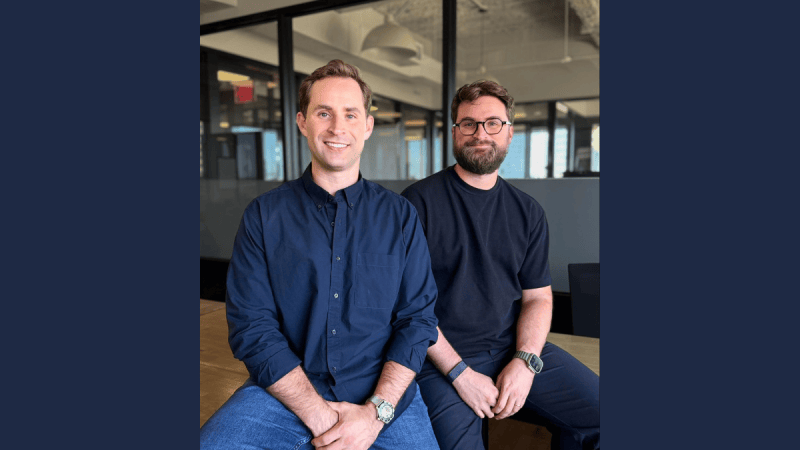
For AccrueMe co-founders Ben and Sam Kotch, the growth of e-commerce raised a central question: who should remain in control as brands scale?
The aggregators’ thesis was seductive: third-party brands were undervalued and fragmented, and running them was easy enough to centralize. Buy hundreds, plug them into a shared playbook, strip out cost, and scale. Investors poured billions of dollars into the model. It was supposed to roll up the entire marketplace.
Many of those roll-ups later faced significant challenges. Some of the brands they pursued have continued operating and growing under the people who built them. AccrueMe, the private capital firm the Kotch brothers started in 2018 to finance those operators, has observed these shifts through its financing work.
“The aggregators bet that running one of these businesses was easy,” says Ben Kotch. “We knew from experience that it is actually very difficult — and that the operator running it is the secret sauce.”
AccrueMe says it has financed e-commerce businesses since 2018, giving the firm access to financial information about the brands in its portfolio. That vantage point, the Kotches argue, explains the gap between the aggregators’ unwinding and the operators’ success.
A market consolidating — but not the way the aggregators bet
The backdrop is stark. According to Marketplace Pulse, the number of active Amazon sellers worldwide fell from roughly 2.4 million in 2021 to about 1.65 million by the end of 2025. Over the same period, the number of sellers generating $1 million or more a year climbed past 100,000 — up from around 60,000 in 2021.
Together, those numbers suggest the market is consolidating around larger, more established operators. The seller base is shrinking, while the number of million-dollar businesses continues to grow. The figures may reflect a shift toward a more professional seller base. The Kotches argue that aggregators anticipated consolidation but may have misjudged which operators would drive it.
The mistake: they forgot the secret sauce
The aggregators made a consequential assumption, according to the Kotches, that the founder was a nice-to-have, but the real value lived in the catalog, the reviews, and the supply chain, assets you could run from a spreadsheet.
“The founder who obsesses over a two-point conversion dip, who knows the supplier’s family, who feels a bad inventory batch in their gut before it hits the numbers — that person is the business,” says Sam Kotch. “Not the listing.”
So, the aggregators did the one thing guaranteed to break what they’d bought, he argues: they pulled out the passionate, experienced founders and handed the brands to someone less expensive — a junior operator running 40 brands at once, a salaried employee with no skin in the game, or a senior executive who had never operated in the trenches. Growth stalled. “You can’t buy the secret sauce and then fire it,” Sam Kotch says.
What the survivors do differently
Across the brands AccrueMe sees thriving, the Kotches say the winners don’t share a category or a hero product. They share operator instincts.
They treat operational expertise like the whole game — because, in many ways, it is. One significant risk for a growing brand may not be weak demand but running out of cash after a large inventory purchase, particularly when the business is growing.
They chase margin, not vanity revenue — a $10 million brand at healthy margins beats a $30 million brand bleeding out on ads. They spread across channels — Amazon, Shopify, Walmart, TikTok Shop — instead of depending on one. And they reinvest deliberately instead of pulling cash out too early.
None of it shows up on a quarterly report as an asset, Ben Kotch notes. All of it lives in the head of an operator who cares, in real time. “A committee doesn’t have that feel for the business,” he says. “A founder knows it like the back of their hand.”
Why AccrueMe built a lender, not an aggregator
The Kotches are blunt about a lesson many operators learn too late: a great brand can be killed by the wrong capital as easily as by no capital. Sell equity and you hand over control — and often the motivation that made you great. Take an easy-to-get merchant cash advance, and the fixed daily repayments strangle cash flow exactly when you’re trying to scale.
That, Ben Kotch says, is why they built AccrueMe as a lender rather than an aggregator. Instead of buying businesses and swapping out founders with “professionals,” AccrueMe finances operators and keeps them in the driver’s seat — owning their business, running the thing they do best. The firm’s capital is designed to flex with a brand’s cash flow rather than drain it, and it doesn’t cost founders their equity or their control.
AccrueMe says its portfolio has shifted toward larger, more established brands over the past two years.
It may help that the Kotches run AccrueMe the way they ask operators to run their brands, with a founder’s mindset. Sam Kotch focuses on relationships and the portfolio, while Ben Kotch runs structure and the numbers.
As twins, they’ve been working together and playing off each other’s strengths since childhood. Building a company alongside someone who will tell you the hard truth across the dinner table, they say, is its own kind of advantage. It’s also why they have so much respect for founder-operators. They are founder-operators themselves.
The takeaway
The Kotches believe the period of rapid, speculative e-commerce growth has cooled, which they see as good news for serious operators: a more complex, more sophisticated market with less noise is exactly where real businesses scale and win. The question for founders, Ben Kotch says, isn’t whether they can find capital — it’s whether that capital keeps them in the driver’s seat or slowly takes the wheel.
“The aggregators learned that lesson with billions of dollars,” he says. “We know we can’t possibly know more about all the unique businesses we fund than the people operating them 24/7. The founders were always the secret sauce.”
AccrueMe, founded in 2018 and headquartered in San Juan, Puerto Rico, provides growth financing to established e-commerce brands on Amazon, Shopify, Walmart, and TikTok Shop.
The information provided in this article is for general informational and educational purposes only. It is not intended as financial or professional advice. Readers should not rely solely on the content of this article and are encouraged to seek professional advice tailored to their specific circumstances. We disclaim any liability for any loss or damage arising directly or indirectly from the use of, or reliance on, the information presented.
Entrepreneur Media was not involved in the creation of this content.