Cequire Capital Bets on AI Payments and Tokenized Finance
The firm says it plans to invest in early-stage crypto companies.
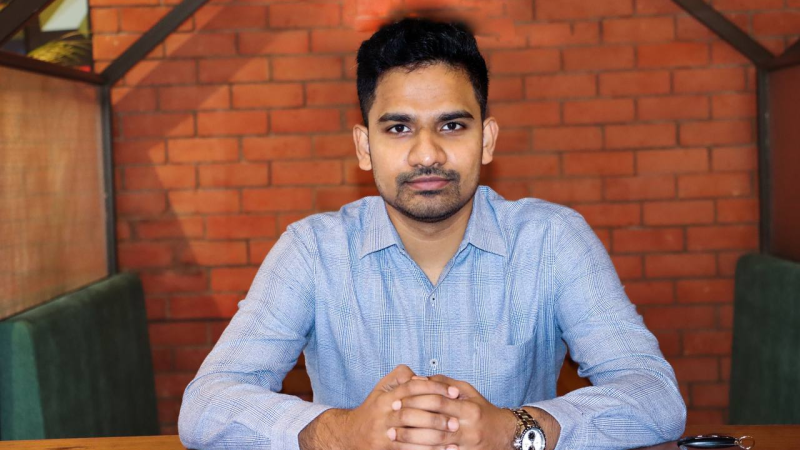
Dubai-based investment firm Cequire Capital says it plans to invest in early-stage crypto companies, backing stablecoins, payments for AI agents and tokenized assets while much of the venture market’s attention has moved to AI.
Cequire says it will finance the commitment from its own balance sheet and that it has invested in a range of crypto projects since its founding in 2024.
The bet rests on a view held by the firm’s managing partner, Salman Parcy, that stablecoins, tokenized assets and AI agents are becoming parts of the same financial system.
“Stablecoins, tokenized assets and AI agents are becoming one financial stack, and it needs privacy and security that will survive quantum computing,” Parcy says.
What Cequire is backing
Cequire says its investments will focus on five areas, with the goal of supporting a financial stack needed for agentic payments to work seamlessly:
- Stablecoin issuance and treasury flows
- AI and agentic payments
- Tokenized real-world assets
- Privacy infrastructure
- Post-quantum security
At a more granular level, Cequire says it is investing in the infrastructure for issuing, transferring and settling stablecoins, including blockchains built for that purpose, and backing platforms that bring private credit and commodities on-chain. The firm is also targeting wallet and identity systems, such as self-sovereign identity, that allow AI agents to transact independently. To protect that activity, it plans to fund zero-knowledge technology and confidential computing for privacy, and quantum-resistant signatures to future-proof transactions against risks from potential quantum attacks.
The firm invests through equity, SAFTs, and token warrants. Its portfolio includes World (formerly Worldcoin), the proof-of-personhood network founded by Sam Altman, among its portfolio companies.
An opening at the earliest stage
The new capital comes as the majority of venture capital flows into AI, with AI startups raising $242 billion of the $300 billion invested globally in the first quarter of 2026, or 80% of the total. In the Middle East and North Africa, AI and AI-enabled companies captured 50% of all venture funding in the first half of the year, according to a recent MAGNiTT report. Crypto seed deals have gone the other way, falling from 35.3% of all crypto venture deals in 2022 to 18.7% in the first half of 2026.
Parcy sees room for Cequire in that shift, and says investors now want to see real users before they commit, where a white paper was often enough in earlier cycles.
“Capital has moved towards later-stage companies as a result. We believe that discipline is healthy. It also leaves a gap at the earliest stage, and that is where we invest,” he says.
Across all stages, investors put approximately $4.5 billion into private crypto and blockchain companies across 296 deals in the third quarter of 2026, according to Galaxy Research. Galaxy also found that only three new crypto venture funds raised capital in the quarter, the lowest number in a quarter since 2019.
“We invest our capital, so we don’t have to chase fundraising cycles or deploy money just to meet a timeline,” Parcy says.
Cequire points to prediction markets as an example of what early money can catch. Parcy says these markets have gained attention, but the teams leading them “spent four to five years building before demand arrived.” The firm expects a similar path for the infrastructure that lets stablecoins and AI agents interact, along with self-sovereign identity and privacy tools.
How Cequire plans to allocate its capital
Cequire says it plans to allocate capital across venture investments, liquid digital assets, and co-investments with other crypto funds. The firm says it is looking to lead or co-lead pre-seed and seed rounds. For its liquid positions, Cequire buys tokens directly from project treasuries, so teams can raise money without selling into the market.
Parcy wants to see revenue before a token. “We encourage founders to build a company that focuses on revenue before they incorporate a complex tokenomics mechanism,” he says. “A token can be the right instrument for a small set of businesses, but it should follow product-market fit.”
While most of the venture market chases AI directly, Cequire is betting on the payment and identity systems AI agents need to transact independently. Founders seeking funding in this space can start with a pitch that identifies the customer, shows evidence of demand, and explains how the business will earn revenue. If a token is part of the plan, explain what it adds to the product.
The information provided in this article is for general informational and educational purposes only. It is not intended as financial or professional advice. Readers should not rely solely on the content of this article and are encouraged to seek professional advice tailored to their specific circumstances. We disclaim any liability for any loss or damage arising directly or indirectly from the use of, or reliance on, the information presented.
Investing involves risk and your investment may lose value. Past performance gives no indication of future results. These statements do not constitute and cannot replace investment advice.
Entrepreneur Media was not involved in the creation of this content.