If AI Can’t Move the P&L, Sloan Dean Says It’s Not Doing Its Job
The corporate world is awash in AI activity and starved for AI results. A handful of operators are imposing a blunt test: does it change the numbers?
Spend a week inside almost any large company right now, and you’ll see a great deal of activity using artificial intelligence (AI), but remarkably little to show for it. There are demos that dazzle in the boardroom, pilots that never make it into production, and dashboards no one has opened since launch. Everybody is busy, but the numbers aren’t moving.
There is now a figure for that gap. In its 2025 report The GenAI Divide: State of AI in Business, MIT found that 95% of the integrated AI pilots it examined had produced no measurable impact on a company’s profit and loss (P&L). Its findings suggest that the obstacle is often not the underlying technology but the way companies integrate it into workflows and measure its value. Companies may be grading AI on how impressive it looks instead of what it does.
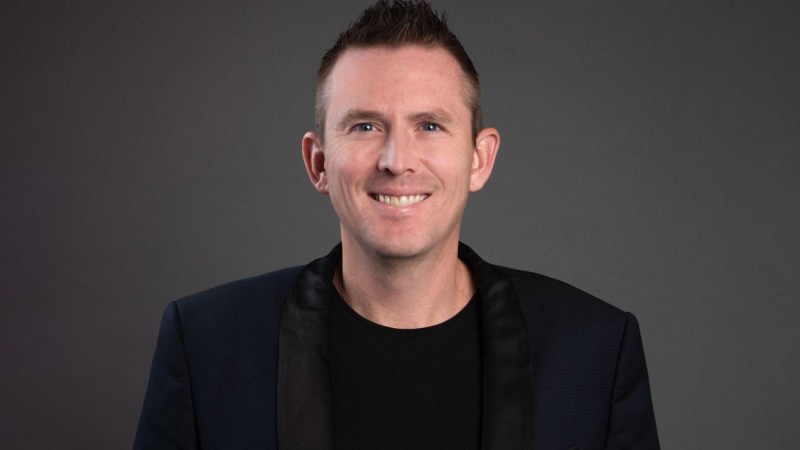
Hotel industry veteran Sloan Dean wants to grade it on one thing. “AI shouldn’t be treated like a project,” says Dean, founder and CEO of AI Hospitality Group, a hotel management company he founded to run hotels on an AI-native model. “It’s a business tool. And business tools should be judged by whether they move the P&L. If you can’t draw a straight line from AI to revenue, cost, or cash, and put a number on it, you don’t have a strategy. You have a hobby.”
For Dean, this approach is also the organizing principle behind AI Hospitality Group.
Service is the new software
In a March 2026 article, Emergence Capital’s Jake Saper and his co-authors described the rise of AI native service businesses, or AINS. The basic idea is different from traditional software: instead of selling a customer a tool and leaving that customer responsible for producing the result, an AI-native service company uses AI to perform the service itself and takes responsibility for the outcome. For hotels, that could mean changing the operator rather than simply changing the software.
AI Hospitality Group is applying the AINS concept to hotel management. The company describes itself as an AI-native hotel operator rather than a software vendor and plans to sign hotel management agreements directly with hotel owners. A software company might provide a revenue-management or recruiting tool, but the hotel remains responsible for whether it improves the property’s performance. Under the AI-native service model, the operator is accountable for the hotel’s results.
Sixty ‘boring’ problems
Instead of hunting for a single transformative use case, Dean and his team inventoried the tasks involved in running a hotel. According to Dean, the team has so far identified more than 60 individual workflows that AI can either fully automate or measurably improve. Most are unglamorous: conducting the nightly revenue reconciliation and audit, coding and paying invoices, pushing rate changes across different distribution channels, triaging guest messages, building staff schedules against a demand forecast, tracking down missing charges, and closing the books each month.
The list goes on. “We’re not looking for the one magic use case that transforms the company,” Dean says. “We found sixty boring ones that each move a number. Boring, times sixty, is how you actually materially change a P&L.”
AI Hospitality Group says it is targeting more than 500 basis points of improvement in gross operating profit margin for each property while reducing the labor required to operate a hotel. Each workflow, Dean says, is tagged to a P&L lever. One takes cost out, another captures revenue that used to leak away, and a third shortens the time it takes cash to arrive. Each is then assigned to an owner with a specific target.
Dean does not regard reducing mistakes as a soft benefit. In a hotel, errors have prices. A scheduling miss becomes overtime; a billing slip becomes a chargeback or a comped night. “Accuracy is a line item,” Dean says. “Every mistake we take out of a process shows up somewhere in the P&L, even if nobody was tracking it before.”
A workflow earns its place only if someone can say which number it moves. Those that merely “save time” don’t automatically qualify, because, as Dean is quick to point out, time saved is not money saved unless the freed capacity is converted into lower cost or more revenue. “If we automate something, the team gets an hour back, and nothing on the P&L changes, we didn’t finish the job,” he says. “We just made the day a little easier. That’s pleasant, but it’s not the point.” The list of sixty is a to-do list, but it is also a scoreboard: build the automation, watch the line it was meant to move, keep what delivers and cut what doesn’t.
An owner on the other side
Dean’s insistence on the bottom line is not just temperament; it is shaped by the peculiar economics of the hotel industry. Many branded hotels operate within a structure in which the company whose name appears on the property, such as Marriott, Hilton or Hyatt, does not own the building and may not manage it. The real estate belongs to another party, which might be a real-estate investment trust such as Host Hotels & Resorts or Park Hotels & Resorts, a private-equity owner like Blackstone, or a family office. A third-party operator, the role AI Hospitality Group intends to assume, is hired to run the hotel for a fee.
Hotel brands commonly receive royalties for use of their marks, while third-party management agreements may combine revenue-based fees with incentives tied to profitability. The owner ultimately bears property-level expenses such as labor, insurance, taxes, and capital investment. An April 2026 Skift investigation, “The Squeeze,” reported that many U.S. hotel owners were facing rising operating costs and debt payments alongside weaker occupancy. That structure, Dean says, leaves his company nowhere to hide.
“There’s an owner on the other side of every decision we make, and they live and die by the bottom line, not by how modern our tech stack looks,” he says. “So every dollar we put into AI has to come back as labor we didn’t have to add, revenue we’d otherwise have missed, or cash that arrived faster. If it can’t, we don’t do it.”
Dean’s parting rule is the one he says he would attach to every AI initiative in any company, hotels or otherwise: pick the P&L line first, then build the AI that moves it, never the reverse. “In three years,” he says, “nobody is going to care how many pilots you ran or how good the demo looked. They’re going to care whether the number moved. That’s the only scoreboard that was ever real.”
Entrepreneur Media was not involved in the creation of this content.