Entrepreneur Alex Hemingway Sees a Moment to Build in a Shifting Restaurant Industry
After roughly 18 months evaluating restaurant companies, entrepreneur and restaurant CEO Alex Hemingway has reached a clear conclusion: the best opportunities aren’t the businesses with the fewest problems. They’re the ones with an established brand and customers who keep coming back.
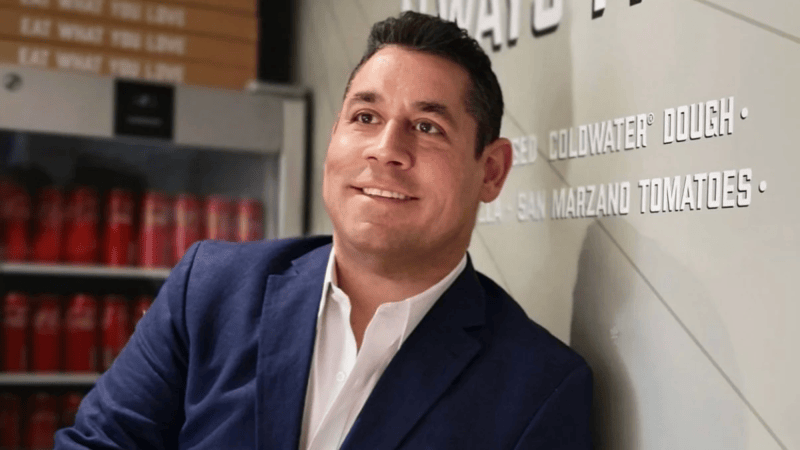
Alex Hemingway says he has spent the past year and a half reviewing dozens of restaurant opportunities and considering what he might want to work on next. The process has given him a close look at how restaurant operators are responding to rising costs, delivery platforms, shifting consumer behavior, and new technology—especially AI. What has surprised him most is not how difficult the environment has become. It is how many operators seem to be waiting for the old one to return.
Hemingway describes a career that has taken him through franchising, restaurant development, and business turnarounds. He says he also served as chief executive of a restaurant group operating 180 locations across four countries.
That experience has shaped the way he approaches his current search. Hemingway is not looking simply for a restaurant company with clean financials or an attractive growth story. He is looking for a brand that already means something to its customers. He then says he assesses whether the business has the leadership, systems, and discipline needed to grow without losing what made it successful in the first place.
“There are great restaurant brands out there that customers genuinely care about and are devoted to,” Hemingway says. “The question is whether the company behind the brand has the leadership and vision to level up and meet the moment.”
Hemingway says he has started and sold restaurant brands and helped turn around a multinational restaurant business that had experienced seven consecutive years of losses. He also describes having led a large independent restaurant company in Central Europe.
What he has seen during his current search, however, has made him question how well many restaurant companies are confronting change.
“Good operators feel like the ground underneath them is shifting,” Hemingway says. “I look at the same environment and see a lot of opportunities.”
Part of that shift involves technology. Hemingway expects artificial intelligence and automation to change how restaurants operate, although he doesn’t see technology as the main issue. His broader concern is whether operators are willing to adjust their businesses when economics, customer behavior, and operating models change.
“Customers do not care about AI,” Hemingway says. “They care about the food, the experience, and how a place makes them feel. The operator needs to care about the technology because it can help make the economics work.”
Hemingway believes technology should do more of its work behind the scenes, helping operators address costs and operational demands while allowing restaurant teams to stay focused on food, experience, and the guest community. For him, the value of AI and automation is not in replacing the parts of restaurants customers care about most, like service. It is in helping operators make the business work more effectively without sacrificing the experience that keeps people coming back.
The same principle applies to delivery platforms. Hemingway does not see every new channel as inherently good or bad. He says he is more interested in whether operators understand what those channels are doing to the business.
Hemingway says that while reviewing companies in markets including Miami and Dallas, he noticed delivery sales growing without a corresponding improvement in profitability. At one business he examined, he said delivery had increased from less than 10 percent of sales to nearly half, even as profitability declined.
“You can celebrate another two million in sales,” Hemingway says. “But if your bottom line is going backward, you have to ask what those sales are actually doing for you and what you intend to do about it.”
For restaurant owners, that means looking at what each sales channel contributes after fees and operating costs, rather than judging its success by revenue alone.
What surprises him is not the pressure itself, but how some operators have responded to it.
“Some great brands are resisting change, which is uncharacteristic,” he says. “Restaurant people are entrepreneurs. It’s in their DNA. These are people who took enormous risks to build their companies. Being adaptable and going the extra mile is what got them there in the first place.”
Hemingway believes the current environment may create opportunities for established restaurant brands. He sees potential in businesses with loyal customers that are willing to adapt as conditions change.
His experience with challenging developing markets and turnarounds has taught him that those situations are often less about finding one dramatic solution than changing a mindset that has become accepted over time.
He recalled one example when the problems in a business were plain to see, yet the organization resisted change. It had grown used to poor performance and the explanations that come with it. The turnaround didn’t come from one headline-making move. It came from a strategic realignment, renewed expectations, and consistent execution. Once the team let go of how things had always been done, they could start to focus on growth again.
“When a business has been struggling and going through change, people start accepting things they would never have accepted before,” Hemingway says. “You have to get everyone looking forward again.”
That experience continues to shape how Hemingway evaluates restaurant businesses. He pays attention to the relationship between a brand and its customers, along with whether its management and operations can support future growth.
“The great brands already have something people want,” Hemingway says. “You do not need to invent that part. You need to build the company around it so the brand can go further.”
Hemingway remains optimistic about the restaurant industry, even with the challenges he has encountered. He believes automation and AI could help restaurant teams spend more time on service and the guest experience.
The restaurant business has absorbed major shifts before, from fast food and digital ordering to delivery, and Hemingway views AI and automation as another part of that evolution rather than the entire story. His review of the landscape has reinforced rather than weakened his optimism. The brands that interest him already have something customers value: a unique experience and a community around it. He believes the strongest opportunities will depend on whether operators are ready to build the business around that strength instead of waiting for an earlier version of the restaurant industry to return.
Entrepreneur Media was not involved in the creation of this content.