How Leaders Who Put People First Can Build Organizations That Last
Great leaders can do more than drive performance. Enrique Velázquez explains why seeing, serving, and empowering people can create stronger cultures and more sustainable organizations.
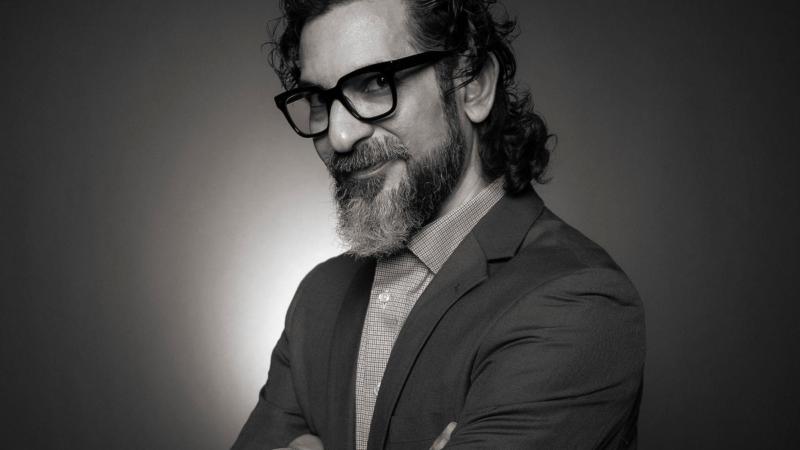
Performance and leadership are commonly talked about together. Leaders are often expected to set high standards, make tough choices, act fast, and deliver significant outcomes.
However, Enrique Velázquez feels that leaders should also consider the topic of what happens to those who are in charge of achieving such outcomes.
For Velázquez, founder of Velazquez Leadership Studio, this question sits at the center of his leadership philosophy. After decades working in global high-technology operations and local government leadership, he has spent much of his career observing what happens when organizations face pressure, uncertainty, and change.
His conclusion is that it is important for leaders to understand the people they are expected to lead and work alongside.
That belief was forged long before his executive career. Velázquez grew up moving between different countries and cultures. He received what he describes as two educations: the formal education of the classroom and the informal education of living among different communities.
He credits those experiences as what taught him to observe before speaking, listen before assuming, and understand the person in front of him before attempting to influence them.
Leadership begins with seeing people
Organizations often depend on systems, policies, processes, performance measures, and strategic objectives. These structures may be necessary, but Velázquez believes leaders can lose sight of something important when these systems become more important than the people operating within them.
Every employee enters an organization carrying a history. Previous experiences with success, failure, recognition, conflict, change, and authority can influence how people respond to leadership.
A leader who ignores that context may interpret hesitation as resistance or disagreement as defiance. A leader who takes the time to understand it may discover something entirely different, he says.
This is the first principle behind Velázquez’s See-Serve-Empower framework: see the person before attempting to lead the person.
Seeing does not mean agreeing with everyone. It means understanding what another person is carrying before deciding what they need.
From seeing to serving
The second part of Velázquez’s framework is serving.
This does not mean leaders exist to satisfy every employee preference. It means leadership should remove unnecessary barriers that prevent people from doing their best work.
Sometimes that means providing clarity, he says. Sometimes it means giving someone the resources or authority required to succeed. Sometimes it means having a difficult conversation that has been avoided.
Velázquez’s says his experience managing teams and navigating complex organizational environments taught him that avoiding difficult conversations rarely serves either the individual or the organization. He believes that clarity can be an act of service.
People are more likely to know where they stand when it is made clear what is expected of them. With honest feedback provided, they may have an opportunity to improve, he says. If leaders explain why different changes are happening and provide a chance for people to participate, then their organizations are more likely to build a community of commitment rather than compliance.
Why empowerment is more than permission
The final part of Velázquez’s framework is empowerment.
Organizations frequently talk about empowerment while maintaining systems in which every meaningful decision still travels upward. Velázquez sees empowerment differently.
People may find it harder to take ownership of their work when they are given responsibility without corresponding authority, accountability without clarity, or expectations without sufficient room to make decisions, he says.
Empowerment requires leaders to create conditions in which people can exercise judgment, Velázquez says. That means giving employees enough autonomy to act, enough competence to make informed decisions, and enough trust to take ownership.
Control can produce compliance. Empowerment can hold the power to plant and grow leadership in others.
The bent keys people carry
One of the most distinctive ideas within Velázquez’s work is the Bent Key Principle.
The metaphor is as follows: A key does not have to be perfect or straight to unlock a door. People are much the same, he says.
Everyone carries experiences that shape how they show up. Some experiences will strengthen people. Others can leave them cautious, defensive, uncertain, or afraid. Yet those experiences do not necessarily determine what they are capable of becoming.
Velázquez believes leaders should learn to recognize these “bent keys” rather than immediately labeling the behaviors they produce as problems.
A disengaged employee may not be apathetic. A resistant employee may not be difficult. A quiet employee may not lack ideas.
Sometimes leaders see the behavior without understanding the story behind it. This does not remove accountability. It changes how leaders approach it.
Instead of asking, “What’s wrong with this person?” the better question may be, “What happened that shaped how this person is showing up?” That shift can change the leadership conversation.
What leaders measure reveals what they value
Velázquez also believes organizations reveal their priorities through what they measure. “If you show me where you spend your money, I will show you what you value,” he says.
The same principle applies to leadership. If organizations measure only revenue, productivity, and output, employees may eventually conclude that those are the only things that matter.
Performance matters. But Velázquez says he believes organizations should also examine the conditions producing that performance.
His work incorporates tools such as the Virtuous Cycle scorecard, which considers factors including autonomy, competence, and satisfaction. The objective is to make elements such as trust and employee experience tangible enough to inform organizational decisions.
The aim is to turn people-first leadership from an inspirational idea into something leaders can examine and improve.
People-first does not mean performance-last
Perhaps one of the biggest misconceptions surrounding people-first leadership is that it represents softer leadership. Velázquez says he rejects that idea.
People-first leadership is not meant to mean avoiding accountability, difficult decisions, or high standards. It is meant, he says, to mean recognizing that people are more likely to perform sustainably when they understand what is expected, have the ability to meet those expectations, and believe their contribution matters.
For Velázquez, leadership ultimately begins with self-reflection. Leaders need to understand their own experiences, assumptions, and “bent keys” before they can genuinely understand others.
Technology will continue changing organizations, but human capabilities such as judgment, empathy, trust, listening, and collaboration will remain essential.
The leaders who can build enduring organizations will not just be those who know how to move fastest. They will also be those who understand when to slow down, listen, and bring people with them.
Velázquez believes that leaders may move quickly on their own, but working with others can help them sustain progress over time.
And organizations that understand that distinction can build something far more difficult to replicate: a culture where people genuinely want to contribute to the journey.
Entrepreneur Media was not involved in the creation of this content.