How Surgical Expertise Shaped Dr. Ariel Ostad’s Cosmetic Practice
He has built his reputation as a patient-first physician, which has also shaped his approach to business decisions and the medical practice he founded nearly 30 years ago.
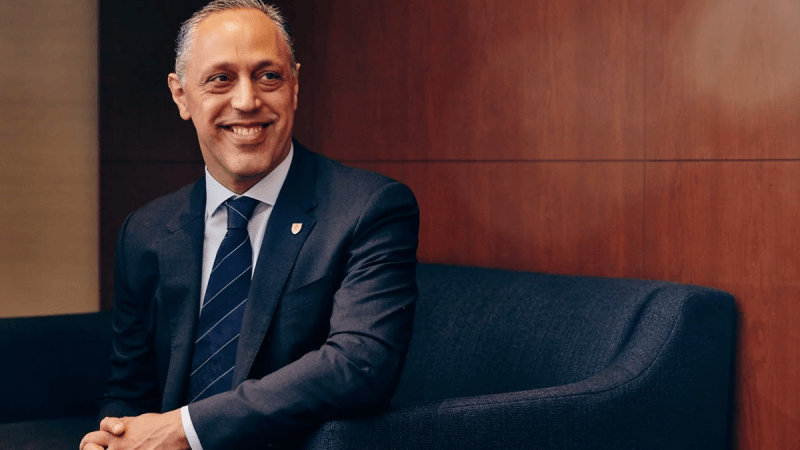
Patients who visit Dr. Ariel Ostad often arrive seeking treatments to manage what they believe to be problem areas with their appearance. However, what they often do not expect is for the doctor to recommend forgoing that treatment altogether.
For Ostad, the underlying anatomical relationships within the face can present certain challenges, especially if a patient does not understand the intricacies behind them. It is a philosophy that has shaped his practice, he says, and that has been a foundational belief well beyond cosmetic medicine.
Since opening his Manhattan practice in 1997, Ostad has also applied his careful approach to the business itself, which centers around every aspect of care, from how much time he spends with patients to what treatments he introduces them to.
The doctor holds a firm belief that medical practice isn’t simply about how many procedures one can perform, but about creating an environment that can help determine the care a patient needs.
How surgical experience shaped his perspective
Long before establishing his cosmetic practice, Ostad developed his surgical foundations through medical training at New York University, an internship at Massachusetts General Hospital, affiliated with Harvard Medical School, and a dermatology residency at New York University (NYU). He would later complete a fellowship in a skin cancer treatment called Mohs micrographic surgery, as well as laser and cosmetic surgery at University of California Los Angeles (UCLA).
While he credits his mentors for changing his perspective on how he approaches medicine and his own abilities, the training he received exposed him to multiple complex cases that challenged him as a medical professional. Complex skin cancer, facial reconstruction, and cosmetic procedures would grow his technical expertise alongside his confidence in making decisions that required precision and judgment.
Performing these procedures has given Ostad a detailed understanding of facial anatomy that continues to influence his cosmetic work, he says. Since reconstructive surgical physicians must understand the structures beneath the skin, such as muscles, arteries, and nerves, Ostad will oftentimes suggest that patients remain cautious when requesting certain procedures, he says.
Adding volume to an area, for example, may not always be the most appropriate option. In these cases, he may recommend a smaller amount of filler in a different area to address underlying challenges in facial support, he explains.
The lessons in these cases were not simply about developing better techniques, but about learning to look beyond the obvious problem before deciding how to address it. This same principle would be an important factor when he began making decisions as a business owner.
Taking a risk to build his own practice
Ostad opened his private practice in New York City in May 1997. As a young physician entering a competitive market filled with dermatologists, he would have to secure financing, build an office, and establish a patient base without knowing whether his investment would pay off.
One of the most difficult early decisions was taking a loan to renovate his new space. Rather than waiting until the practice was established to invest in the experience of his patients, he committed resources to creating an environment he wanted from the beginning. For this reason, he strived to make the practice feel warm, inviting, and comfortable, he says.
The physical environment Ostad created was part of a larger vision. He says he wanted a practice where patients not only felt heard, but where treatment plans were individualized, and medical expertise was accompanied by compassion.
Building a reputation took time, but he continued to lecture, develop professional relationships, and contribute to academic work. He went on to co-author Practical Management of Skin Cancer, and became a Clinical Associate Professor of Dermatology at NYU Grossman School of Medicine.
Looking back, Ostad says he attributes his practice’s development not to a single breakthrough, but to a consistent, professional discipline and the standards he established during his early years.
Three decades later, time becomes important
Like many physicians, one of Ostad’s primary focuses is giving patients the best care he possibly can. As a result, managing time has become a staple in his business, just as it has in his patient care.
While he deliberately allows more time for consultations, he says he does so even when it limits the number of patients he can see in a day.
“Our practice revolves around you, the patient,” Ostad shares.
This patient-first philosophy is what has built Ostad’s business and reputation, and it remains the defining principle he practices to this day.
This article is for informational purposes only and does not substitute for professional medical advice. If you are seeking medical advice, diagnosis or treatment, please consult a medical professional or healthcare provider.
Entrepreneur Media was not involved in the creation of this content.