John Boyd Lowery Has Spent Nearly Five Decades Turning Change into Development Opportunity
The founder of Lowery Company and WholeLife is applying his experience as a national developer to luxury, health-centric, residential communities for successful adults.
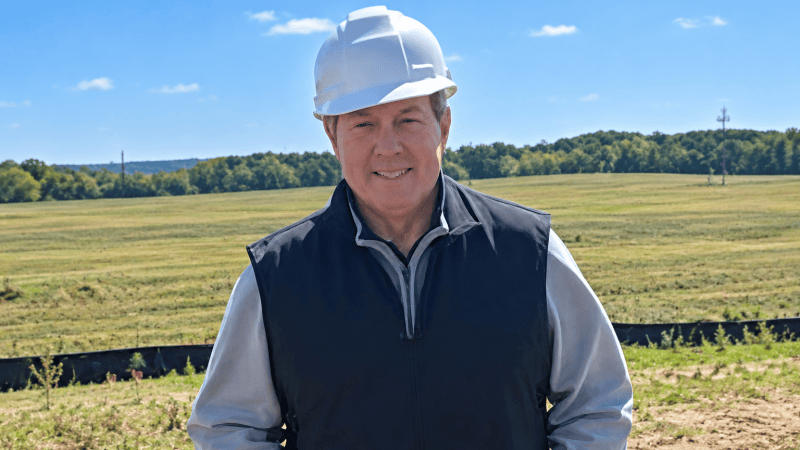
John Boyd Lowery is particular about the distinction between building houses and developing real estate. He describes himself as a national developer, a role that begins well before construction and continues through financing, design, operations, and the eventual disposition of a property.
That distinction reflects the scope of his career.
Lowery founded Lowery Company in 1979. Since then, his work has extended across single-family housing, multifamily communities, hotels, office buildings, medical facilities, and senior housing. Company materials attribute approximately 15,000 single-family homes and 37 senior-housing communities to Lowery and affiliated companies.
The property types have changed, but Lowery Company’s operating philosophy has remained consistent: combine emerging ideas, models, and concepts with tried and proven development methods.
That philosophy now informs WholeLife, a developer and operator of luxury rental living communities that integrates health, fitness and wellness into the creation and operation of the residential environment.
Development begins long before construction
Developers are often identified with the buildings they complete. Much of the work that can shape those buildings’ eventual success takes place before construction begins.
Lowery Company’s development process extends from feasibility and market assessment through site acquisition, budgeting, zoning, financing coordination, design-team selection, construction oversight, lease-up, and operations. Each phase answers a different question.
The feasibility work determines whether demand, land costs, rents, and competitive supply support a project. The design process must align the proposed product with the site, budget and intended resident. Construction requires cost control, scheduling and coordination. Operations ultimately determine whether the original development thesis holds after residents move in.
That breadth helps explain Lowery’s emphasis on experience. Development is not a sequence of isolated transactions. Decisions made during site selection can affect design, construction costs, lease-up and long-term operations years later.
Research on successful founders supports the value of that accumulated knowledge. A National Bureau of Economic Research study examining millions of founders found that relevant industry experience substantially increased the likelihood of entrepreneurial success.
Lowery’s career offers a real estate example. His work in traditional housing established an understanding of what people expect from a residence. His experience in hospitality added lessons about service and experience. His senior-housing developments introduced the operational demands associated with wellness, programming and changing resident needs. Before scaling a new offering, test whether the market need, economics, operations and customer experience align. A strong concept is more likely to succeed when its underlying business model is validated as carefully as the idea itself.
WholeLife extends a health-centric development thesis
WholeLife brings those disciplines together within a luxury residential company. It is designed for successful adults who remain active and independent but want a different relationship with their homes, Lowery says.
Its communities pair attainable-luxury residences with a maintenance-free living experience. Residents can access fitness evaluations, instructors, wellness consultants, nutrition resources, educational speakers, classes, and optional household services without entering a care-oriented senior property.
Lowery calls the concept an “ageless community.” The term reflects his belief that a residential environment should be organized around lifestyle, health and independence instead of treating age as the defining characteristic of the resident.
“Good health begins at birth,” Lowery has said.
That statement expands WholeLife’s health-centric thesis beyond conventional senior housing. Fitness, sensible nutrition, social activity and access to supportive services are treated as parts of everyday living rather than responses introduced only after someone develops a health need.
The company’s guiding line, “Where you live, can help you live,” summarizes the relationship WholeLife is attempting to create between the resident and the surrounding community.
In development terms, that requires more than adding a fitness center to an existing plan.
WholeLife evaluates how the site, housing format, amenities, services and operating model work together. Potential locations are considered in relation to demographics, prevailing rents, land costs, accessibility, nearby healthcare, retail, surrounding neighborhoods and competitive supply.
The health-centric concept shapes the product, but the project must still satisfy the fundamentals of real estate.
“It has to work as real estate first,” Lowery has said.
One company with multiple development paths
WholeLife has developed three principal residential formats that can be matched to different sites and markets.
“Traditions” communities feature single-level residences organized around a central club with fitness, gathering, and recreational amenities. “Bungalows” provide another single-level format with private outdoor areas and a more residential streetscape. “Flats” adapt the WholeLife concept to denser locations where multifamily construction is better suited to the surrounding market. The choice among them is determined by land availability, density, market demand, and local economics.
WholeLife has also contemplated four ways of bringing communities to market: company-owned development, joint ventures, franchise operators, and developer-owner relationships.
Under a company-owned structure, WholeLife develops and operates the property directly. Joint ventures allow it to work alongside capital and development partners. Franchise and developer-owner arrangements allow qualified local developers to contribute land, financing and market knowledge while WholeLife provides customized plans, construction guidance, branding, wellness programming and management.
The company’s franchise expansion represents one part of that broader development strategy.
The purpose is not to reproduce an identical building in every market. A Traditions community on a lower-density site will look and operate differently from a Flats property in a town-center setting. WholeLife’s task is to preserve the quality of the residential experience while adapting the physical development to local conditions.
That approach reflects Lowery Company’s wider development philosophy. New concepts can respond to changing markets, but execution still depends on feasibility, value engineering, disciplined construction and professional operations.
Experience as a source of new ideas
Entrepreneurship is frequently associated with abandoning established methods. Lowery’s career suggests another path: experience can provide the foundation for a new concept when it reveals how customer expectations and market conditions are changing.
WholeLife did not require Lowery to leave real estate behind. It allowed him to apply lessons from several parts of it at once.
Housing contributed the importance of privacy, neighborhood, and residential character. Hospitality contributed service and convenience. Senior housing contributed wellness programming and operating experience. Decades of development work supplied the process for determining where a project belongs, how it should be financed, and what must happen between concept and completion.
The result is a residential company that is focused on upscale, wellness-oriented living for adults who value independence and a lower-maintenance alternative to conventional homeownership.
Lowery has spent nearly five decades working across different markets, property types and economic conditions. WholeLife reflects a principle that has informed Lowery Company’s approach over time: periods of change can create development opportunities for teams equipped to recognize and pursue them.
Equal Housing Opportunity Statement: We are pledged to the letter and spirit of U.S. policy for the achievement of equal housing opportunity throughout the Nation. We encourage and support an affirmative advertising and marketing program in which there are no barriers to obtaining housing because of race, color, religion, sex, handicap, familial status, or national origin. This Home does not discriminate based on race, color, religion, national origin, sex, handicap or familial status.
Entrepreneur Media was not involved in the creation of this content.