The Childhood Dream Behind Selvei Rajkumar’s Journey From Engineering to Education
Her path from engineering to education shapes Orion STEM Schools, where she aims to connect academic learning with practical problem-solving and community contribution.
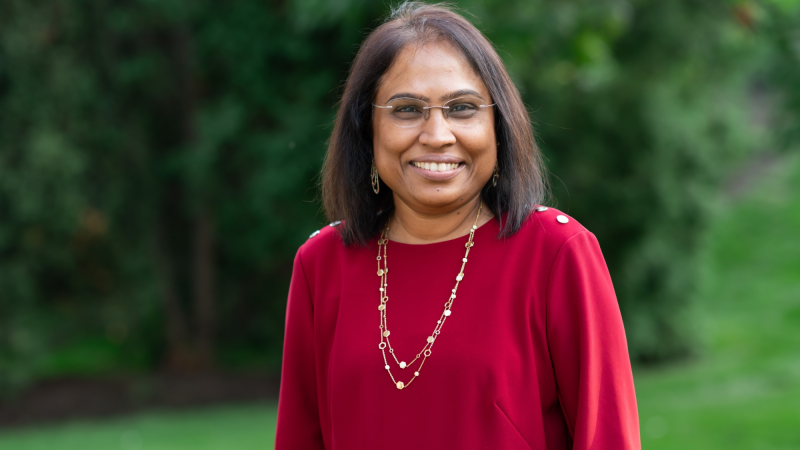
Entrepreneurial journeys can begin with a career, an opportunity, or a dream that survives years of other work. Sometimes, the experience gained along the way changes how that dream takes shape. A childhood wish to educate children can become a practical question about how a school could operate.
For Selvei Rajkumar, founder of Orion STEM Schools, answering that question draws on three distinct careers: engineering, management consulting, and early childhood education. Her approach starts where an engineer’s would, with a problem. Who does it affect? And how could learning equip students to solve it?
Rajkumar traces her interest in education to a letter she and her friends wrote to Mother Teresa in seventh grade. She says the reply urged them to contribute to their communities by educating children. The message stayed with her, alongside her parents’ belief that education should benefit others.
Her professional life initially followed her father’s example. She became an engineer, moved to the United States, pursued an MBA, and worked in management consulting. Those experiences helped shape how she would eventually approach her earlier dream.
“As an engineer, I’ve been trained to think of solving problems,” Rajkumar says.
The transition into education took time. Rajkumar says she researched schools for years and spent roughly a decade bringing her first preschool to opening day in 2013. Two additional schools followed. Watching young children explore ideas through inquiry and projects strengthened her interest in extending those experiences into a K–12 setting.
“Before committing to a new venture or expanding an existing one, speak with prospective customers about what their current options fail to provide and use their feedback to decide what to offer first,” she says.
Orion became the next stage of that ambition, bringing science, technology, engineering, and mathematics together with entrepreneurship and character development. Rajkumar wanted students to gain experience applying knowledge while developing the confidence to approach unfamiliar challenges.
“When we see a problem as an opportunity to make something better, we can begin to focus on finding a solution,” she says.
That thinking influences the choices behind Orion’s model. Rajkumar wants subject specialists teaching from kindergarten, with mathematics and science taught by people who bring depth and enthusiasm to their fields. Introducing medical science, financial literacy, and entrepreneurship also reflects her belief that early exposure can give children more interests to explore.
A family experience reinforced that view. Rajkumar says her son returned from a university leadership program with an idea for extending parent education to low-income communities in Chicago. His suggestion helped prompt the creation of a nonprofit. For her, it illustrated how encountering unfamiliar circumstances could help a young person recognize a need.
“Exposure gives students the ability to think about things they might not have otherwise considered,” she says.
At Orion, she wants students to develop that awareness through real-world problems involving real organizations and community challenges. The school’s learning model includes a full day each week for problem-solving, using design thinking. Rajkumar sees these experiences as opportunities to connect classroom knowledge with communication, collaboration, and the work of developing a useful solution.
Assessment reflects a similar intention. Orion’s approach emphasizes mastery and individual growth, using portfolios, presentations, and feedback from educators, families, peers, and students themselves. Personalized plans are designed to capture each learner’s strengths and areas for development, while mentors provide ongoing support.
“We should not compare one student with another,” Rajkumar says. “Comparison can prevent children from believing in themselves and feeling that they belong.”
Her emphasis on individual development connects the school’s academic plans with its broader purpose. She wants children to build knowledge alongside empathy, integrity, and the ability to work effectively with others. In her view, those qualities matter when students consider whose needs a solution should serve and how their decisions affect a community.
For Rajkumar, building the organization means translating those beliefs into everyday choices about teaching, assessment, and relationships. Her ambitions also include online learning for homeschooled children and sharing the model with educators elsewhere. She presents these as opportunities to extend the work beyond a single campus.
“Change on this scale is impossible to do alone. It takes researchers, experts, and educators from across the world, and local communities to embrace the vision and the willingness to act.” Rajkumar adds, “This goal is in reach, and we find ourselves on the cusp of a new learning model for the innovation economy.”
The childhood dream has developed into a larger responsibility. Rajkumar believes in creating an environment where students can discover dreams of their own and consider how to put their learning to use. “Education should give us the knowledge to pursue our dreams with a sense of responsibility to serve others,” Rajkumar says. “What we learn gains purpose when we apply knowledge to make a meaningful contribution to our communities.”
Entrepreneur Media was not involved in the creation of this content.