From Operator to Organization Builder: Jose Anon’s Approach to Scale
Growth can sometimes expose weaknesses faster than it creates success. Anon’s answer is to build companies where leadership, accountability, and trust scale alongside revenue.
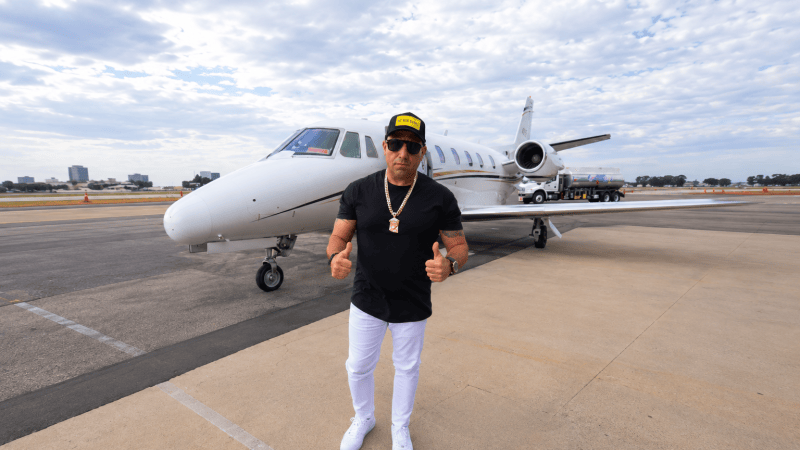
Many entrepreneurs spend years trying to become indispensable. They may make sales calls, resolve customer issues, approve hires, and step in to address every problem that threatens progress. In the beginning, that level of involvement is often necessary. But as businesses grow, Jose Anon says many founders face an uncomfortable reality: the same habits that helped build the company can eventually become barriers to scale.
That realization has shaped how Anon approaches leadership across Around The Clock, Iron Shield Roofing, and Infinite Capital Consulting. Rather than building organizations around his own involvement, he has focused on creating businesses capable of making the right decisions without depending on the founder’s constant presence.
Anon says the goal is not to become more important as a company grows, but less. A founder’s responsibility, in his view, is to build leaders, systems, and culture strong enough to continue performing even when the founder is not in the room.
That lesson became especially clear during Around The Clock’s rapid growth. The company claims to have expanded from roughly 10 to 15 employees to more than 40 employees within its first year in Colorado Springs while broadening its home service offerings. From the outside, that kind of growth can look exciting. Inside an organization, it may actually expose weaknesses quickly.
Communication can become more complex. Hiring decisions can carry greater consequences. Processes that worked for a small team may begin to break down under larger workloads. Growth can stop being about doing more work and start becoming about building an organization capable of handling greater complexity.
For Anon, that shift changed how he defines success. Revenue matters, but sustainable growth might require something deeper: leadership, accountability, and systems capable of preserving the customer experience that earned trust in the first place.
Building a business that can scale
One of the biggest challenges founders face is transforming personal knowledge into organizational capability. Early-stage companies often run on a founder’s attention. If something goes wrong, the founder typically fixes it. If a customer has a concern, the founder may step in. If a process breaks, the founder usually creates a solution.
That approach can work well, until it doesn’t. Anon says growth rarely creates entirely new problems. Instead, growth tends to reveal weaknesses that already existed beneath the surface. In his experience, unclear expectations, weak communication, and inconsistent processes become increasingly difficult to hide as an organization expands.
As companies grow, what once lived in a founder’s head can become part of a repeatable framework that others can understand, execute, and improve. Leadership, communication, accountability, training, and technology can all become part of the infrastructure needed to support growth.
For a home services company, that challenge can carry additional weight. Customers are not simply purchasing a service. They are inviting someone into their home and trusting them with systems that impact daily life.
Anon says customers don’t experience a company’s organizational chart, internal meetings, or operational dashboards. They experience a technician, a conversation, and a moment of trust. Because of that, he believes trust must scale alongside growth. Maintaining that trust typically requires more than technical expertise. It frequently requires standards, systems, and leadership that help employees consistently deliver a positive experience regardless of how large the company becomes.
Developing leaders, not dependence
As organizations grow, founders can eventually confront another difficult challenge. The behaviors that helped create the company often become the same ones that prevent it from scaling. In the beginning, entrepreneurs are frequently rewarded for solving every problem themselves. Over time, however, constantly being the person with all the answers can create dependence rather than capability. If every major decision eventually returns to the founder, the organization likely has not truly become stronger, but has likely just become larger.
Anon says a turning point came when he stopped asking how quickly he could solve a problem and started asking why the problem still depended on him in the first place. The answer often pointed toward stronger managers, clearer training, better communication, improved processes, or greater delegation.
He believes every founder eventually reaches a crossroads. One path involves remaining the hero who solves every challenge. The other involves developing leaders capable of solving challenges independently.
While the first path can create short-term control, the second can create long-term scale. For that reason, Anon cites leadership development as a strategic priority across his businesses. Anon believes leadership is not measured by the number of decisions a founder makes, but by the number of people who are capable of making good decisions because of the environment the founder created.
The goal is not to remove accountability. It is to distribute accountability throughout the organization.
One philosophy across multiple businesses
Although Around The Clock, Iron Shield Roofing, and Infinite Capital Consulting serve different markets, Anon applies a similar operating philosophy across all three organizations. He notes that at the core of his philosophy is a simple belief: growth creates value only when a business can preserve the qualities that earned customers’ trust in the first place.
Through Infinite Capital Consulting, Anon works with contractors and business owners who are facing many of the same challenges his own companies have experienced, including operational systems, accountability, leadership development, and organizational growth.
Anon claims the experience has reinforced a lesson that extends far beyond home services. More marketing does not usually solve operational problems. More customers typically do not fix weak leadership. More opportunities do not automatically create stronger organizations.
Anon says growth magnifies whatever already exists. Strong organizations become stronger. Weaknesses become harder to ignore. Whether the business is HVAC, roofing, consulting, or another industry entirely, he believes the challenge remains largely the same: creating an organization capable of delivering the same standard as complexity increases.
Building for the long term
Looking ahead, Anon says he remains focused on strengthening the leadership, systems, and culture behind his businesses while expanding his impact through the upcoming Infinite Mindset Podcast. Across each venture, the objective remains consistent: create organizations capable of growing without losing the accountability, trust, and leadership principles that made them successful in the first place.
For Anon, success is not defined solely by revenue, headcount, or expansion into new markets. It is measured by whether employees are proud to represent the organization, whether customers continue to trust it, and whether the company becomes stronger with each stage of growth.
As he continues to build businesses and develop leaders, Anon says the most important measure of a founder is not how much a company depends on them, but how well the company performs because of what they built.
Anyone can create something that relies on their constant involvement, Anon says. The greater challenge is creating something that continues to serve people, create opportunities, and grow stronger even when the founder is no longer at the center of every decision.
In his view, that is what scale is really about. Not simply building something bigger, but building something that lasts.
Entrepreneur Media was not involved in the creation of this content.