Why Top Executives and Founders Must Rethink Their Personal Security
A company can have excellent security measures in place while the people running it remain exposed.
For years, corporate security has largely focused on protecting the business through tools such as cybersecurity systems, access controls, surveillance cameras, alarm systems, and security teams. But there is a second vulnerability that executives and founders are increasingly having to think about: themselves.
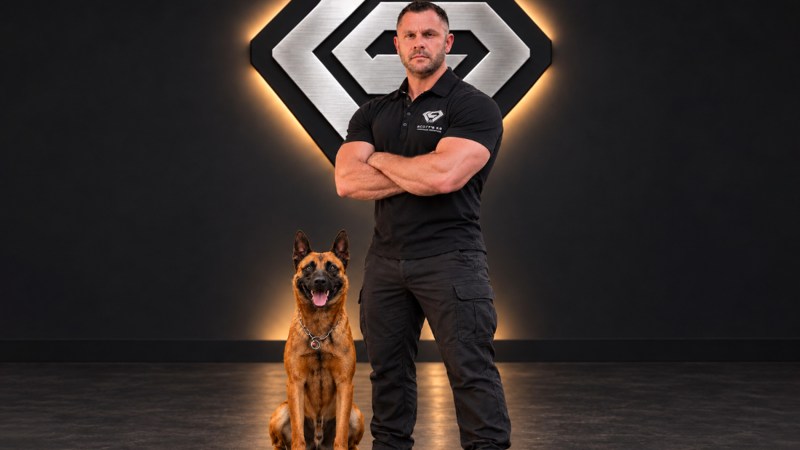
Steve Scott has worked in law enforcement, military service, and protection dogs for more than 20 years. He’s watched security change dramatically during that time. Technology has become more sophisticated, information travels faster, and people can learn an extraordinary amount about someone without ever meeting them.
Scott is founder of Copper Canyon, Texas-based Scott’s K9, a dog training and protection service. As the landscape has evolved, Scott has guided his clients on one main principle: good security isn’t about reacting after a threat occurs. It’s about making yourself a less attractive target from the start.
Why are executives more exposed today?
Sometimes, the line between a professional and personal life can become blurred. Someone may have plenty of access to security at their job, but they may not think about the public details that are listed about their speaking engagements, events, or travel.
Family may post pictures of places that are easily recognizable. And property records or social media can help someone determine routines, vehicles, and other personal information.
Isn’t security technology enough?
Cameras can record someone near your property, and alarms alert you if a door or window opens. Your smartphone notifies you of any movement outside your home. All of these tools provide valuable information, but knowing something is happening isn’t the same as being able to protect yourself or intervene.
Technology can tell you something’s happening, but it can’t always put space between you and a threat. That difference matters when every second counts.
That’s why effective personal security needs layers. Depending on your situation, those layers might include better privacy habits, secure transportation, home security, cameras and alarms, trained personnel, situational awareness, and, in many cases, a professionally trained executive protection dog.
Do executives need a protection dog?
Security decisions should be based on actual risk, lifestyle, and environment rather than status alone, Scott says. An executive who travels constantly, for example, may have different needs from someone who works primarily from home. A public-facing founder may face different concerns from an executive whose name and family are rarely in the public eye.
A protection dog can be a good addition to your security plan depending on your circumstances. The dogs are trained to identify and respond to threats, but they also have to be comfortable living with a family and around people. A large dog that barks loudly and aggressively is not always the best choice for guard duty. It’s a matter of how well trained the dog is, whether it has a steady temperament and whether it responds reliably to its handler.
Scott’s K9 also considers what life with the dog will actually look like. It may spend its mornings around children, accompany its owner on errands, or have visitors coming in and out of the house. Its training needs to account for those ordinary situations.
What does a trained dog provide that technology cannot? One of the biggest differences is presence.
Security cameras are stationary. The alarms depend on sensors. A trained dog travels with you and provides a visual deterrent in places traditional security systems can’t.
Dogs also notice changes in their environment that humans might miss. Their effectiveness comes down to training and temperament; a poorly trained or unstable dog can create risk instead of security.
That is why executives who are considering this option should evaluate the dog, the trainer, and the training process carefully. They should understand what the dog has been trained to do, how it behaves around family members and guests, how it responds in public environments and what ongoing work will be expected of the handler.
What should executives assess before investing in personal security?
Scott suggests starting with a simple question: Where are you most vulnerable?
For some executives, the answer may be online. For others, it may be their home, their commute, frequent travel, or highly predictable routines.
Try to see your life through an outsider’s eyes. How easy is it to find your address? Does your social media reveal when you’re away? Do family members share locations online? Are your speaking engagements announced in advance? Does your security system only notify you, or do you have a plan for what happens after an alert?
The best time to build a security plan is before you need one. Personal security works best when it’s proactive, layered, and tailored to your real life.
That doesn’t mean you need a full-time security team. Often, that means just taking the first steps to reduce how much personal information is public, vary your routines when possible, improve home security, talk with family about safety, and know how to respond in an emergency.
How can founders protect themselves without living in fear?
Security should create confidence, and not create a sense of paranoia or fear. The objective is to identify realistic vulnerabilities and put enough layers between yourself and a potential threat to reduce both the likelihood and the potential impact of an incident.
Founders understand this concept instinctively when it comes to their companies. They diversify risk, protect intellectual property, secure sensitive information, and develop contingency plans for things they hope will never happen.
Founders plan for problems at work all the time. Their own security should be part of that planning, especially when their schedules and personal information are easy to find online. Protecting a company while ignoring the people who lead it leaves a major gap.
Entrepreneur Media was not involved in the creation of this content.