His Bootstrapped Business Reimagines a Classic Childhood Toy to Honor Veterans. It Surpassed $13K in Sales Its First Month.
Tyler Donovan is on a mission to tell veterans’ stories.
Key Takeaways
- Donovan wanted to join the military, but a severe food allergy disqualified him.
- After college and working in insurance sales, he started work on his business: Real Plastic Heroes.
- Donovan looks forward to growing the business and giving back to the veteran community.
Growing up, Tyler Donovan always found the idea of the military “inherently cool,” he says. He had an interest in toy firearms, which his parents confiscated because they’d heard it wasn’t good for kids to play with fake guns. Then Donovan started building them out of Legos, wearing combat boots “even when it was totally not appropriate” and setting his sights on joining the Army.
Donovan was a freshman in high school when 9/11 happened. The attacks reaffirmed his commitment to serve; he planned to attend West Point. Unfortunately, he didn’t pass the medical exam.
“ I had a severe enough food allergy, which was peanuts as well as a few other different kinds of nuts, [that it] totally disqualified me from service,” Donovan recalls. “The Marine recruiter wouldn’t talk to me anymore. The Army recruiter was pretty much done. Then even ROTC completely dried up.”
A pivot, then starting a business: Real Plastic Heroes
Instead, Donovan went to college and studied economics, taking a job in insurance sales after graduation.
Unable to serve and fight, Donovan admits he largely ignored the military during that time. But he says it was the wrong attitude to have — and one he’s actively trying to correct now with his business: Real Plastic Heroes, a line of toy figures modeled after real-life soldiers who served in Afghanistan and Iraq during the War on Terror.
Donovan had always liked the idea of working for himself, and as he considered what kind of business he wanted to start, he kept returning to, and reimagining, the little green plastic soldiers he’d played with as a child.
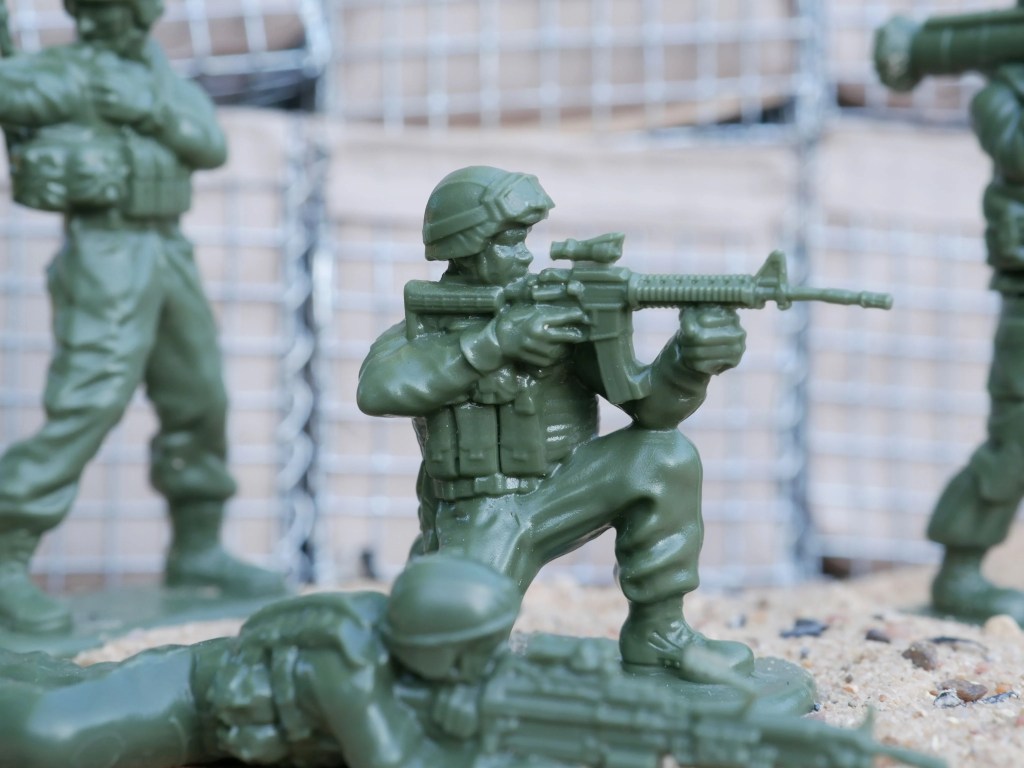
Donovan’s conversations with his neighbor and retired Marine Manny Merrill about his deployment and the aftermath — brothers lost in Afghanistan in combat and at home by suicide — struck a particular chord. So, in 2021, he set out to bring Real Plastic Heroes to life and start telling veterans’ stories.
“Very few people really understand what war is like,” Donovan says. “To include myself, no one paid attention to it for 20-plus years, and that’s why we get this result where we pull out, [and] it’s a complete disaster. The American public has no idea why it happened. All the veterans look back and they’re like, What was it all for?”
The bootstrapped business saw over $13k in soft launch month
Real Plastic Heroes is still in its early stages. The bootstrapped business did just over $13,000 in sales during its soft launch last December and approximately another $10,000 this year. Donovan has focused on expanding the manufacturing operation and currently has about 14,000 figures ready to ship, with infrastructure designed to scale significantly.
Beyond the bottom line, Donovan wants Real Plastic Heroes to make a meaningful difference in the lives of the veterans behind it. The veterans earn royalties from the sale of each set.
Ahead of Veteran’s Day, Entrepreneur sat down with Donovan to learn more about how he’s building Real Plastic Heroes — and what’s next for the business.
Commit to scrappy research and due diligence
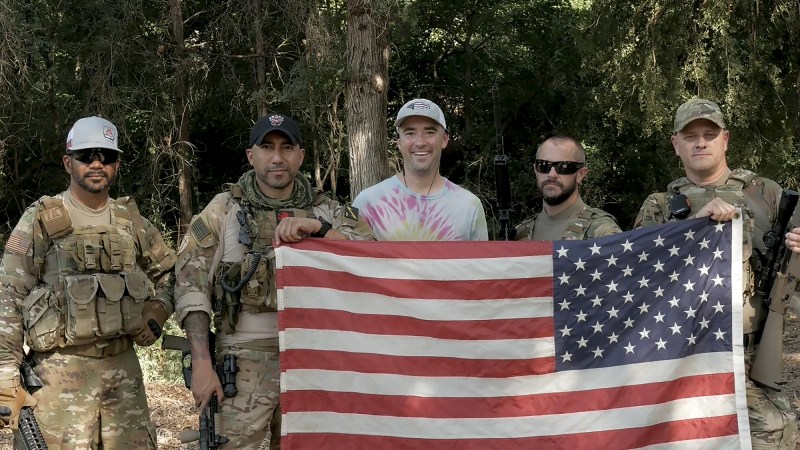
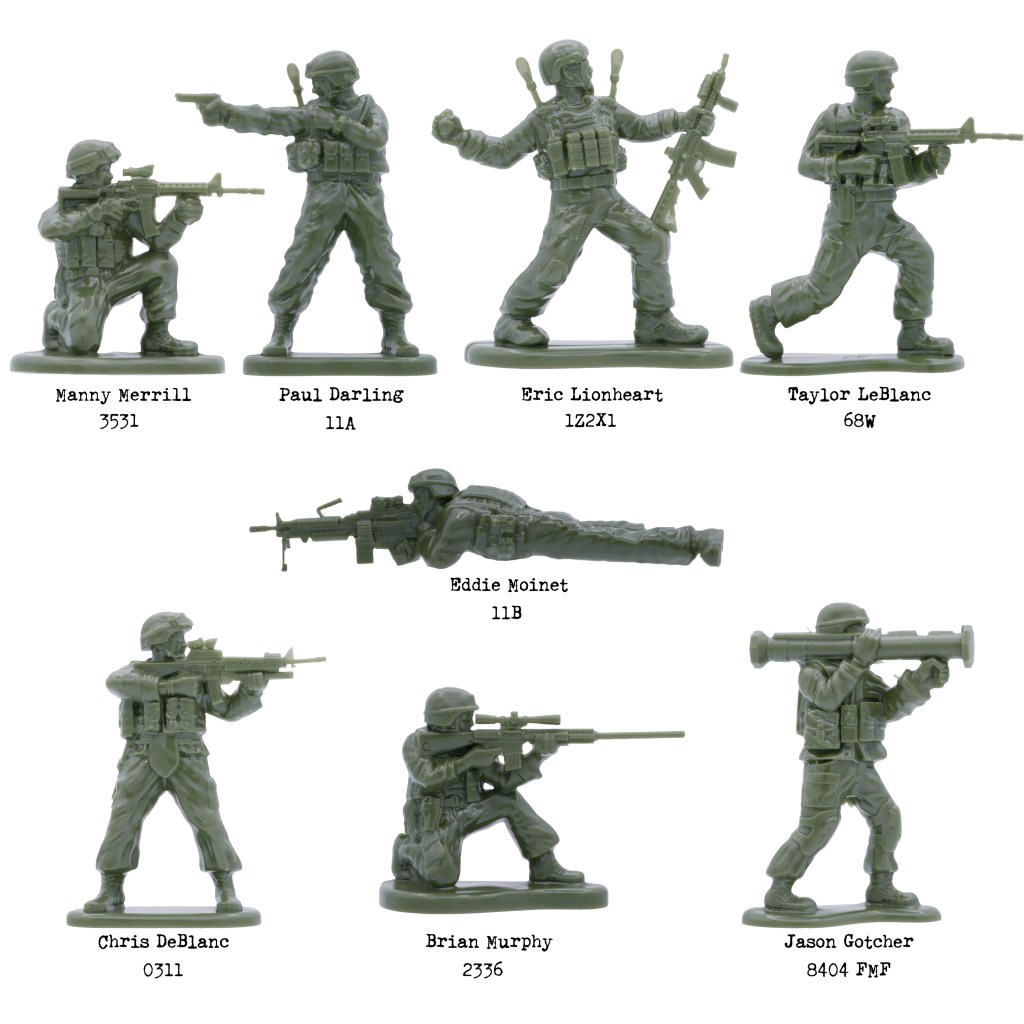
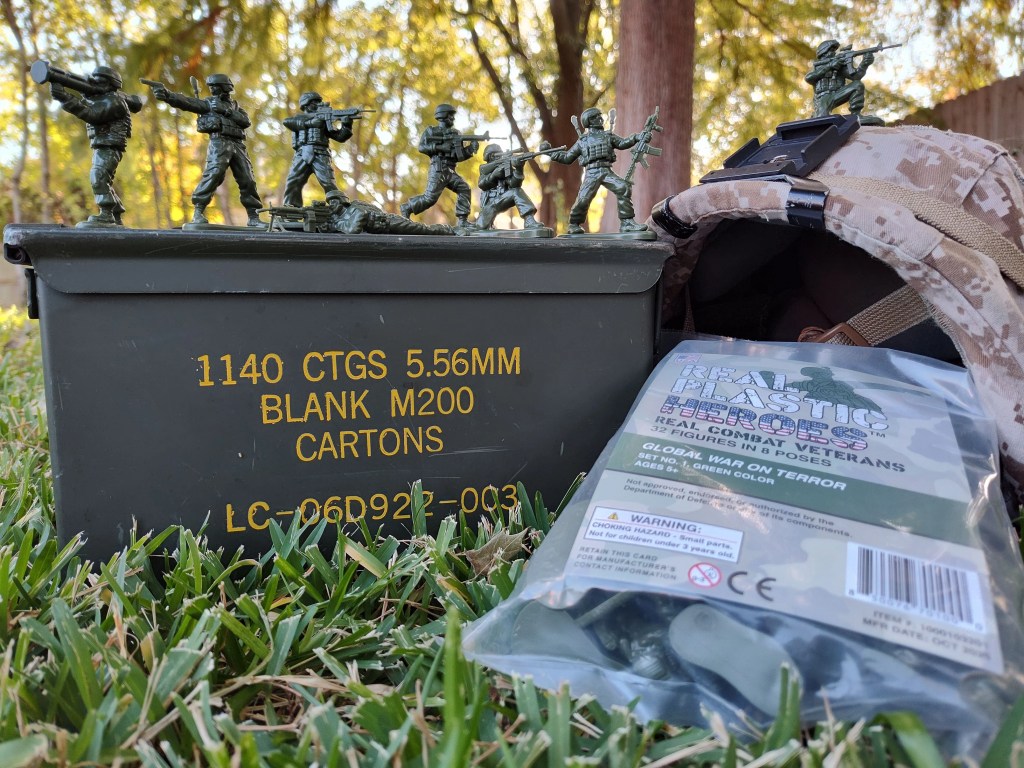
Currently, Real Plastic Heroes’ 32-figure set honors eight veterans: Manny Merrill, Paul Darling, Eric Lionheart, Taylor LeBlanc, Eddie Moinet, Brian Murphy, Chris DeBlanc and Jason Gotcher.
Donovan’s goal was to find veterans in every branch, spanning the war’s duration, who had different types of jobs within the military. He’d interview them to learn their stories and develop their models.
One arena that proved particularly helpful? Military forums on Reddit.
The Reddit forums gave him extensive data in the form of post and comment history — an invaluable asset when it comes to using someone’s name, image and likeness for a product that will outlast its founder, Donovan notes.
“ There’s a lot of risk that you take in trusting that person,” Donovan says. “If they lied about their military experience or they’re just not very nice person, that would be really bad. So I did as much as I could upfront vetting them.”
Additionally, Donovan made sure to connect with veterans through a variety of avenues to avoid overly similar interviews, finding some of the Real Plastic Heroes subjects through books, documentaries — and even at an Airbnb on vacation.
Partner with people who have the skills you don’t
When Donovan started working on Real Plastic Heroes, he didn’t have any of the skills necessary — “other than determination” — to make the vision a reality.
“To anyone that’s starting a business, just because you don’t personally know how to do something, doesn’t mean you shouldn’t do it,” Donovan says.
Once again, success came down to strategic research. Donovan turned to sculptorwanted.net to find an artist who could create the figures in the veterans’ likenesses. That’s where he found Tim Barry. The two of them spent at least a month crafting the first figure based on a series of photographs of Merrill in uniform.
“ A lot of other artists create a sculpt where they’re modeling the clay, then they have it sent out to be 3D-scanned,” Donovan explains. “Tim took the opposite approach. He digitally sculpted the entire thing. That allows us to give incredible levels of detail and precision that is very hard to accomplish if you are physically sculpting something, especially in that size.”
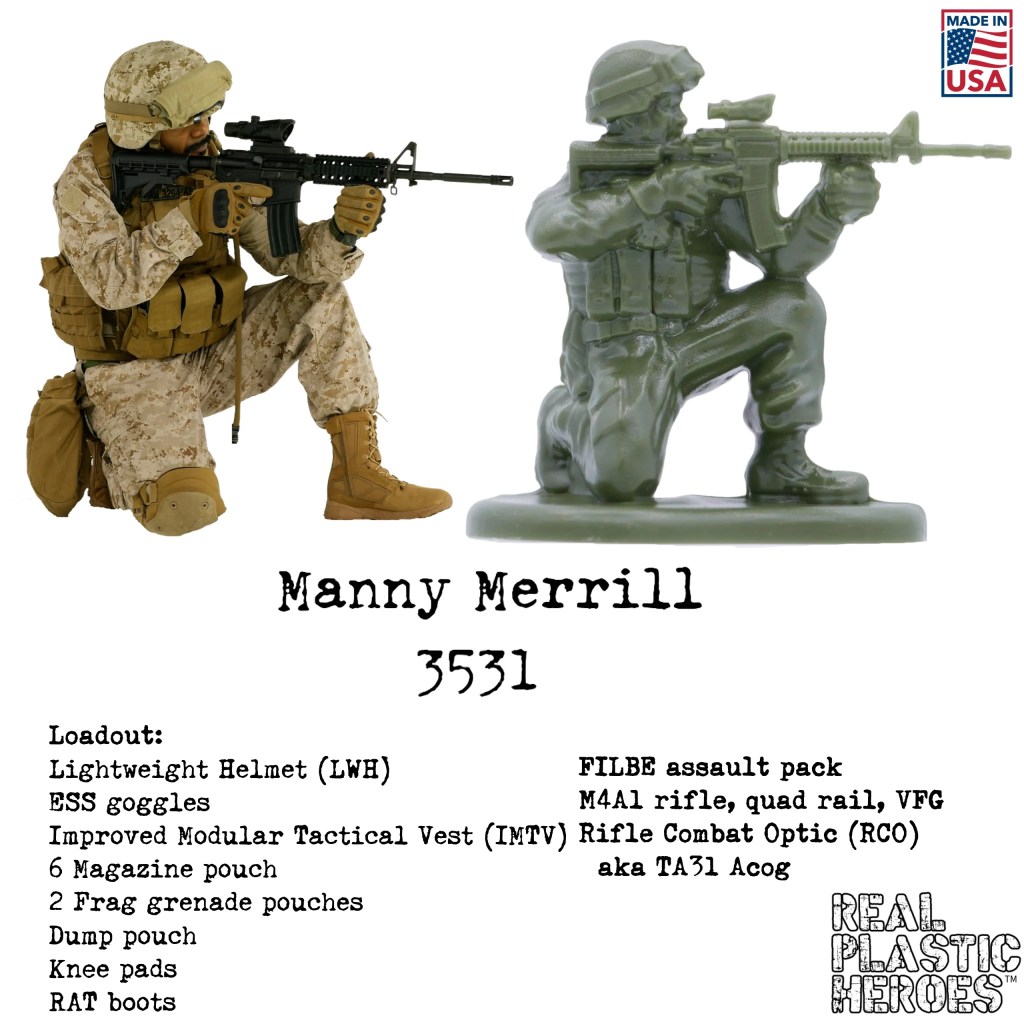
Standing up to 2.5 inches tall, the figures are about 30% larger than the average military figure — a design element incorporated in response to crowdsourced feedback.
Work with a value-aligned manufacturer
Donovan knew that many similar types of plastic toys are manufactured in China, but from the outset, he wanted Real Plastic Heroes to be American-made, even if it was more expensive, he says.
Mold-maker TK Mold & Engineering and hot runner supplier Incoe Corporation, both based in Michigan, manufacture for Real Plastic Heroes.
Additionally, Darling, one of the veterans modeled by Real Plastic Heroes, introduced Donovan to fellow West Point graduate Dean Wegner, a former Army Ranger and helicopter pilot turned entrepreneur.
Wegner is the founder and CEO of promotional products company AAW Solutions and U.S.-made apparel and merchandise company Authentically American, which serves thousands of businesses, charities and values-driven organizations. Authentically American manufactures apparel for Real Plastic Heroes.
Wegner has also given Donovan helpful business advice in preparation for a PR and advertising push after years of building Real Plastic Heroes in secret. (“Everybody had an NDA,” the founder notes).
Don’t rely on if you build it, they will come
In the early days, Donovan, like many new entrepreneurs, fell for a common trap: the if you build it, they will come mentality. He’d create the best plastic soldier possible, and word-of-mouth recommendations would help the business sell out.
That didn’t happen, Donovan says. But the slower start has given him a critical opportunity to consider what he wants to come next, and how to make it happen.
The founder is relying on a couple of key strategies to take Real Plastic Heroes to the next level. He’s creating social media content, breaking up more than 30 hours of veteran interview footage to be posted alongside other short videos in pursuit of a viral moment.
Donovan also plans to experiment with outsourced marketing to cut advertising costs. He intends to reach out to nonprofits benefitting veterans or their family members to propose collaboration opportunities, where a unique link and coupon code can be tied to them for a cut of sales.
“ Once we’ve made it, I really want to promote the stories behind the toys,” Donovan says. “Sure, it would make me happy if we sold out our inventory before Christmas. But it would make me even happier if I saw our watch hours on YouTube not just go viral, but if people are watching the entire video and listening to the calls for action that each veteran has. That people are actually getting involved.”
