Inside Solidarity Group Holding’s Playbook for Building a Regional Insurance Leader

Solidarity Group Holding has spent the past decade and a half turning a mid-tier Bahraini insurer into the region’s most acquisitive underwriter, growing revenue and net profit roughly 12x since 2012 through more than ten M&A transactions. The Bahrain-headquartered group now controls regulated subsidiaries in Jordan and the UAE, holds an estimated 35% of Bahrain’s insurance market on its own, and is raising its stake in Dubai-listed Alliance Insurance from 29% to 49% by year-end, the maximum allowed for non-Emirati shareholders in a listed UAE company.
A holding structure built for accountability
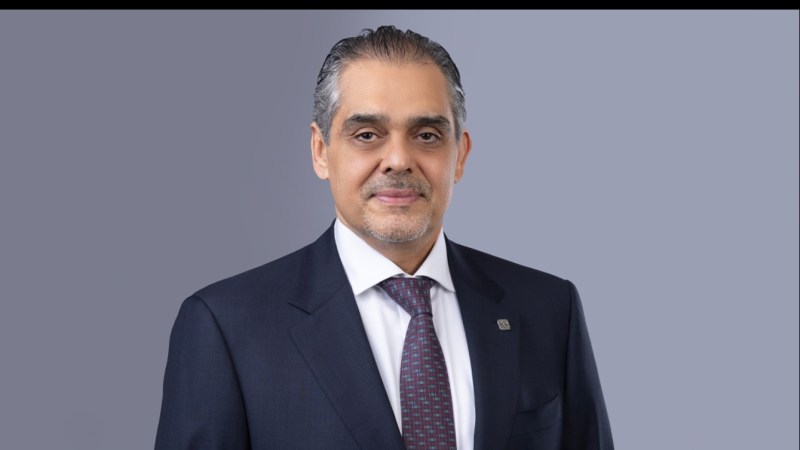
Solidarity was established in 2003-2004 as an Islamic insurance company in Bahrain, expanding through the 2000s into Saudi Arabia, Jordan, Malaysia and Egypt under a single corporate umbrella. The 2008 financial crisis exposed the limits and constraints of that structure. “The group was expanding entirely under one umbrella, which created issues with capital allocation and accountability, since one company was involved in all these entities,” says Ashraf Bseisu, Group Chief Executive Officer. In 2009-2010, Solidarity restructured into a holding company with each business established as a separately capitalized, regulated subsidiary, improving capital efficiency and accountability. That restructuring also introduced a three-year rolling strategy cycle, first set at a 2009 meeting in Kuala Lumpur and has been practiced ever since.
The formula behind ten-plus acquisitions
From 2012, Solidarity’s board drew a hard line: for investments where it did not hold majority control, take a majority stake and operate the business, or exit. That discipline shaped a run of deals, including Jordan’s Yarmouk Insurance Company in 2016, which brought a grandfathered life-insurance license; Bahrain’s Al Ahlia Insurance in 2017-2018; T’azur Insurance in 2019-2020; a regulator-driven merger with Al Jazira Takaful in Saudi Arabia in 2020-2021; and Al Hilal life and Al Hilal Takaful, acquired from Ahli United Bank Bahrain in 2023. Its largest transaction, the 2024-2025 acquisition and integration of Bahrain National Insurance and Bahrain National Life, was also its first to require external leverage rather than internal financing.
Bseisu says the group evaluates targets less on their standalone profile than on what they could become combined with Solidarity. “We don’t look at the target as it stands today; we look at the potential of the combined entity once merged with us. The goal is that one plus one shouldn’t equal two, it should equal three, four, or five,” he says.
Extending digital and AI beyond Bahrain
Since adopting a strategy built around disruption and differentiation in 2018, Solidarity has rebuilt its core systems and became, by its own account, the only regional insurer offering fully video-based insurance when COVID-19 hit in 2020. Motor insurance is now fully digital, supported by AI-powered vehicle inspection technology. The Group has also significantly expanded its online insurance portal, allowing customers to conveniently purchase a wide range of products quickly and securely. It also runs a bancassurance channel through its parent, Al Salam Bank, and it is building in-house AI capability it plans to extend to Jordan and the UAE. Bseisu links the push partly to a generational shift: Gen Z and Gen Alpha customers, he says, expect a more digital-first experience and transact differently from previous generations.
People before products
Asked what differentiates Solidarity beyond pricing, Bseisu points first to people, highlighting the Group’s focus on developing an agile work environment and investing in its people as an ethos. He draws a distinction between leadership and management, emphasizing the role of leaders in mentoring teams and helping their functions grow. Solidarity has also repeatedly progressed employees who started in junior roles, reflecting its focus on developing talent and creating opportunities for career progression. This focus is also reflected in the Group’s workforce, with a Bahrainization rate of 93%. Women represent 37% of the total workforce, with 33% of them holding leadership positions.
Preparing for a shifting industry
Bseisu names market and geopolitical volatility, changing consumer behavior, an evolving regulatory regime and shifting operating models as the biggest pressures facing regional insurers, alongside the generational change already reshaping customer expectations. Solidarity’s response is to build multiple scenarios into its planning and lean on organizational agility. “You put things in place to mitigate, because not everything goes according to plan,” he says. Sustaining growth, he argues, ultimately comes down to leadership, people and a genuine culture of continuous innovation. “Especially now, change is exponential… that’s happened in a very short period of time,” he says. “You have to keep pushing to keep up with the curve.”
About Solidarity Group Holding
Solidarity Group Holding builds insurance businesses by taking operational control, not by holding passive financial stakes. The Bahrain-headquartered group has completed more than ten mergers and acquisitions since 2012, becoming the leading insurer by market share in Bahrain, with regulated subsidiaries also operating in Saudi Arabia, Jordan and the UAE.
Media Contacts
The Executive Insight on behalf of Solidarity Group Holding
Solidarity Group Holding
editor@theexecutiveinsight.com + 1 332 242 4643Have News to Share?
Publish your press release on Entrepreneur and reach millions of business leaders worldwide.
Submit Your Press Release