Trossen Robotics Names New CEO and CTO as It Launches 2026 Product Lineup

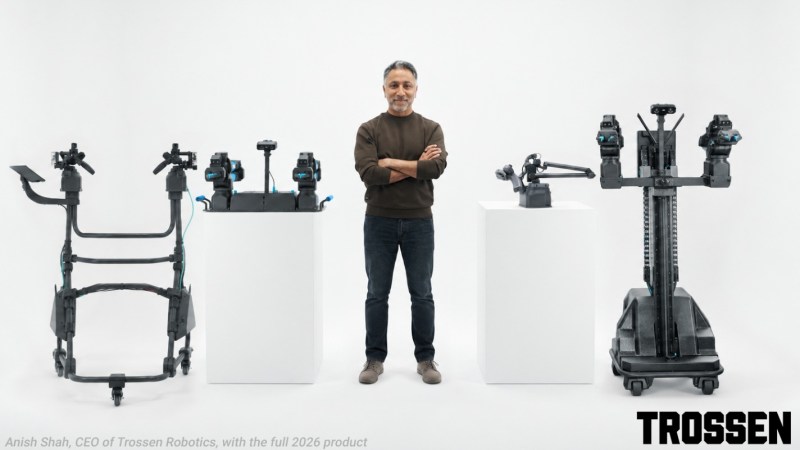
The leadership change sharpens a long-standing philosophy: listen closely, engineer pragmatically, and make advanced robotics accessible.
For a technology to reach the broader market, being possible is not enough. It must also be useful, affordable to adopt, and dependable enough for other people to build on. That distinction has shaped Trossen Robotics for more than two decades, and it is the thread connecting the company’s new product lineup with its next chapter of leadership.
Anish Shah is becoming Chief Executive Officer, while founder Matt Trossen is moving into the role of Chief Technology Officer. The structure sharpens focus on two complementary responsibilities: continuing to turn emerging technologies into practical products, and building the organization and market reach that help those products make a broader impact.
For Trossen, the CTO role concentrates his work on the technology implementation, engineering, and product judgment that have defined the company. For Shah, the CEO role expands the growth, commercialization, and partnership responsibilities he has already been leading as President and Chief Operating Officer.
A legacy built by listening
Trossen Robotics’ history has unfolded across several generations of robotics: from supplying components and development tools to creating its own robotic platforms, supporting advanced research, and helping teams explore how machines can learn from human demonstrations. The products have changed as the field has changed. The underlying discipline has remained consistent: understand what people are trying to accomplish, identify what stands in their way, and make the enabling technology more accessible.
Under Trossen’s leadership, that approach helped build a company whose platforms serve research institutions, corporate development teams, and startups. Trossen Robotics publicly reports a customer base that includes more than 400 universities and colleges, as well as more than 60 Fortune 500 organizations. The breadth matters not only as a measure of reach but also as a source of insight into where the market is heading.
A research laboratory can reveal a capability that is just becoming possible. A corporate R&D team can expose the integration requirements that determine whether it will work inside a larger organization. Large-scale data-collection operators can reveal the practical consequences of operator fatigue, inconsistent demonstrations, or difficult-to-maintain equipment. Startups can show where those technologies are becoming products. Automation integrators can show what it takes to bring them into a customer’s workflow.
Taken together, those perspectives help distinguish an interesting experiment from a product opportunity. The objective is not to chase every request. It is to recognize recurring needs, select technologies that meaningfully address them, and engineer a supported platform that is useful to many customers. This is the market-driven philosophy Trossen Robotics is formalizing through its Virtuous Integration Cycle: listening, development, production, commercialization, and customer feedback, which reinforce one another.
Trossen’s move into the CTO role places that philosophy at the center of his executive mandate. His legacy is not only the hardware the company has shipped. It is a way of deciding what deserves to be built, and how to make it valuable beyond the first demonstration.
“The technologies have changed many times, but our job has stayed remarkably consistent: listen to the people pushing them forward, understand what they need, and turn that into products more people can use,” said Trossen . “As CTO, I’ll be focused on strengthening that process, from the first market signal through engineering, quality, and the customer experience.”
A product family shaped by the same principle
The 2026 lineup gives that approach a tangible form. Rivet and Workbench provide mobile and stationary platforms for two-arm manipulation. The WidowX arm family supplies the underlying manipulation hardware. Glide and Cockpit address the human side of teleoperation, while TRumi supports handheld demonstration capture. Together, they reflect an effort to connect stages of robot development that teams would otherwise have to assemble and integrate themselves.
The goal is continuity: a more coherent path from demonstrating a task to collecting data, training and evaluating a model, and testing its behavior on real hardware. Trossen Robotics’ developer tools and evolving cloud services extend that effort beyond the physical robot. The intention is to reduce repeated integration work without asking customers to build their entire application around a single model provider.
The collaboration with Stereolabs, a wholly owned subsidiary of Ouster, Inc., announced in August, provides a concrete example. Integrating scene and wrist cameras into the Workbench and Rivet addresses a practical part of robot learning: obtaining consistent visual observations of both the workspace and the interaction at the gripper. It applies advanced sensing technology to a specific customer problem rather than treating the sensor as an isolated specification.
Serviceability and support belong in the same conversation. Accessible wear components, documentation, and a path to expert help can matter as much to a team’s progress as a headline specification. Trossen Robotics’ public commitment to field-replaceable wear parts and lifetime product support reflects that broader definition of value.
The expansion toward applied automation builds on the research business rather than replacing it. Research helps establish what may become possible; supervised pilots and integrator feedback help establish what must improve for wider adoption. Keeping those communities connected is central to the company’s direction.
Experience for the next stage of growth
Shah brings 25 years of experience spanning strategy, analytics, startups, and large-scale operations. His career includes McKinsey & Company, strategy leadership at SPSS through its acquisition by IBM, and helping Moderna scale its response during the COVID-19 pandemic. Those experiences combine emerging technology with the operational demands of turning ambition into execution.
At Trossen Robotics, he has already been leading growth, go-to-market strategy, and strategic partnerships as the company broadens its role from a hardware provider toward a platform for robotics and AI. Becoming CEO extends that work: aligning the organization, strengthening commercial relationships, and supporting growth in a way that preserves the quality and customer proximity the business depends on.
“Matt has built more than a product company. He has built a way of bringing advanced technology within reach,” Shah said. “Our next chapter is about scaling that strength: helping more customers succeed, building the partnerships and operating capabilities to support them, and preserving the pragmatism that makes Trossen Robotics distinctive.”
The partnership between the two leaders is therefore not a division between innovation and business. Customer knowledge informs the products; reliable products and support earn the relationships that generate better knowledge. Trossen’s technology leadership and Shah’s business leadership are intended to strengthen different parts of the same cycle.
The ambition is broader access to advanced robotics: not only for organizations able to build every component and integration themselves, but for more researchers, developers, startups, and integrators pursuing useful applications. Reaching that market requires both continued technical progress and the discipline to make it adoptable.
Trossen Robotics’ next chapter is built around that combination. A new generation of products expands what customers can build. A more focused leadership structure is designed to help the company deliver those products, and the capabilities behind them, to a wider market. The mission remains familiar: help innovators innovate, and make the next wave of technology practical enough for more of them to participate.

About Trossen Robotics
Trossen Robotics builds hardware and software platforms for robot learning and physical AI, serving research institutions, corporate development teams, and startups. The company's customer base includes more than 400 universities and colleges and more than 60 Fortune 500 organizations. Trossen's 2026 product lineup extends its platforms toward applied automation, backed by field-replaceable wear parts and lifetime product support. Learn more here.
Media Contacts
Have News to Share?
Publish your press release on Entrepreneur and reach millions of business leaders worldwide.
Submit Your Press Release