From QVC to Countdown Timers — How eCosmetics Is Turning Beauty Shopping Into a Live Auction Game
A look inside eCosmetics’ strategy to grow online shopping by tapping into the fun and competition of live auctions.
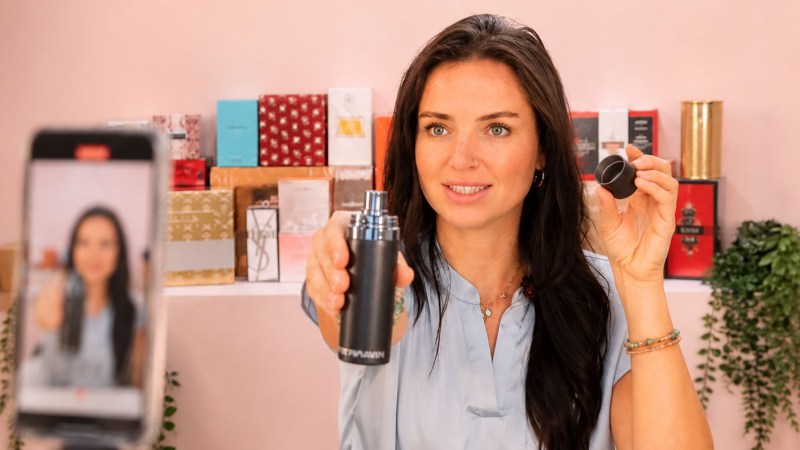
Picture this: It’s 9 p.m. on a Tuesday. You weren’t planning to buy anything. You opened an app out of boredom, maybe to kill five minutes before bed. Then a countdown timer appeared on your screen — twelve seconds to get your hands on a moisturizer you’ve been eyeing for weeks. Someone just outbid you. Now you’re wide awake.
This is what shopping looks like in 2026: live auction shopping. Once a niche novelty borrowed from Asian markets, it has quietly crept into the mainstream American beauty routine. The numbers back it up: the global live commerce market hit $15.5 billion in 2024. Analysts project it will climb to $287 billion by 2034. About 49 million Americans are already doing it.
The question everyone’s asking is why it works so well and the answer is simple. It’s the same reason people can’t stop watching poker tournaments or refreshing eBay listings. Competition does something to the brain. Add a product you actually want, a clock running down, and a few hundred other people bidding against you, and the whole experience stops feeling like shopping, and it starts feeling like a game.
QVC Had the Right Idea. It Just Needed an Upgrade.
There’s a version of this that’s been around for decades. QVC, the Home Shopping Network. Your aunt called in to buy cubic zirconia earrings while a host in a blazer counted down the remaining units. The formula worked then for the same reasons it works now: a real person, demonstrating a real product, creating real urgency.
What’s changed is everything around that formula. The TV is now a phone screen, the host is a beauty creator with 800,000 followers who does her own makeup on camera every morning, the studio audience is a live comment section, and the “call now” button has been replaced with a bidding interface that updates in real time.
eCosmetics Live, the live auction platform launched by established beauty retailer eCosmetics and co-founded by Alex Irvin and Richard Kirsch, has been building in this space and was recently profiled by Forbes for its role in the live shopping movement. eCosmetics Live runs on a real-time auction model. Products go up in short, timed windows. A countdown ticks on screen. Viewers bid against each other. When the clock hits zero, the highest bid wins and checkout processes automatically. No browsing, no cart abandonment, no “I’ll think about it.”
The “I’ll think about it” moment is exactly what the format eliminates. When something is gone in 30 seconds, you stop deliberating.
The Part That Actually Hooks People
Ask anyone who’s gotten pulled into a live auction session what happened, and the story is usually the same. They didn’t come to buy, they came to watch. Maybe a creator they follow was hosting, maybe an algorithm served them a clip. Ten minutes later, they owned a vitamin C serum they didn’t know existed an hour ago.
The mechanics of live auction shopping are specifically designed to keep viewers present and participating. Countdown timers create urgency, visible bidding creates competition, limited quantities create scarcity. None of these are new psychological levers, but combining all three, in real time, with a product someone already wants, while a trusted host is talking directly to them, is more potent than any static product page.
Irvin has been pretty direct about where this is headed: “It’s not the future, it’s already here.”
The social element matters more than people realize too. Watching thousands of other people engage with a product in real time does something that reviews and star ratings can’t. It’s live social proof. You’re not reading about what other people thought after the fact; you’re watching it happen. Someone in the comments just said it worked for her oily skin, someone else is saying the shade runs light, the host is answering questions on the spot. It’s the beauty counter experience, just on your couch at 9 PM.
Who’s Actually Running These Things
One of the more interesting parts of how eCosmetics built this out is the seller side. A creator hosting on eCosmetics Live doesn’t need to own any inventory. They go live remotely and pull directly from eCosmetics’ existing catalog, which runs into the hundreds of thousands of products. Warehousing, fulfillment, shipping — all of it is handled on the back end.
What that means in practice is that a beauty creator with an engaged following can host a live shopping event from her apartment, pulling from hundreds of thousands of SKUs already sitting in eCosmetics’ warehouses, with shipping, returns, and customer service already handled. The infrastructure problem most live commerce startups spend years solving is already solved on the back end. The barrier to entry dropped significantly, and a lot of people walked through the door.
Irvin’s approach to these creator partnerships has been to stay out of the way. “We don’t tell influencers what to post. We give them store credit and let them be creative.” That hands-off model is part of why the content coming out of these events tends to feel like a recommendation from someone you actually trust rather than a sponsored segment. The audience can tell the difference, and it shows in how they respond.
The Numbers That Suggest This Isn’t a Phase
Today, U.S. online beauty sales are closing in on $30 billion a year. E-commerce already accounts for more than a third of all beauty purchases worldwide. The infrastructure for live commerce — the streaming tools, the auction mechanics, and the fulfillment networks — is now mature enough that smaller platforms and independent creators can participate without enterprise-level resources.
The brands benefiting aren’t just the big names either. eCosmetics Live has used the format to spotlight indie, women-owned, and minority-owned brands that traditionally struggle for shelf space in physical retail. In a live event, a founder can tell her story directly. The product has context. That context, it turns out, moves units.
The real shift happening underneath all of this is simpler than the technology. Shopping has been a passive activity online for a long time. You scroll, you click, you wait for delivery. Live auction commerce makes it active; you’re in it and competing. You’re making split-second decisions with a clock on the screen and other people doing the same thing in real time.
Once you’ve shopped that way, the old version feels broken. And that, more than any algorithm or AR filter, is probably why this is spreading the way it is.
Entrepreneur Media was not involved in the creation of this content.