Shane Lowry Says His Proudest Moment Wasn’t His Masters Hole-in-One (But It Was Close)
The golfing great opens up about why he partnered with medical tech leader Stryker and what it really feels like to sink a hole-in-one at the Masters.
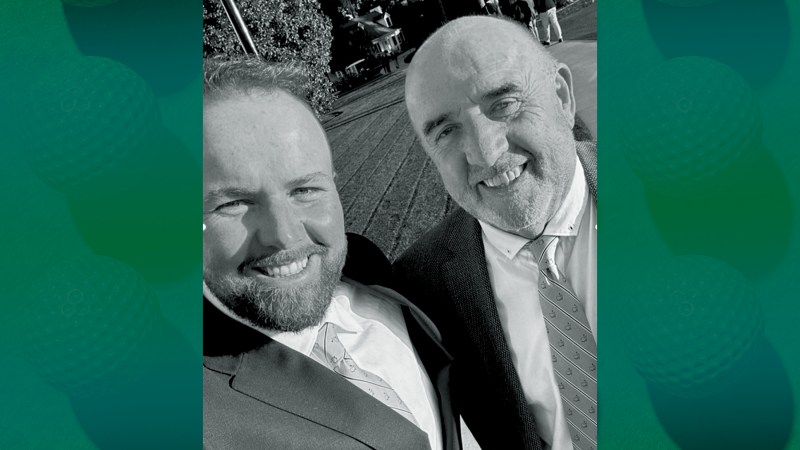
Golfing great Shane Lowry has won a Claret Jug, competed in Ryder Cups, and this year drained a hole-in-one at the Masters in front of a roaring crowd. But ask him about his proudest role, and he brings up his father Brendan, a former Gaelic football player, who needed both a hip and knee replacement. Shane took on the role and responsibilities of caregiver, and that experience is at the heart of his new partnership with Stryker, a global medical technology leader.
The company’s mission, says Joint Replacement division president Katherine Truppi, is simple: “Together with our customers, we are driven to make healthcare better.” Truppi says the Lowry partnership was a chance to shine a light on an “under-recognized role” — the caregiver — and to help other families feel less alone navigating a similar journey. I caught up with Shane as he prepares to battle it out at the 2026 Irish Open to talk about his dad, preventative health, and what it actually feels like to make a hole-in-one on one of golf’s biggest stages.
Dan Bova: What drew you to this partnership with Stryker?
Shane Lowry: I’m in a fortunate position where I get the opportunity to meet so many people, and I get to pick the partnerships I choose to get involved with. This one for me was pretty straightforward — my dad had hip replacement surgery 10 or 12 years ago. His hip worked for a while and took pressure off his knee, but ultimately his knee was always the problem, and he ended up getting a knee replacement a few years ago. Both are Stryker products, and he’s still going pretty strong now.
A lot of us find ourselves in that “sandwich generation” — caring for aging parents while raising our own kids. What did it mean to be able to help your dad through this?
I’ve got my own 18-month-old, so I’m forging my own path, building my own life, and taking care of my own family. But I feel like I’ve been in a fortunate position where I can take care of my parents, too. When it came time for my dad to get something done about his hip, I was able to go find the right people. My dad’s still only 67 — he’s young, so he doesn’t need that much taking care of. But when you’re able to help him through tougher times, it’s pretty fulfilling, to be honest.
Men in particular aren’t always great about taking care of themselves and tend to put off procedures like this. What would you say to someone who’s putting it off?
There’s nothing wrong with going and getting a consultation and seeing how much it can help you. Because when you do that, you’ll realize you can go from not being able to do simple everyday jobs — my dad used to have trouble tying his shoelaces — to being back out there. As you get older, you want to be out and about with your grandkids, kicking a ball, playing golf. I think the hardest part for most people is the original step toward the consultation and starting the ball rolling. But once you do that, you realize it’s the right thing for you.
What do you say to entrepreneurs reading this — hard-charging people working a million hours, probably not eating great, probably not exercising as much as they should?
It’s hugely important to take care of yourself, your body and your mind. A small bit of exercise and eating the right stuff and other stuff in moderation — you need to enjoy yourself at times too — but it’s very important to take care of yourself. I think as I’ve gotten older, having kids, I’ve realized I want to stay younger for longer. And I think if you have a friend or family member and you see them limping or struggling through everyday life, don’t be afraid to say something. Don’t be afraid to ask, “Do you think you should get this checked out?”
We’ve talked a lot about physical struggles — let’s talk about something a little more fun. What does it actually feel like to hit a hole-in-one?
It’s a funny thing, because you’re obviously aiming there, right? That’s the object of golf — get the ball in the hole as quickly as you can. But you don’t stand up on a hole and go, “Right, I’m going to make a hole-in-one here.” You’re trying to hit the best shot you can, and sometimes it just comes off. I’ve been fortunate to make a few really good ones — most recently this year at the Masters, on the Saturday afternoon, playing with one of my good friends, I made a hole-in-one on the sixth. To put myself right into contention at one of the biggest tournaments in the world — there aren’t many better feelings, to be honest with you. It’s a funny thing too, because when it happens in the middle of your round, your adrenaline goes through the roof, and you actually spend the next twenty minutes trying to get your heart rate back down, because you’ve still got a lot of golf to play. But it’s a very cool thing to have 20,000 people there cheering you on.
Golf, like entrepreneurship, has a lot of highs and lows. What have you learned about staying even-keeled through it all?
It’s an interesting sport we play because it’s such a long career, and I think it’s pretty similar to everyday life — nothing is plain sailing. It’s full of ups and downs, highs and lows, and it’s important to try and be as even as you can through it all. The last few months haven’t been the best for me, and I think it’s important to never lose sight of your goals or what you’re working toward — just keep grinding through, day by day, and eventually it’ll turn. It’s a stressful job at times, but it’s an amazing job. I’m very lucky to do what I do. I love competing at the highest level — it’s what I get out of bed for.
Golfing great Shane Lowry has won a Claret Jug, competed in Ryder Cups, and this year drained a hole-in-one at the Masters in front of a roaring crowd. But ask him about his proudest role, and he brings up his father Brendan, a former Gaelic football player, who needed both a hip and knee replacement. Shane took on the role and responsibilities of caregiver, and that experience is at the heart of his new partnership with Stryker, a global medical technology leader.
The company’s mission, says Joint Replacement division president Katherine Truppi, is simple: “Together with our customers, we are driven to make healthcare better.” Truppi says the Lowry partnership was a chance to shine a light on an “under-recognized role” — the caregiver — and to help other families feel less alone navigating a similar journey. I caught up with Shane as he prepares to battle it out at the 2026 Irish Open to talk about his dad, preventative health, and what it actually feels like to make a hole-in-one on one of golf’s biggest stages.
Dan Bova: What drew you to this partnership with Stryker?
Shane Lowry: I’m in a fortunate position where I get the opportunity to meet so many people, and I get to pick the partnerships I choose to get involved with. This one for me was pretty straightforward — my dad had hip replacement surgery 10 or 12 years ago. His hip worked for a while and took pressure off his knee, but ultimately his knee was always the problem, and he ended up getting a knee replacement a few years ago. Both are Stryker products, and he’s still going pretty strong now.