These Founders Built a $60 Device That Solves Phone Addiction — Hundreds of Thousands of People Are Already Using It
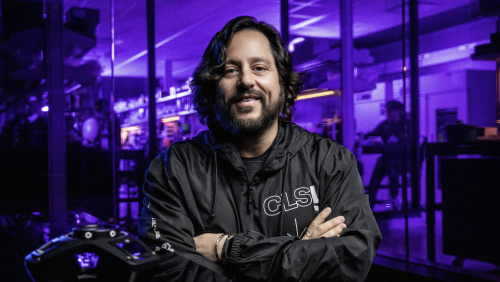
TJ Driver and Zach Nasgowitz built Brick to combat mindlessly scrolling through your phone. Now, the simple device is used in 180 countries.

Opinions expressed by Entrepreneur contributors are their own.
Key Takeaways
- Brick is a $60 physical device that locks distracting apps on your phone.
- The founders have known each other since first grade.
- Brick proves the best products solve the founder’s own problem first.
The average American spends 20 years of their life staring at their phone. That’s about 5 to 6 hours a day mindlessly scrolling through apps. TJ Driver, 26, and Zach Nasgowitz, 27, had this exact problem. After graduating college, they were brainstorming business concepts, trying to come up with problems they could solve. But they noticed they’d constantly get distracted by looking at their phones.
“We’d have all these ideas,” Driver says. “We’d have hours-long discussions seeing which ones might be promising. But we weren’t making as much progress on this list as we’d like because we were on our phones all the time.”
That’s when the thing preventing them from building a business became the business.
The $60 Fix
Today, their company Brick has over 500,000 active users in 180 countries and brings in multiple eight figures in revenue. For a problem born in the digital age, the product is refreshingly low-tech: a small $60 physical device that locks you out of distracting apps on your phone. Unlike screen-time apps that you can easily ignore with a single tap, Brick acts as a physical “key” that you leave in another room—or another building entirely.
For the uninitiated, here’s how it works: You select which apps to lock—Instagram, TikTok, email, whatever steals your attention—and Brick blocks them. Feel an urgent need to check your feed? You’ll have to physically walk back to wherever you left your Brick, unlock it and make a conscious choice. That friction is often enough to break the compulsion. “It just gives you that moment,” Driver says. “You’re like, okay, I’m going to stay focused here.”
It’s also what makes Brick different from other solutions. The Light Phone or dumb phones, stripped of all social apps, require you to swap your iPhone for a bare-bones alternative. This can be impractical when you need your phone for two-factor authentication, building access or mobile payments. It also gets costly. Meanwhile, screen-time apps, Nasgowitz argues, are too easy to bypass. “You can just click ignore.”
Related: 4 Ways to Break Your Phone Addiction So You Can Focus on What Really Matters
Friends since first grade
Driver and Nasgowitz have been best friends since first grade, going through grade school, high school and college together at the University of Wisconsin-Madison. Both were drawn to entrepreneurship, so after graduation, starting a company together felt natural.
Their first startup was called Fitted, which let fashion influencers post outfits and link every item for a commission. They spent six months building it, convinced people would want it. They didn’t.
A few lessons stuck: First, always run your idea by potential users before launch. They built the app in isolation and this was a mistake. Second, build for yourself. They were not the Fitted user and had they been, they may have seen its shortcomings. “If you’re not the user, you’re not going to know if you’ve actually built something useful,” Driver says. So, for their next business, they built for themselves—starting with wood.
Related: Here’s How People Successfully Work With Friends, Family and Even Their Spouse
3D printing to the rescue
Nasgowitz carved the first Brick from a block of wood he found in his dad’s workshop. They wanted something heavy enough to make you think twice about carrying it around, but portable enough to actually use.
But wood doesn’t scale. Nasgowitz bought a 3D printer and started making 10 units a day. When demand outpaced supply, they bought another printer. Then another. Eventually, 15 printers ran around the clock in Nasgowitz’s parents’ basement, churning out 500 units a day. “My mom was like, there’s fumes,” Nasgowitz recalls. He and his dad built a ventilation system.
Eventually demand was so great they had to outsource production. But they proudly printed 70,000 units in that basement.
Related: How This $28 Million Startup Hopes to Save the World With 3D Printing
The unexpected users
The Brick user isn’t just a tech bro trying to optimize their productivity. Young parents use Brick. They’ll tell the founders, “I’m spending so much time with my toddler that I wasn’t having before because I was using my technology unintentionally.” College students are also fans, using the Brick to power through library study sessions.
The psychology is surprisingly powerful. Even when the Brick is just across the apartment, users report the physical separation is enough to break the compulsion. “I would just leave it at my apartment and then go to the library or go to work,” Nasgowitz says. “You know that key is no longer there.”
iPhone fans
You would think that Driver and Nasgowitz are anti-technology—or at the very least anti-iPhone. They say the opposite is true. Both cite Steve Jobs as a major inspiration, and they’re quick to defend the device they’re helping you use less. “The iPhone is one of the most powerful inventions ever created,” says Driver. “Within 30 seconds, I could be reading any book ever written in human history. That’s insane how great this tool is.”
But like any great tool, it can be misused. “I just realized I was spending so much time mindlessly and unintentionally—hours of my day essentially deleted,” he says. “I just need to use it better.”
Related: 7 Lasting Lessons I Learned from Steve Jobs, 10 Years After His Passing
Key Takeaways
- Brick is a $60 physical device that locks distracting apps on your phone.
- The founders have known each other since first grade.
- Brick proves the best products solve the founder’s own problem first.
The average American spends 20 years of their life staring at their phone. That’s about 5 to 6 hours a day mindlessly scrolling through apps. TJ Driver, 26, and Zach Nasgowitz, 27, had this exact problem. After graduating college, they were brainstorming business concepts, trying to come up with problems they could solve. But they noticed they’d constantly get distracted by looking at their phones.
“We’d have all these ideas,” Driver says. “We’d have hours-long discussions seeing which ones might be promising. But we weren’t making as much progress on this list as we’d like because we were on our phones all the time.”
That’s when the thing preventing them from building a business became the business.