I Sold My Business for $280 Million in Cash. Now, I Invest in Early-Stage Companies — Here’s What Every Young Entrepreneur Should Know.
Dan Graham was interested in business from a young age.
Key Takeaways
- Graham sold BuildASign, the startup he co-founded, to VistaPrint, now Cimpress, in 2018.
- After the sale, Graham became an investor and advisor, helping early-stage companies grow.
- Here’s what he thinks young entrepreneurs should know as AI continues to change the landscape.
This as-told-to story is based on a conversation with Austin, Texas-based entrepreneur and investor Dan Graham. Since selling his business, BuildASign, to VistaPrint in 2018 in a $280 million cash transaction, Graham has continued to launch and play a role at multiple other firms. He has been a partner at Notley since 2015, general partner at Springdale Ventures, general partner at Geyser Group and board member at CiviTech, among others. Additionally, Graham gives back to the Austin community through participation on the board of directors for numerous philanthropic organizations, including Austin Community Foundation, Austin Monitor, the 4ATX Foundation and others.

Growing up, I always gravitated towards entrepreneurship. But I didn’t necessarily think of it as a career path. When I was 12, I started this little business doing door-to-door magic tricks, where I’d do the magic for free, then ask for money to reveal how I’d done it. I also sold candy at school.
I went to school for a computer science degree. Then, I went to law school to study intellectual property and patent law. But I always enjoyed the entrepreneurial side of things as well. So, when I was a second-year law student, a couple of friends that I had grown up with partnered to do web development work to earn some extra money.
Pitching websites and a Web 2.0-type solution
We would meet with different small- to medium-sized businesses and pitch basic websites. But we’d also look at their workflows and the way they were selling products. We’d try to upsell them into a more robust Web 2.0-type solution. We often had ideas that we thought were really good that the client would turn down for whatever reason, price, or something else. Then, we would occasionally spin those ideas out into their own brands to try to run them or sell them as a separate small entity.
Ultimately, that model led to our business, BuildASign. We had a local print company that we were pitching a basic website for, and one of my business partners had the idea to embed a Photoshop-style tool on the website because they were spending a lot of money and time in the graphic proofing process. After this back and forth, the customer might decide not to buy anything at all, so there was a high sunk cost. So the idea was, what if the customer designed their own product and then paid for it online?
Originally, we tried to sell that piece of software. We quoted about $7,000 for the site. The first company said it was too expensive. Then we just printed up 100 different print shop names in town and started going door to door trying to find someone who would buy the software and couldn’t. That’s what led us to push it online and prove it out, then turn it into an actual business.
From $250k revenue in six months to $8M a year
We had about six months in 2005 where we were effectively selling and just outsourcing everything to a local company to produce. So we did about $250,000 in revenue in those six months. Then we saw a little over $3 million in 2006, our first full year working on the business, and $8 million in 2007. We bootstrapped the company with no outside money until 2015.
By 2015, my co-founders weren’t as involved in the business day-to-day. All of our net worth was tied up in this printing company because we had bootstrapped it. So we decided to see what the company was worth.
We sold a little over half of the business to a private equity fund in 2015. Then, in 2018, we sold the entire business to Vistaprint, or what’s now called Cimpress, for $280 million in a cash transaction.
Angel investing, advising entrepreneurs
After the final sale, we set up our family office and started to do a lot of angel investing and working with founders. I knew I didn’t want to start another business right away. So I started to look for places to plug into the entrepreneurial ecosystems. I did a lot of work with different groups: Capital Factory, SKU and Techstars.
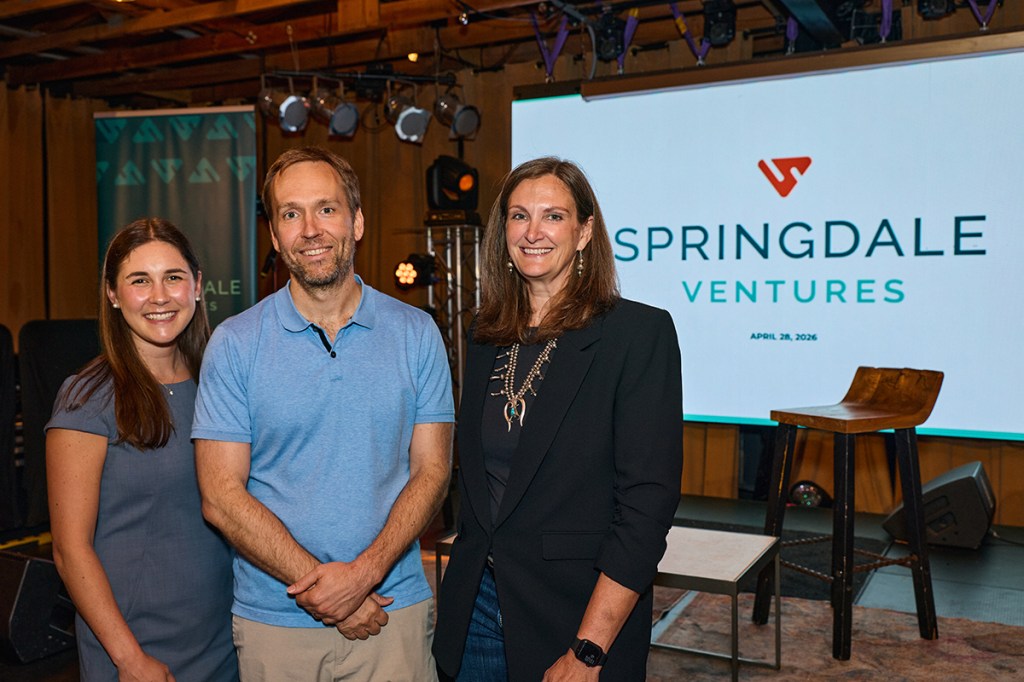
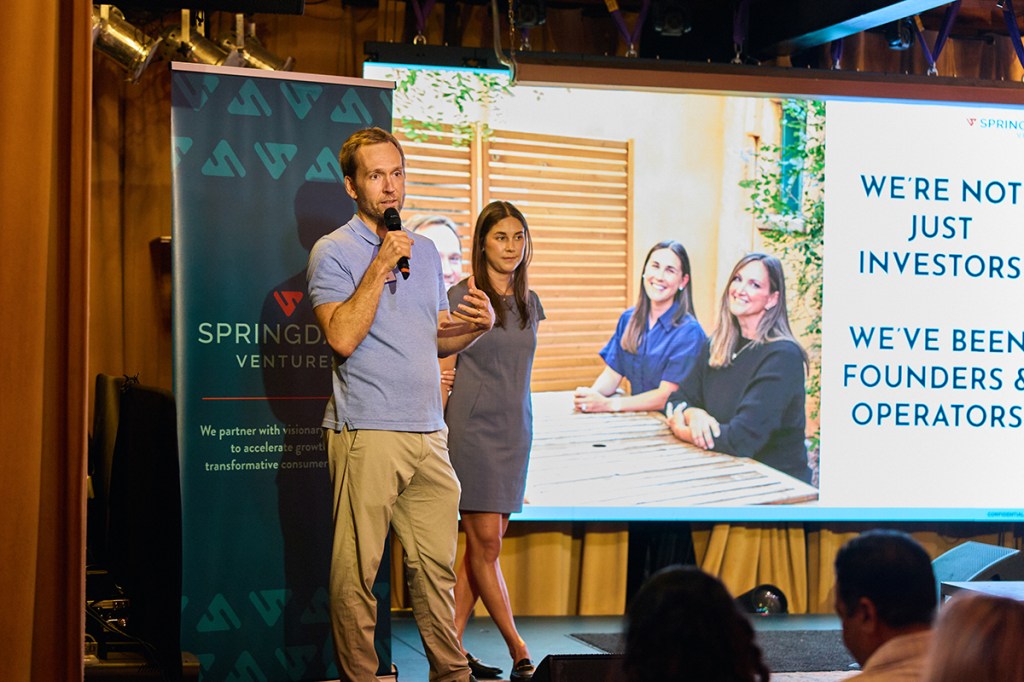
I did a lot of mentoring and early-stage investing. And I got really involved with SKU, particularly in the consumer space. I was part of its founding board of directors. That’s where I met my co-founder in Springdale Ventures, Genevieve Gilbreath.
There are so many things that are fun about working with early-stage companies. In addition to witnessing passion and ambition, catching someone in that special moment of turning an idea into a product and a real business is magical.
Fundraising challenges and facing rejection
A lot of founders make the mistake of thinking that investors are going to view their company as favorably as they do. To be a founder, you have to have this blind faith in your product. Switching into a mode where you’re pitching and talking about the risks can be hard. You face a lot of rejection.
Early-stage founders often struggle with the lack of capital available to them. Most angels invest when a company is pre-revenue. The company might just need to get its first inventory run done or make packaging, requiring a few hundred thousand dollars and pulling together $25,000 or $50,000 checks from angels to make that happen.
When companies are a little bigger and need to raise a couple million dollars, it becomes challenging to raise that money from angels. And the big players in the space don’t write checks that small. So founders get hit from both sides. You usually can’t get bank financing when you’ve only been in business a couple of years. A lot of these early-stage companies with great products don’t make it because they can’t find the capital to grow.
Coming to terms with uncertainty when starting a business
One of the hardest indicators to get your head around as an investor is the uncertainty in starting a business. Pretty much every founder that I’ve met has gone through multiple substantial pivots in their business journey.
So if you’re an investor just looking at a company through the lens of what’s working now, and ignore the ability for the business to be dynamic, then more often than not, that will end up being a bad investment.
You have to figure out the right way to evaluate the entrepreneurs themselves. Does this founder have the ability to weather the storm that’s coming? That takes a combination of grit, resilience and innovative thinking.
Right now, we’re undergoing this massive shift around how marketing takes place with AI, influencer platforms and audiences. Google searches are declining. An early-stage founder’s ability to navigate these changes is a company’s biggest asset by far.
An audience-based approach to customer acquisition
The way people buy has changed. Now, there’s an audience-based approach to customer acquisition. Micro-influencers who have 10,000 followers might have an audience based in one specific city. Mega-influencers like Khloe Kardashian, who’s behind the Khloud snack brand that we invested in, have more followers than some countries have people. So, how do you navigate that to grow your business? It’s a very noisy space.
AI is also changing how people buy. When people search for brands, AI is actually making brand recommendations. I think pretty soon, as Siri and Alexa get upgraded to agentic assistant LLM modes, they will be making the purchases on behalf of people as well. So, telling Alexa, “Go find me a good cookie to buy.” And then the AI has to determine which brand to buy. That’s going to completely change the purchase landscape again.
Don’t underestimate the value of networking
Don’t underestimate the importance of networking and sharing ideas.
Once, I was in this room with 20 CEOs, and there was a speaker who said, “Hey, everyone write down the top five hires you’ve ever made.” So everyone wrote down their names. Then he said, “Okay, now how many of you have at least one name on that list that you met through networking instead of through a resume search?” And everybody raised their hand. Then he said, “Well, how about two of the names?” And everybody raised their hand. He went all the way through, and of the 20 CEOs who’d written down a total of 100 names, 100% of those people were hired from networking.
Networking is easy to put off, but it’s so critical. I always suggest setting a weekly coffee goal.
So many aspiring entrepreneurs get caught up in having the perfect business plan or getting the right number of months of financial backing in advance. But I encourage everyone to just get started, learn and iterate.
Key Takeaways
- Graham sold BuildASign, the startup he co-founded, to VistaPrint, now Cimpress, in 2018.
- After the sale, Graham became an investor and advisor, helping early-stage companies grow.
- Here’s what he thinks young entrepreneurs should know as AI continues to change the landscape.
This as-told-to story is based on a conversation with Austin, Texas-based entrepreneur and investor Dan Graham. Since selling his business, BuildASign, to VistaPrint in 2018 in a $280 million cash transaction, Graham has continued to launch and play a role at multiple other firms. He has been a partner at Notley since 2015, general partner at Springdale Ventures, general partner at Geyser Group and board member at CiviTech, among others. Additionally, Graham gives back to the Austin community through participation on the board of directors for numerous philanthropic organizations, including Austin Community Foundation, Austin Monitor, the 4ATX Foundation and others.
Growing up, I always gravitated towards entrepreneurship. But I didn’t necessarily think of it as a career path. When I was 12, I started this little business doing door-to-door magic tricks, where I’d do the magic for free, then ask for money to reveal how I’d done it. I also sold candy at school.
I went to school for a computer science degree. Then, I went to law school to study intellectual property and patent law. But I always enjoyed the entrepreneurial side of things as well. So, when I was a second-year law student, a couple of friends that I had grown up with partnered to do web development work to earn some extra money.