They Brought in $5K Per Weekend at Craft Fairs — Then $1.5M a Year — Thanks to an Unusual Business Model: ‘Incredibly Fast Scale’
Susana Chen and Jess Wu wanted to help artists monetize their work.
Key Takeaways
- Chen, a Parsons School of Design graduate, set out to create ‘wearable art that really shows who you are.’
- Wu’s background in brand marketing helped the co-founders build efficient systems and scale.
- Now, with $1.5 million revenue and a ‘Shark Tank’ deal secured, the business continues to expand.
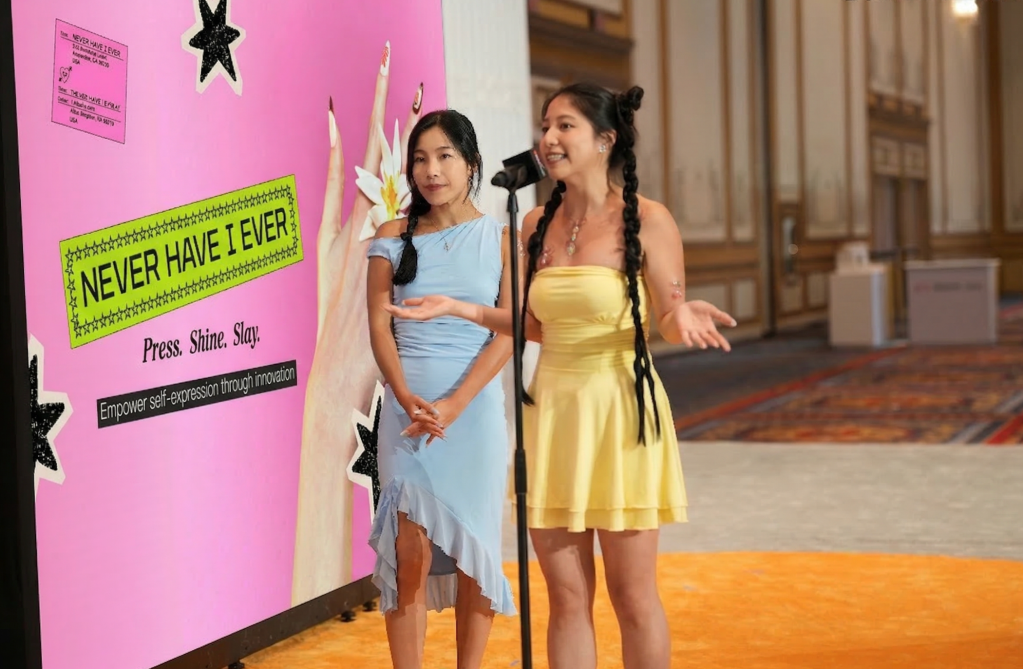
Susana Chen and Jess Wu’s New York-based beauty startup Never Have I Ever began with a simple question: What if art could be living on unexpected canvases — not just on printed T-shirts or hats?
Chen had some experience with the latter, growing up in New York City’s Chinatown, where she helped sell “I Love New York” tees and other customized items at her mother’s souvenir shop.
As an adult, Chen graduated from Parsons School of Design, worked at several creative agencies, founded the non-profit Asian Creative Foundation and attended craft fairs, where she purchased artist-made goods and spotted a gap in the market when it came to a certain slice of self-expression.
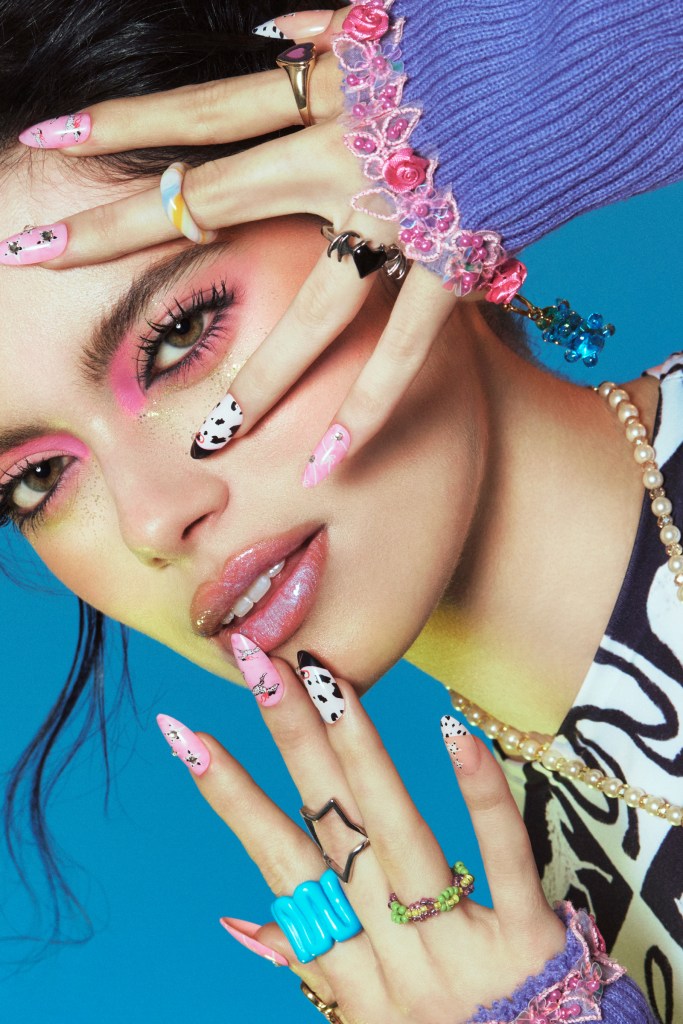
Chen saw the potential to start a business selling press-on nails, temporary tattoos and tooth gems — “wearable art that really shows who you are,” she says.
Chen brought the idea to her former colleague Wu, whose corporate background in brand marketing came in handy. Wu has helped cross-cultural brands, from consumer goods to tech companies, go global. She knew how to build efficient systems.
The duo officially launched Never Have I Ever in November 2023. Chen says the brand name has “multiple meanings to empower people in their individuality” — encompassing her and Wu starting a business for the first time, artists experimenting with new mediums and customers trying new looks.
Shifting consumer behavior and a significant pain point
It was a well-timed rollout, coinciding with a shift in consumer behavior around non-essential beauty services. Last year, salon owners and other beauty professionals across the U.S. reported decreased business amid an economic downturn and extensive tariffs, per NBC News.
Never Have I Ever’s press-on nails, which retail from about $18 to $45, not only offer consumers a more affordable option to do their nails, but also address another, sometimes overlooked pain point.
“I go to the nail salon,” Chen explains. “I want an artist’s work on my nails. But the artists don’t get credit for the nail drawing, and the nail tech cannot draw exactly what I want. So the customer isn’t happy. We just solved that whole issue.”
Never Have I Ever pulled in $3,000 to $5,000 per weekend
In the early days, Chen and Wu brought Never Have I Ever’s artist-designed products to craft fairs to see if it would stick. It did, with the customized nails “easily bringing in $3,000 to $5,000 per weekend,” Chen says. That’s when it made sense to attend trade shows and capture the attention of larger retailers.
Nowadays, Never Have I Ever’s products are available at Urban Outfitters, Revolve, Anthropologie, PacSun, Zumiez and Nordstrom. What’s more, in keeping with its artistic roots, the brand is carried at cultural institutions including the Met Museum, MoMA and Denver Art Museum.
“ When we had this idea of working with artists, I knew I wanted to sell to MoMA,” Chen says. “I wanted to sell to Metropolitan. Because I don’t want to go just to see art — I want to bring home souvenirs of the art, but not to put it on my fridge or table. I want to wear them.”
A business model allowing artists to monetize their work
From the outset, Chen and Wu centered creatives in their approach. Never Have I Ever works with more than 100 artists, who are typically paid 5% in royalties for their licensed artwork.
The majority of Never Have I Ever’s supply chain is based in China, but the production process is always a collaborative one, the co-founders say. Once an artist submits their artwork, Never Have I Ever works closely with them to ensure the final product remains true to their vision.
“We built an internal system and template to bridge artists’ creative process and manufacturing realities so that we can minimize the gap between art and production,” Wu says. “So it’s generally quite smooth.”
Highlighting a community of artists on social media
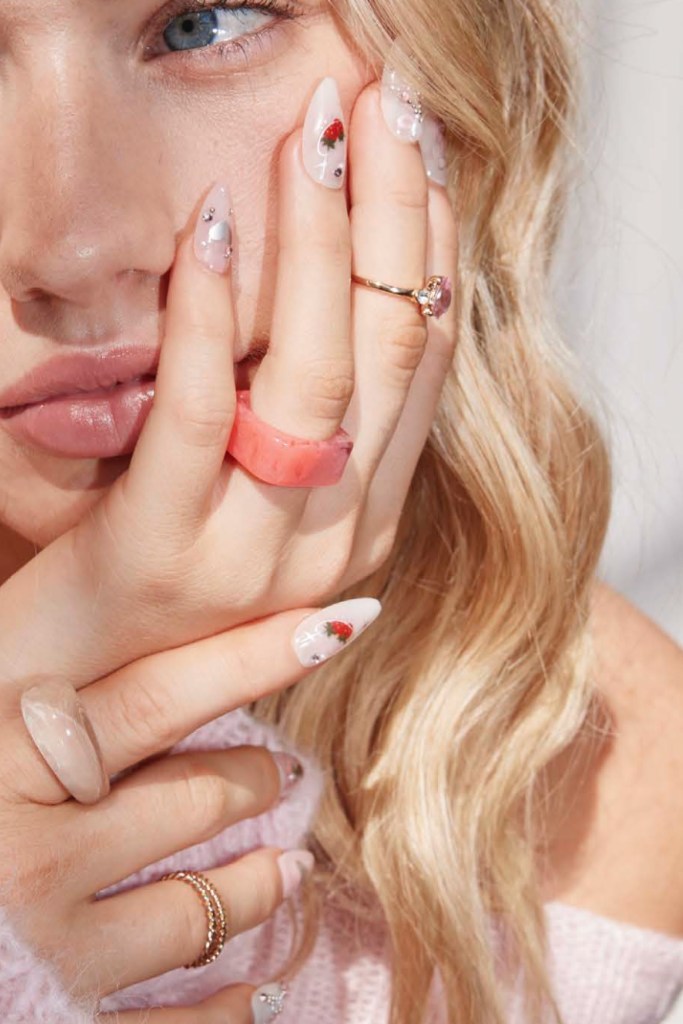
Additionally, Never Have I Ever showcases its artist community on its social media platforms. The business’s social media strategy isn’t just focused on getting consumers to purchase the press-on nails; it makes a point to highlight the individual artists behind the designs, Chen notes.
Never Have I Ever boasts collaborations with artists including Lorien Stern, Tay Beepboop, Jade Roland, Lily Hoang-Zhu (liliuhms), August Wren, Mercedes Bazan, Omotola, Zoe Wodarz, Hey Su Lee, Alice Lee and Priyanka, among many others.
Hitting $1.5 million in revenue and 120,000 units sold
By the end of 2025, Never Have I Ever had about ten people on its team, half based in the U.S. and half in China. The company closed out its second full year in business with $1.5 million in revenue, with 3.5X year–over-year sales growth and 120,000 units sold, per the company.
“ We went from selling at a marketplace on the weekend to now being in more than 2,000 shops in less than two years,” Wu says, “so it was an incredibly fast scale.”
What’s more, in another major milestone for the young brand, Never Have I Ever appeared on an episode of Shark Tank last month.
“It was wild,” Chen says of pitching to the Sharks. “It was nerve-wracking. But it was also one of the most vulnerable experiences, talking through growing up in New York City, selling I love New York T-shirts at my mom’s souvenir shop [and how that] gave me the perspective to understand the importance of creative expression.”
Never Have I Ever secured a deal with Kevin O’Leary: a $150,000 investment for 10% of the company and 50 cent per unit loyalty royalty capped at $450,000.
Becoming the go-to brand in instant glam
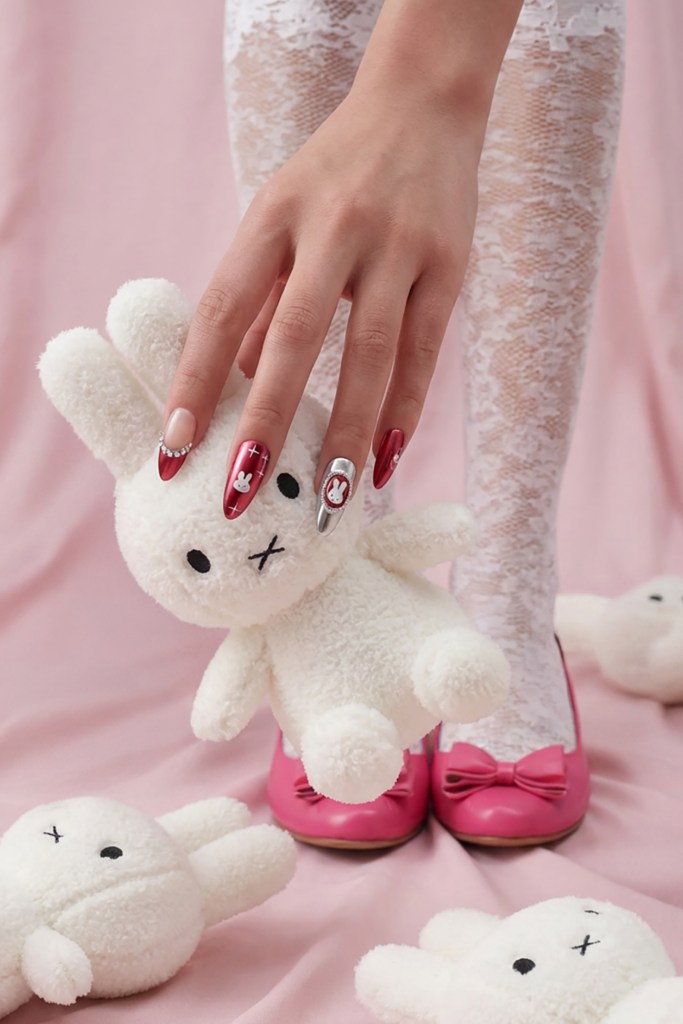
Looking ahead, the co-founders intend to make Never Have I Ever the go-to brand in the instant glam category, continuing to expand into additional retail stores and partner with new artists along the way.
Now is a prime time to start a new business, Wu says, noting that aspiring entrepreneurs don’t need a huge team or massive budget to launch, just an understanding of what they want to do and why they want to do it.
“We knew that we wanted to support artists,” Wu adds. “We wanted to help them do what they love.”
Key Takeaways
- Chen, a Parsons School of Design graduate, set out to create ‘wearable art that really shows who you are.’
- Wu’s background in brand marketing helped the co-founders build efficient systems and scale.
- Now, with $1.5 million revenue and a ‘Shark Tank’ deal secured, the business continues to expand.
Susana Chen and Jess Wu’s New York-based beauty startup Never Have I Ever began with a simple question: What if art could be living on unexpected canvases — not just on printed T-shirts or hats?
Chen had some experience with the latter, growing up in New York City’s Chinatown, where she helped sell “I Love New York” tees and other customized items at her mother’s souvenir shop.
As an adult, Chen graduated from Parsons School of Design, worked at several creative agencies, founded the non-profit Asian Creative Foundation and attended craft fairs, where she purchased artist-made goods and spotted a gap in the market when it came to a certain slice of self-expression.