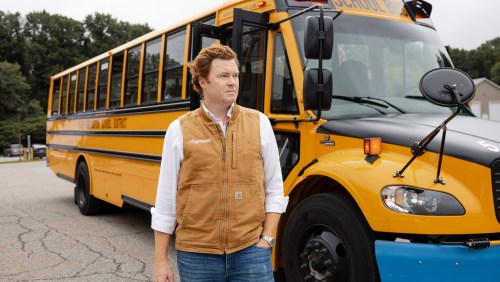
‘It’s Fine, I’ll Take It As Is’: The Customer’s Words That Changed My Business
My outsider complex made me think everything had to be perfect. It was stopping me from swinging bigger.
This story appears in the September 2026 issue of Entrepreneur. Subscribe »
If you’ve been to an alcohol festival lately, you’ve probably seen me and my wife, Kimberly. We make a recovery product for people who like to drink but hate how they feel the next day, so festivals are a great sales channel for us. And back in 2025, as we worked one of them, I had an experience that changed how I do business — and propelled our company’s growth perhaps better than anything else.
Here’s what happened: I learned to stop being a perfectionist.
This was at the Atlanta Fall Wine Festival. Our booth was popular, and product sold fast. At some point, I handed some to a customer — and then noticed a small tear on the upper-left corner of the packaging.
“Hold on,” I said. “That one’s not perfect. Let me grab you another.”
“It’s fine,” the guy said. “I’ll take it as is.”
That made sense. The package is meant to be ripped open, and the tear was just at the start of that perforated top. If this guy bought it, he’d just tear the whole top off anyway. But something about it felt wrong to me. I couldn’t sell him something imperfect! So I gave him a fresh package anyway, plus a free one as a bonus. Then I stuck the damaged product into my pocket. Something about it felt worth holding onto.
Here’s what it made me realize: I was applying a standard nobody else was asking for.
I have no formal business training. I’m just a U.S. Army veteran who doesn’t want to lose the day after a night out, and I built this brand by watching YouTube videos and asking AI.
I often felt like an outsider in entrepreneurship, and believed that everything I do must be careful, considered, and perfect.
But that standard wasn’t helping me. I’d essentially wasted product at the festival. And I realized there were many other costs to my perfectionism: I’d barely tried email marketing, because I kept trying to craft the perfect campaign. I’d also delayed launching a subscription offer, because I didn’t have the bandwidth to build the perfect website and offer.
No more, I thought. I took that partially torn product, and I pinned it to the wall next to my computer. I wanted it to serve as a reminder: Just start shipping things imperfectly.
I began with a rule for myself on email marketing: Send a campaign every week, no exceptions. Now I move too fast to overthink it — and email climbed from 5% of our revenue to 20%. Next I slammed together a subscription system and set it live. Subscriptions now drive more than half our revenue.
None of this means I stopped caring. I’d still rather ship something excellent. What changed is what I do when I hit the wall — when I’ve been staring at an ad, an email, or a project for two hours and getting nowhere. Now I look up at that torn pouch on my wall, and I remember a customer saying he’d
buy it as is.
People don’t need perfect. So why let it hold us back?
If you’ve been to an alcohol festival lately, you’ve probably seen me and my wife, Kimberly. We make a recovery product for people who like to drink but hate how they feel the next day, so festivals are a great sales channel for us. And back in 2025, as we worked one of them, I had an experience that changed how I do business — and propelled our company’s growth perhaps better than anything else.
Here’s what happened: I learned to stop being a perfectionist.
This was at the Atlanta Fall Wine Festival. Our booth was popular, and product sold fast. At some point, I handed some to a customer — and then noticed a small tear on the upper-left corner of the packaging.