Arianna Huffington Thinks Work-Life Balance Is the Wrong Goal — Here’s What She Says Matters Instead
Huffington said that no one with a truly “interesting job” can reliably shut their laptop down at 5 p.m. and stop thinking about work.
Key Takeaways
- Arianna Huffington says to aspire for “life-work integration” over “work-life balance,” arguing that work and life rise together rather than compete.
- In her view, if you can finish everything before you go to sleep every night, your job may not be challenging enough, and you should consider changing roles.
- Her broader message is that true success means integrating fulfilling work with health, relationships and purpose.
Arianna Huffington says that work-life balance is the wrong target for ambitious people. Instead, she wants workers, especially Gen Z, to rethink what meaningful work and real recovery look like.
Huffington is blunt about the limits of a strict 9-to-5 mindset in a new interview with Fortune. Many young workers say they want to close their laptops at 5 p.m. and never think about work again. Huffington sees a disconnect between that ideal and the reality of high-impact roles.
“I don’t think there is anybody with an interesting job who can do that,” Huffington told Fortune. “For you, or me, or most people with interesting jobs, there is never a time when you have a natural ending to the day.”
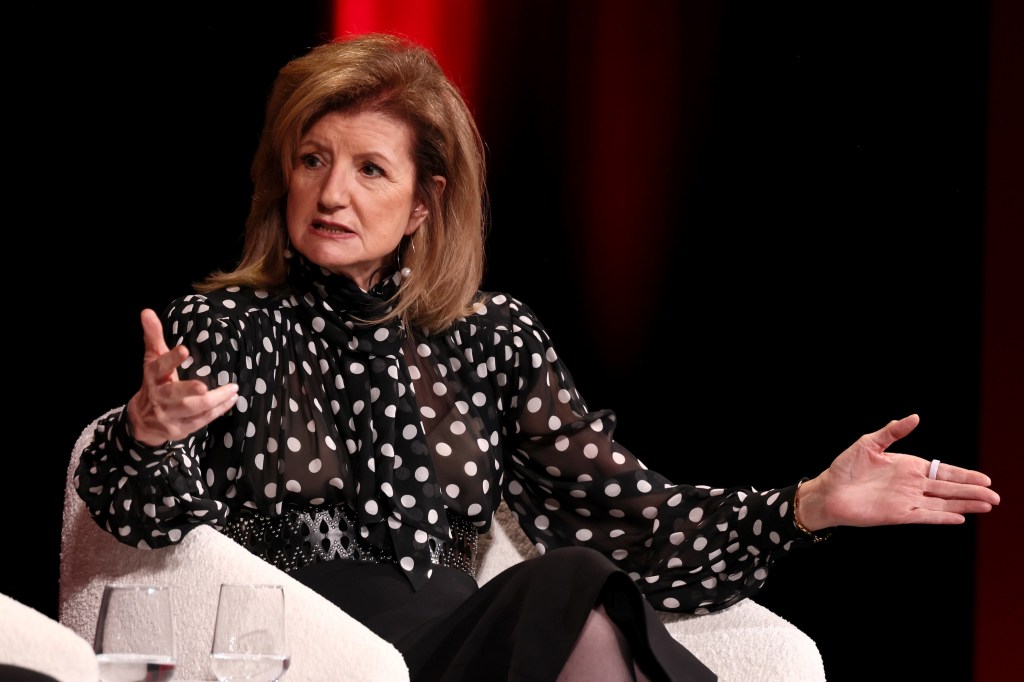
She pushes this idea even further. “I tell people that if you can finish everything before you go to sleep, you don’t have an interesting enough job,” she said. She even suggested that if someone’s work is always “complete” by bedtime, they “should change jobs.”
Huffington has warned about the costs of overwork
That does not mean that Huffington believes in glorifying hustle culture or burnout. Instead, she has built her brand on warning about the costs of overwork. She was working 18-hour days to build The Huffington Post in 2007, when she fainted in her home office due to complete exhaustion. She hit her head against her desk, fracturing her cheekbone. The moment shaped the way she views work.
However, Huffington still says that the issue isn’t working long hours. In her view, the solution isn’t scaling back — it is doubling down on the fundamentals, including better sleep, stronger nutrition and intentional recovery to sustain demanding work.
Sleep sits at the center of her prescription. Huffington pointed out that most adults need seven to nine hours of sleep a night. “If you get your optimal number, that’s critical for how effective you are at work,” she said. Sleep, for her, is not a luxury or a side benefit; it is the base condition that makes long, intense workdays sustainable.
She adds that exercise is vital too. “As long as people get the sleep they need, the exercise they need — whatever that is, walking or strength training, or both — that’s also important,” she said.
She opts to say “life-work integration” over “work-life balance”
Huffington rejects the word “balance” itself. She has long argued that the problem with “balance” is that it is based on the idea that work and life, well-being and productivity, are on opposite sides. “In fact, they are on the same side,” she said in a 2022 interview with Great Place to Work. In her eyes, well-being and performance rise together.
Huffington prefers the language of “life-work integration” with the goal of integrating work and life in a way that lets people bring their whole selves to what they do.
“It’s about rejecting the idea that we should have to choose between being successful at work and successful in other parts of our lives,” Huffington said.
Key Takeaways
- Arianna Huffington says to aspire for “life-work integration” over “work-life balance,” arguing that work and life rise together rather than compete.
- In her view, if you can finish everything before you go to sleep every night, your job may not be challenging enough, and you should consider changing roles.
- Her broader message is that true success means integrating fulfilling work with health, relationships and purpose.
Arianna Huffington says that work-life balance is the wrong target for ambitious people. Instead, she wants workers, especially Gen Z, to rethink what meaningful work and real recovery look like.
Huffington is blunt about the limits of a strict 9-to-5 mindset in a new interview with Fortune. Many young workers say they want to close their laptops at 5 p.m. and never think about work again. Huffington sees a disconnect between that ideal and the reality of high-impact roles.
“I don’t think there is anybody with an interesting job who can do that,” Huffington told Fortune. “For you, or me, or most people with interesting jobs, there is never a time when you have a natural ending to the day.”